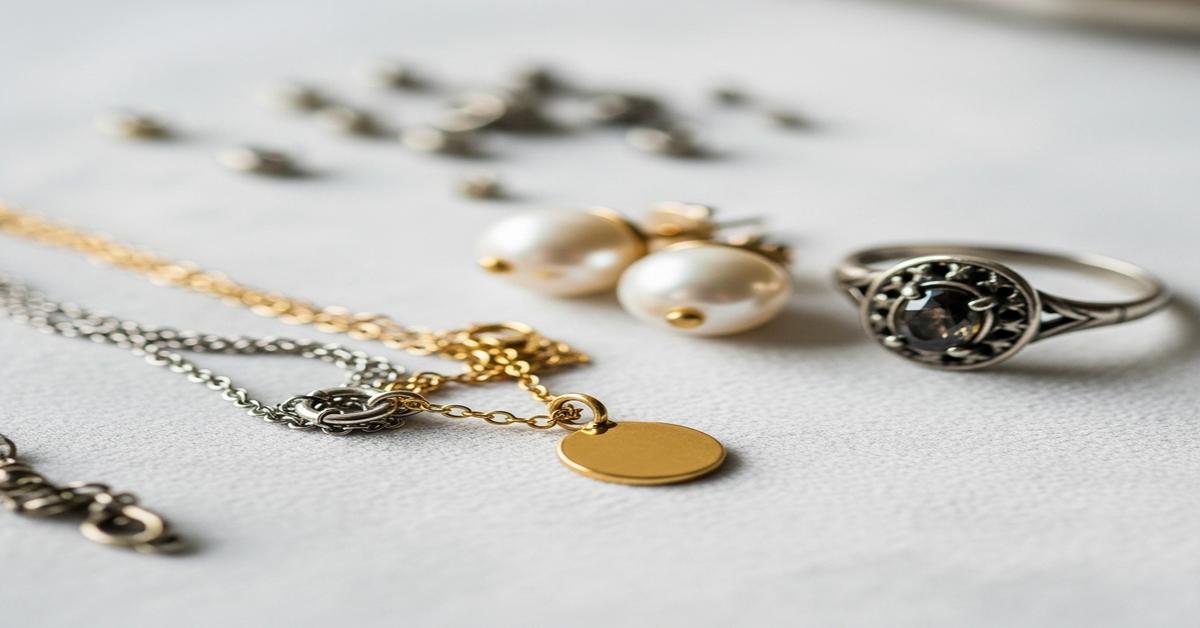
Most people store jewelry the same way they grab it—tossed into a bowl, piled in a drawer, or shoved into a handbag. That’s why scratches, tangles, and tarnish are so common. Proper storage is simple, but it depends on what you own. Different metals, gemstones, and organic materials need different conditions. This guide explains the practical why and how, with specific steps you can apply today.
Why storage matters: the mechanics behind damage
Three basic processes cause damage: mechanical abrasion, chemical reaction, and environmental stress. Mechanical abrasion happens when harder pieces rub softer ones. For example, a 1.0 ct diamond (Mohs 10) can scratch a 7–8 Mohs gemstone like amethyst. Chemical reactions cause tarnish: sterling silver (92.5% Ag + 7.5% Cu) reacts with sulfur compounds in air to form black silver sulfide. Environmental stress—extreme dryness, heat, or sudden temperature change—can crack hydrated gems like opal or dry out organic materials like pearls and amber.
Sort before you store: simple triage that prevents damage
Sort jewelry into categories before you put anything away. That makes targeted storage possible.
- Everyday pieces: wedding band, daily pendant. Store where you reach for them—separate slots or a small tray.
- Precious metals and stones: gold (10k–18k), platinum (typically 95% Pt), diamonds, sapphires. These are durable but still need separation to avoid abrasion.
- Soft or porous gems: opal, emerald (often oil-treated), pearls, amber. Treat them gently and keep out of extremes.
- Plated or costume jewelry: brass, copper base with gold/silver plating. Keep these away from polishing cloths and abrasive contact—plating wears off easily.
Practical storage solutions by jewelry type
Pick storage that matches the object’s vulnerability.
- Chains and necklaces: Hang thin chains on hooks to prevent knots. For travel or drawers, thread a chain through a short length of plastic straw or narrow tubing. Example: an 18″ 1 mm chain fits easily through a 6–10 mm straw segment. Thick curb or rope chains can lie flat in individual lined compartments.
- Rings: Use ring rolls or individual padded slots. For a solitaire engagement ring (e.g., 1.5 ct center), choose a slot with 2–3 mm cushioning to avoid the setting rubbing against other metal.
- Earrings: Store pairs together on cards or in small compartments. Stud backs and posts are soft; keep posts from rubbing against heavier pieces.
- Pearls and organic gems: Store flat in a soft cloth pouch or lined drawer. Do not seal pearls in airtight plastic. Pearls need slight humidity; aim for roughly 45–55% relative humidity. Avoid putting them near heat vents or in direct sunlight.
- Plated and fashion jewelry: Keep in soft pouches and separate from fine jewelry. Do not use abrasive cloths. If metal darkens, a gentle wipe with a soft, dry microfiber cloth is enough.
- Watches: Store face-up on a pillow in a dry, dark place. For automatics, use a winder or cycle them periodically. Leather straps should avoid high humidity; metal bracelets prefer low humidity.
Control the environment: humidity, air, and chemicals
Small environmental changes stop long-term damage.
- Humidity: Sterling silver tarnishes faster in humid air with sulfur compounds. Use silica gel packets in silver storage to lower humidity. But avoid silica gel with pearls or unbaked organic gemstones—those need some moisture.
- Airflow and airtight containers: Airtight containers slow tarnish for silver but are bad for pearls and some treated gems. Use sealed anti-tarnish pouches or boxes for silver and gold. Use breathable cloth pouches for pearls and opals.
- Avoid sulfur sources: Keep jewelry away from rubber bands, wool, and certain household chemicals. Sulfur in these materials quickly tarnishes silver and discolors some alloys.
- Light and heat: Store opals and some dyed stones away from direct light. High heat can cause glue in assembled pieces to fail and can accelerate plating wear.
Cleaning before storage: remove what accelerates damage
Clean jewelry before you store it. Oils from skin, lotions, and sweat attract dirt and speed corrosion. A quick routine prevents problems.
- For gold and hard gemstones: wash in warm water with a drop of mild dish soap, brush gently with a soft toothbrush, rinse, and dry with a lint-free cloth.
- For sterling silver: wipe with a clean, dry silver cloth after wearing. For heavier tarnish, use a silver-cleaning solution or professional cleaning—avoid overuse of chemical dips, as they can remove patina.
- For pearls and opals: wipe with a slightly damp soft cloth and air dry on a flat surface. Never use ultrasonic cleaners or steam on pearls and most porous stones.
- For plated pieces: a soft dry cloth only. Water and chemicals can lift plating.
Tools and materials that make a difference
Not all storage is equal. Invest in a few items that prevent frequent damage.
- Padded jewelry box with individual compartments and soft lining. Look for at least 3–5 mm foam padding in ring slots.
- Anti-tarnish strips or pouches for silver. They absorb sulfur and slow tarnish chemically without scraping metal.
- Silica gel packets for non-porous metals and stones. Replace or regenerate them periodically (drying at low heat restores them).
- Microfiber or chamois cloths for wrapping and light cleaning. Avoid paper towels or tissues that can leave fibers.
- Necklace hangers and travel rolls for chains. Hangers prevent tangles; rolls keep pieces separate in a bag.
Daily habits to protect your investment
Small behavior changes reduce problems immediately.
- Take jewelry off before showering, swimming, or applying lotions and perfumes. Chemicals and salt water accelerate wear.
- Put jewelry on after makeup and hair products. Aerosols and hairspray can dull plating and stones.
- Check settings regularly. A loose prong saves a lost stone. If a 0.7 ct stone seems wobbly, see a jeweler soon.
- Photograph and inventory valuable items. If something is lost or damaged, a recent photo and appraisal detail (ct, mm, metal) helps insurance and repair.
When to call a pro
DIY care is fine for routine prevention. But call a jeweler when a piece needs soldering, rhodium replating, stone tightening, or deep cleaning. For example, white gold that’s 14k with worn rhodium plating should be replated to restore its protective layer. Emeralds with oil treatments that appear cloudy should be inspected by a pro to avoid damage from home cleaners.
Storing jewelry correctly reduces scratches, tangles, and tarnish. Know what you own, clean before you store, choose the right container, and control humidity. The upfront effort protects appearance and extends the life of every piece.

I am G S Sachin, a gemologist with a Diploma in Polished Diamond Grading from KGK Academy, Jaipur. I love writing about jewelry, gems, and diamonds, and I share simple, honest reviews and easy buying tips on JewellersReviews.com to help you choose pieces you’ll love with confidence.