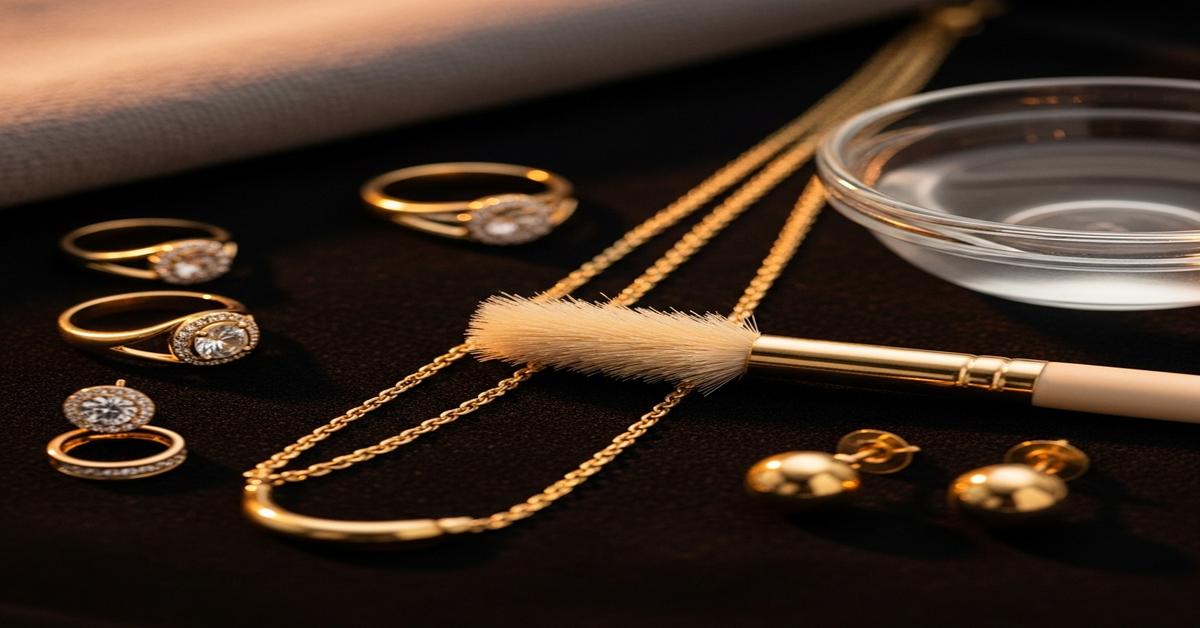
Toothpaste looks like a handy quick fix for dirty jewelry. Don’t use it. Toothpaste contains abrasive particles and bleaching chemicals that scratch gold, wear away plating, and can damage softer gemstones. This article explains exactly why toothpaste is harmful and gives safe, specific methods to clean the different kinds of gold jewelry you might own. You’ll get step-by-step instructions, measurements, and clear rules for when to see a pro.
Why toothpaste damages gold
Toothpaste is abrasive. Most pastes use hydrated silica or other abrasives with a hardness of about 6–7 on the Mohs scale. Gold is soft: pure 24k gold sits around 2.5–3. That difference means toothpaste particles will leave micro-scratches on the metal. Micro-scratches dull the polished finish and, over time, make pieces look worn.
Toothpaste contains chemicals. Whitening agents and mild bleaches (peroxide or peroxide precursors) can react with some alloy metals in 10k–18k gold. That can change color or accelerate corrosion in copper-rich alloys. Toothpaste can also lift thin rhodium plating on white gold.
Toothpaste is bad for gemstones and plating. Abrasives grind away plating and can scratch softer stones such as opal, turquoise, and pearls. Toothpaste paste can clog prongs and settings with paste residue, trapping moisture and dirt.
Know your gold: karat and plating matter
Gold type changes how you clean it.
- 24k (pure) gold: Very soft. Avoid hard scrubbing and abrasives.
- 18k, 14k, 10k gold: These contain alloys (silver, copper, nickel). They’re harder and more durable but still scratch easily compared with tool metals.
- Gold-plated or vermeil: A thin layer of gold over base metal. The plated layer is delicate and wears off with harsh cleaning or abrasion.
- Rhodium-plated white gold: Cleaning should be gentle so you don’t remove the rhodium. When rhodium is thin or gone, a jeweler can re-plate it.
Everyday safe cleaning — the basic home method
Use this for most solid gold pieces and for gold settings with hard gems (diamonds, sapphires, rubies).
- Measure 1 cup (240 ml) warm water and 2–3 drops of mild dish soap in a small bowl.
- Place the jewelry in the solution and let it soak for 15–20 minutes. Soaking loosens oils and dirt without scrubbing.
- Use a very soft toothbrush or a soft paintbrush. Gently brush in crevices and behind stones. Keep pressure light — you are removing deposits, not polishing metal.
- Rinse under warm running water or in a clean bowl of warm water to remove soap. Hold onto small pieces — use a strainer if needed.
- Pat dry with a lint-free cloth and let air-dry fully on a soft towel.
When you can use ammonia (carefully)
Ammonia is effective against heavy oils and grime for solid gold (no plating) and hard stones. Use rarely and with caution.
- Mix 1 part household ammonia to 6 parts water in a bowl.
- Soak the jewelry for no more than 30–60 seconds. Do not scrub with ammonia.
- Rinse thoroughly with warm water and dry.
- Do not use ammonia on gold-plated pieces, pearls, opals, emeralds, or any porous or treated stones. Do not use on fragile settings.
Cleaning gold-plated jewelry
Gold-plated pieces need gentler care because the gold layer is thin.
- Use the warm, soapy water method but limit soaking to 1–2 minutes.
- Swab with a soft cloth or Q-tip rather than brushing. Avoid abrasive cloths or scrubs.
- Rinse and dry immediately. Repeated soaking and abrasion remove plating faster.
- If plating is worn or discolored, a jeweler can re-plate (rhodium or gold). Don’t try to repair plating at home.
Gemstone-specific rules
- Pearls and opals: Wipe with a soft damp cloth. Do not soak. Avoid detergents and ammonia because they strip nacre and finish.
- Emeralds: Many emeralds are oiled to improve appearance. Avoid ultrasonic cleaners and ammonia. Use mild soap and a soft brush only.
- Diamonds, sapphires, rubies: These are hard and safe for ultrasonic or steam cleaners, but only if the settings and stones are secure.
- Turquoise and malachite: Porous stones that absorb liquids. Clean with a dry or slightly damp cloth only.
Ultrasonic and steam cleaners — pros and cons
Ultrasonic cleaners and steamers can give a professional-level clean. But they can also loosen stones, remove treatments, and damage delicate gems.
- Ultrasonic cleaners are fine for sturdy settings and hard gems. Avoid if the piece has fractures, fillings, or soft stones.
- Steam cleaners remove grime without chemicals but use high heat and pressure. Avoid with glued-in stones, porous gems, and plated items.
- When in doubt, consult a jeweler before using these machines.
Polishing and finishing touches
Use a soft microfiber or a jeweler’s polishing cloth. These cloths contain mild polishing compounds and remove tarnish without abrasives. Don’t use metal polishes or household cleaners on jewelry. They are formulated for different metals and are too abrasive for gold.
Maintenance and storage tips
- Remove jewelry before swimming in pools or hot tubs. Chlorine speeds corrosion of some alloys and weakens settings.
- Apply lotions, perfumes, and hairspray before putting on jewelry. Chemicals in cosmetics build up on metal and stones.
- Store pieces separately in soft pouches or compartmentalized boxes to avoid scratches. For plated items, avoid prolonged friction against other pieces.
- Wear daily pieces often. Gold resists tarnish; regular wear keeps oils from building up. Clean lightly every few weeks if you wear them daily. Do a deeper clean every 6–12 months.
When to see a professional
Take your pieces to a jeweler if you notice loose stones, deep scratches, bent prongs, missing plating, or heavy buildup that won’t come off with gentle cleaning. A jeweler can re-plate, re-polish, tighten settings, and professionally steam-clean or ultrasonically clean where safe.
Bottom line: toothpaste is a quick way to dull and damage gold. Use warm soapy water, gentle brushing, and occasional professional care. For plated or delicate pieces, stick to cloths and light cleaning only. These approaches remove dirt without risking scratches or lost plating.

I am G S Sachin, a gemologist with a Diploma in Polished Diamond Grading from KGK Academy, Jaipur. I love writing about jewelry, gems, and diamonds, and I share simple, honest reviews and easy buying tips on JewellersReviews.com to help you choose pieces you’ll love with confidence.