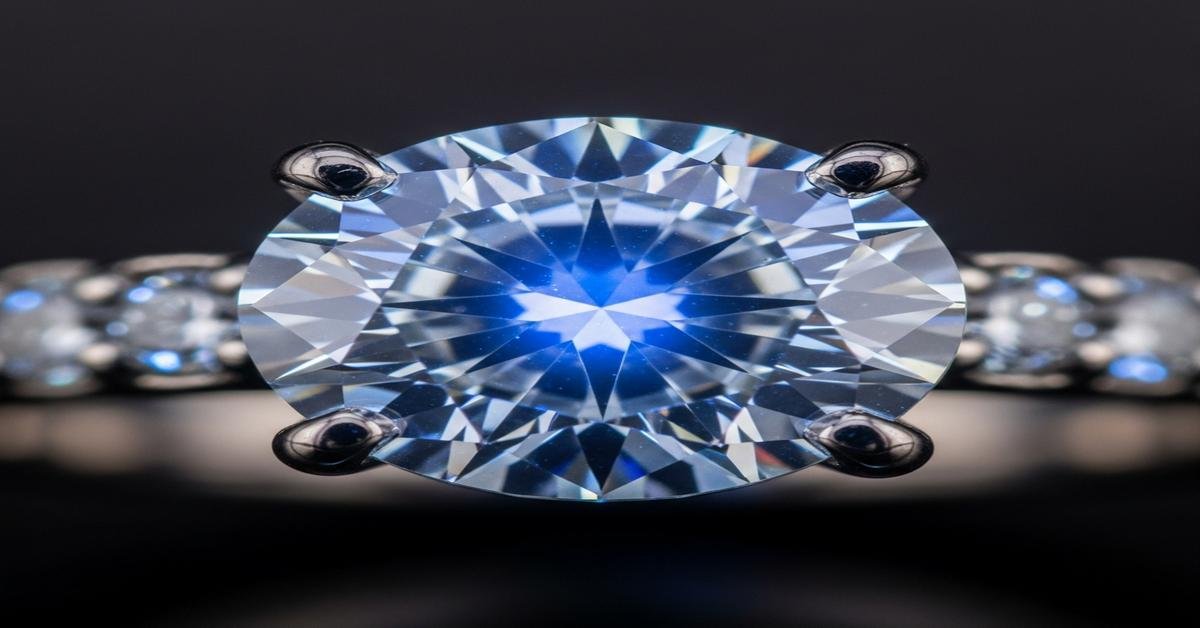
Diamond fluorescence stirs debate because it can change how a diamond looks and how much it costs. Some buyers love the effect. Others avoid it. Here’s a clear, practical guide based on GIA grading standards and real-world viewing. You’ll learn what fluorescence is, when it helps, when it hurts, and how to judge it with your own eyes before you buy.
What is diamond fluorescence?
Fluorescence is a diamond’s visible glow under ultraviolet (UV) light. The most common glow is blue. Less common colors include yellow, green, and orange.
Why it matters: UV exists in daylight and in some indoor lights. If your diamond fluoresces, its face-up color can change slightly outdoors. In a nightclub with black lights, it can glow strongly.
Fluorescence comes from trace structural features in the crystal. It’s not an inclusion and it’s not damage. Most diamonds show no or faint fluorescence. A smaller share shows medium to very strong.
How GIA grades fluorescence
On a GIA grading report, fluorescence is listed by strength and color. The strength scale is:
- None
- Faint
- Medium
- Strong
- Very Strong
Color is usually “blue.” Other colors are noted if present.
Why this matters: GIA grades color in UV-filtered light, so the color grade (D–Z) does not include fluorescence effects. Fluorescence is a separate line item because it may affect how the diamond looks in normal life.
Does fluorescence change sparkle?
Short answer: not in typical indoor lighting. Sparkle comes from cut quality. Brilliance, fire, and scintillation depend on proportions, symmetry, and polish. Fluorescence doesn’t change how visible light reflects and refracts inside the diamond.
What you might see:
- Outdoors in sunlight: A blue-fluorescent diamond can look a touch whiter due to UV. Some viewers perceive a soft boost in brightness. This is about color contrast, not more “sparkle.”
- Under strong UV (black light): You’ll see a neon-like glow layered over the diamond’s normal return of light.
If you want maximum sparkle, prioritize cut. Use fluorescence as a secondary factor related to color and price.
When fluorescence helps color
Blue is opposite yellow on the color spectrum. Many near-colorless diamonds (G–J) and lower (K–M) have a mild warm tint. Blue fluorescence can visually cancel some of that warmth in UV-rich light. The diamond can look slightly whiter face-up outdoors.
Practical matches:
- G–J color: Faint to Medium blue often looks great. You get a near-colorless look with a potential price advantage.
- K–M color: Medium to Strong blue can be helpful. It may improve the face-up appearance outside and in mixed light.
Why it works: The blue glow blends with the diamond’s returned light and offsets yellow. It’s a subtle effect, but many buyers prefer it in real-world viewing.
When fluorescence can hurt
Some diamonds with Strong or Very Strong fluorescence appear hazy or oily. This is not common, but when it happens, transparency drops. The diamond looks slightly cloudy even in non-UV light.
Why it happens: Strong fluorescence sometimes correlates with structural irregularities that scatter light. It’s not the fluorescence alone; it’s fluorescence plus how the diamond’s crystal responds.
What to watch for:
- Persistent milkiness: If the stone looks dull or cloudy indoors and outdoors, pass. No discount is worth a lifeless diamond.
- Non-blue fluorescence: Yellow fluorescence can make a diamond look warmer, not whiter. Be cautious in near-colorless ranges.
Important nuance: Many Strong blue diamonds are not hazy at all. You must evaluate each stone in person or by video under varied lighting.
Price impact: discounts and value plays
Market behavior varies by seller and region, but typical patterns hold:
- D–F color: Medium to Very Strong blue often trades at a discount because buyers worry about milkiness and purity of color. Expect a price drop compared with non-fluorescent equals. The stronger the fluorescence, the larger the typical discount.
- G–J color: Faint to Medium blue can be a sweet spot. Modest discount or even neutral pricing with a face-up benefit outdoors.
- K–M color: Medium to Strong blue may be net-positive in appeal. Prices vary widely; strong, clean stones can be good value.
Why discounts exist: The trade prices in risk and perception. Fluorescence introduces uncertainty (will it be hazy? will the buyer dislike the glow?). That uncertainty becomes a discount. If you confirm the diamond is not hazy, fluorescence can be a smart way to save money without giving up beauty.
How to judge a fluorescent diamond in 10 minutes
Use this simple checklist before you buy:
- 1) Cut first: Confirm top-tier cut. For round brilliants, aim for excellent/ideal proportions and symmetry. Fluorescence will not fix poor cut.
- 2) Check transparency: View the diamond in neutral indoor light. It should look crisp, glass-like, and bright. Any gray cloud or milkiness is a red flag.
- 3) Step outside: In daylight, does it look clean and lively? For G–M colors with blue fluorescence, you may notice a slightly whiter face-up.
- 4) UV test: Use a small UV flashlight. Observe the glow’s strength and color. A strong neon glow is okay if the stone still looks transparent without UV.
- 5) Compare side-by-side: Place a similar non-fluorescent diamond next to it. Look for haze, not just color difference. If both are crisp, choose the look you like and the better price.
- 6) Metal matters: White metal (platinum/white gold) emphasizes whiteness. Yellow or rose gold reflects warm tones into the diamond. With blue fluorescence, white metal often shows the “whitening” effect best.
- 7) Ask for a daylight and UV video: If buying online, request footage in indoor neutral light, outdoor shade/sun, and under UV. You’re checking for transparency and any odd color behavior.
- 8) Confirm with the lab report: Note the fluorescence strength and color. Blue is usually helpful; yellow is usually not, especially in near-colorless grades.
Special cases: fancy colors, shapes, and lab-grown
Fancy color diamonds: Fluorescence can shift perceived color in daylight. For yellow fancy diamonds, blue fluorescence may reduce the saturation you paid for. For blue fancy diamonds, strong fluorescence can complicate the tone. Evaluate case by case.
Fancy shapes: Ovals, pears, marquises, and cushions show body color more readily. In G–M, a touch of blue fluorescence can be helpful outdoors, but transparency still rules. Always check for milkiness.
Lab-grown diamonds: Many CVD and HPHT diamonds show fluorescence or even phosphorescence. The viewing principles are the same: judge cut and transparency first, then color behavior in varied light. Discounts for strong fluorescence also exist in lab-grown, sometimes even more pronounced because the category already trades at lower price points.
Common myths, clarified
- “Fluorescence makes diamonds sparkle more.” Not in typical indoor light. Sparkle is cut-driven. Fluorescence adds a glow only when UV is present.
- “All strong fluorescence is bad.” Not true. Many strong-blue diamonds are crystal-clear. The problem is milkiness, not fluorescence itself.
- “GIA penalizes color grades for fluorescence.” No. GIA grades color under UV-filtered conditions. Fluorescence is reported separately.
Buying strategies by color grade
- D–F: Choose None to Faint if you want the purest, most predictable look. If you find Medium or Strong blue, verify zero haze and enjoy the discount if the stone is crisp.
- G–J: Faint to Medium blue is often a value play. The diamond may look a touch whiter outdoors. Confirm transparency indoors.
- K–M: Medium to Strong blue can be helpful. Compare in daylight. Avoid stones that look dull or oily.
Care, cleaning, and identification
Fluorescent diamonds need the same care as any other. Keep them clean to maintain brightness. A gentle soak in warm water with mild soap and a soft brush works well.
Bonus: Fluorescence can help identify your diamond. Under UV, it may show a distinct glow pattern. This can be useful if you service the ring or verify a stone.
Bottom line
Fluorescence is not good or bad by itself. It’s a trait with trade-offs:
- Pros: Potential price savings, a slightly whiter look in the G–M range outdoors, and a fun glow under black light.
- Cons: Risk of milkiness in some Strong/Very Strong stones, and perception issues in D–F color where buyers expect zero nuance.
If you test the diamond in varied lighting and it looks crisp and lively, fluorescence can be a smart way to maximize beauty for your budget. Pick the best cut you can, check transparency, and let your eyes decide.

I am Satyam Pandey, a gemologist with a Diploma in Polished Diamond Grading from KGK Academy, Jaipur. I love writing about jewelry, gems, and diamonds, and I share simple, honest reviews and easy buying tips on JewellersReviews.com to help you choose pieces you’ll love with confidence.