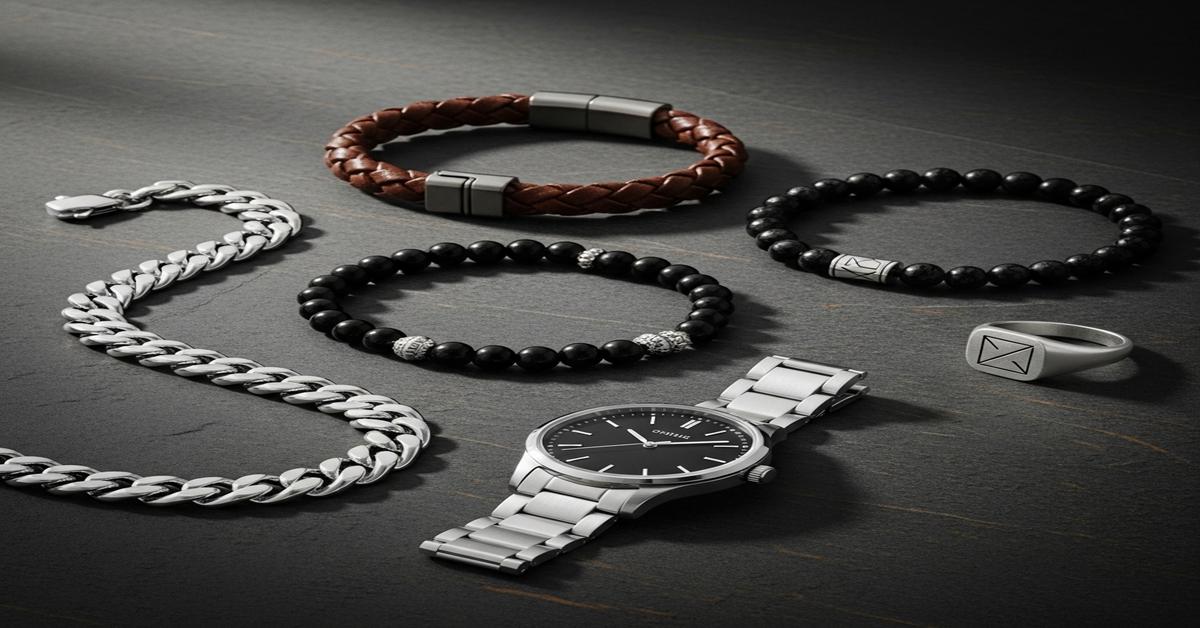
Jewelry for men has moved beyond novelty. It’s now a practical way to refine a look. The right piece adds balance to an outfit and signals attention to detail. In this guide you’ll find five classy, wearable options: bracelets, chains, rings, watches and cufflinks. For each I explain what to look for, why it matters, and how to match materials and sizes to your style.
Bracelets — metal, leather and beads
Bracelets are the easiest way to add texture at the wrist. Choose a single piece to start. Mixing multiple bracelets works later once you understand scale.
- Metal bracelets: Look for 316L stainless steel or solid gold (14k = 58.5% gold, 18k = 75% gold). Thickness of 3–6 mm is versatile; 6–10 mm reads bolder. Cuban curb and box chains are classic. Weight and clasp quality matter — a 3–4 mm sterling silver bracelet (.925 silver) with a lobster or box clasp will last.
- Leather: Go for full-grain leather, 6–10 mm wide. Leather bracelets with a stainless-steel clasp combine casual and durable. Avoid bonded or coated leather; it peels quickly.
- Beaded: Beads in 6–10 mm sizes suit most wrists. Choose natural stones like onyx, tiger’s eye, or matte lava. For a refined look, pick beads under 8 mm and pair with a thin metal bracelet.
Why it matters: bracelet width and weight control formality. Thinner, lighter pieces read dressy; thicker, heavier pieces read casual.
Chains and necklaces — length, thickness and link type
Neck chains define the neckline. Length and link style determine how a chain sits and what outfits it complements.
- Lengths: 18 inches sits near the collarbone on most men. 20–22 inches drops to the upper chest. 24 inches reaches the sternum. Pick a length that works with your shirt collar.
- Thickness: 1–2 mm is subtle. 3–5 mm is visible but refined. 6 mm+ becomes statement. Match thickness to your build — smaller chains for slim frames, heavier chains for broader frames.
- Link types: Curb and Figaro are classic and lie flat. Box chain offers a clean, geometric look. Rope chains catch light and feel dressier. Choose solid links over hollow if you want longevity.
- Materials: Solid 14k gold or 18k gold for long-term value. For daily wear, 316L stainless is scratch-resistant. Sterling silver (.925) is affordable but tarnishes; look for rhodium plating if you want a longer shine.
Why it matters: link type affects drape and durability. Hollow chains look good but snap easily. Solid, properly gauged chains last decades.
Rings — signet, wedding bands and stacking
Rings are personal. They can be symbolic (wedding band), family (signet), or style-driven (a bold band). Fit, width and metal choice matter most.
- Widths: 3–4 mm is understated. 5–7 mm is the modern standard. 8 mm+ reads bold. Ring width should scale with finger size — larger hands take wider bands comfortably.
- Signet rings: Typical signet face sizes run 10–14 mm across. Engraved or blank, they anchor a look. Solid gold or sterling with proper hallmarks is recommended for heirloom quality.
- Materials and finishes: 14k/18k gold for classic pieces. Platinum for durability and hypoallergenic wear. Tungsten carbide and titanium offer scratch resistance but can’t be resized easily. Matte and brushed finishes hide small scratches better than high polish.
- Gemstones: Small diamonds (0.01–0.25 ct) or single cabochons add subtle interest. Avoid large, flashy stones unless you want a statement piece.
Why it matters: ring comfort and proportion influence how often you wear it. A poorly sized or overly wide ring ends up in a drawer.
Watches — jewelry that tells time
A watch is the most functional piece of jewelry a man wears. Beyond movement and brand, treat a watch like a jewelry anchor: it sets the tone for the rest of your accessories.
- Case size: 36–40 mm is versatile. 40–44 mm suits larger wrists. Thickness under 12 mm fits under dress cuffs.
- Materials: Stainless steel bracelets are durable; 316L or 904L steel is common. Leather straps (20 mm lug width common) can be swapped to dress up or down. Gold watches should be solid gold or gold-capped rather than plated for longevity.
- Style cues: A simple three-hand watch with a clean dial reads timeless. Chronographs and dive bezels are sportier. Match watch formality to your wardrobe — dress watches with minimal complications for suits, sport watches for casual wear.
- Care: Mechanical watches need service every 4–6 years. Quartz watches need battery changes but less servicing.
Why it matters: a watch anchors wristwear choices. Pair a dress watch with a slim metal bracelet or leather band to avoid crowding the wrist.
Cufflinks — small but precise
Cufflinks are the finishing touch for dress shirts. They’re also a subtle way to show personality without being loud.
- Mechanics: Bullet back and whale back are most common and easy to use. Fixed-back cufflinks are simpler but less forgiving on cuff holes.
- Materials and sizes: Solid sterling (.925) or gold-filled options balance cost and appearance. Face sizes typically run 12–20 mm. Smaller faces read conservative; larger faces make a statement.
- Design choices: Mother-of-pearl, enamel, and subtle stone inlays (onyx, lapis) add texture. Avoid logos or novelty motifs unless for a themed event.
- Why it matters: cufflinks show attention to tailoring. They should harmonize with your watch metal and belt buckle for coherence.
Final practical checklist:
- Start with one anchor piece (watch or chain). Add one accent (bracelet or ring).
- Match metals where possible — mixed metals can work if done deliberately (e.g., warm gold with leather and black onyx).
- Pay attention to scale: thin chains with thin bracelets; wider rings with wider watch cases.
- Buy solid materials for pieces you plan to wear daily: 14k gold, 316L stainless, .925 sterling with good plating, or solid platinum.
- Care: clean silver with a soft cloth, avoid chlorine on gold, and service mechanical watches regularly.
Choose pieces that fit your life, not just a trend. The best jewelry complements your clothes and routine. Start simple, invest in one quality item, and expand with pieces that support your personal style.

I am Satyam Pandey, a gemologist with a Diploma in Polished Diamond Grading from KGK Academy, Jaipur. I love writing about jewelry, gems, and diamonds, and I share simple, honest reviews and easy buying tips on JewellersReviews.com to help you choose pieces you’ll love with confidence.