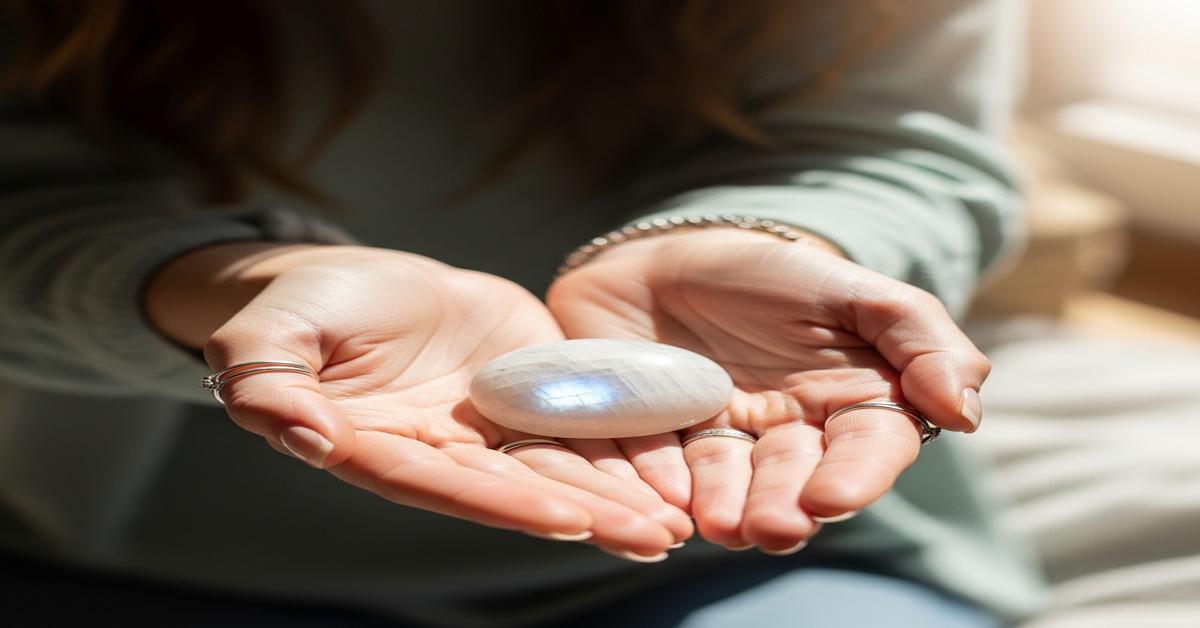
Moonstone is a soft, luminous gem known for its blue-white glow. Many women choose it for emotional balance, calm, and intuition. This article explains what moonstone really is, why it feels calming, how to wear and care for it, and practical ways to use it in daily life. I focus on facts you can act on, and the simple reasons behind each claim.
What moonstone is — physical and gemological facts
Moonstone is a member of the feldspar group. Its defining effect is adularescence — a shimmery, floating light that moves under the surface. This happens because of thin, alternating layers of feldspar crystals that scatter light. Typical properties:
- Hardness: Mohs 6–6.5. It scratches more easily than quartz or sapphire, so it needs careful settings.
- Density: ~2.56–2.62 g/cm³. That affects carat weight for a given size.
- Common cuts: Cabochon (high dome) to maximize adularescence. Faceting is rare because it reduces the effect.
- Sources: Sri Lanka (noted for blue adularescence), India, Madagascar, Myanmar.
Why moonstone feels calming and boosts intuition
There are three practical reasons people report emotional benefits:
- Focused attention: The gem’s glow draws the eye and the mind. When you look at or hold a moonstone, you pause. That pause reduces reactivity and creates space for reflection.
- Ritual and meaning: Wearing or using an object with personal meaning creates a consistent cue. Over time, that cue can trigger calm responses automatically, similar to how a breathing routine helps manage stress.
- Contextual symbolism: Moon imagery links to cycles and inner life. For many women, that symbolism aligns with real, lived rhythms like menstrual cycles, sleep patterns, or empathy. The alignment strengthens intention and self-awareness, which supports emotional balance.
These effects are not magical. They are psychological and behavioral. That does not make them less useful. If a stone helps you pause, reflect, or breathe, it is serving a practical function for mental health.
How to choose moonstone for emotional balance
Pick stones and settings that suit daily use and the way you’ll interact with them.
- Adularescence quality: Look for a clear, movable blue or white sheen. A strong, centered flash is better than a busy surface full of inclusions.
- Cut and size: Cabochons with a high dome show the effect best. For rings, a 10×8 mm oval cab is common and comfortable. That size is often 3–6 carats depending on thickness.
- Metal choice: Sterling silver (92.5% Ag) or 14k–18k gold work well. Silver highlights cooler blue sheens; 14k gold (58.3% Au) and 18k gold (75% Au) add warmth. For everyday wear, a bezel setting protects the stone better than prongs because moonstone chips easily along cleavage planes.
- Durability: Avoid thin, delicate prong settings for rings you will wear daily. Choose a bezel or halo that reduces impact to the stone edges.
Practical ways to wear and use moonstone
How you use the stone determines its practical benefit. Here are realistic, repeatable methods:
- Ring for touchpoints: A moonstone ring on the non-dominant hand gives an easy touchpoint. Touching it during stress can cue grounding. The non-dominant hand is less active and more symbolic of receiving rather than doing.
- Pendant for heart connection: A moonstone set as a 12–15 mm round or oval pendant rests near the chest. The movement and warmth from the body can make the stone feel more present during meditation.
- Touchstone or pocket stone: A smooth 20–30 mm cabochon or pebble is useful for breathing exercises. Hold it during a 4-4-6 breath cycle: inhale 4 seconds, hold 4, exhale 6. Repeat 5 times to lower heart rate and re-center.
- Bedtime ritual: Place a small moonstone under a pillow or next to the bed. Use it as a cue to journal for five minutes about one emotion you felt that day. Writing clarifies feelings and improves sleep quality.
Combining moonstone with other techniques
Moonstone works best as part of a practical routine. It should not replace therapy, medication, or medical advice. Use it to amplify strategies that already work:
- Therapy: Bring the stone to sessions as a grounding tool. Touching it can slow rapid speech and promote reflection.
- Mindfulness: Pair the stone with a 5-minute body-scan or breathwork. The stone provides a tactile anchor for attention.
- Tracking cycles: If you track mood or menstrual cycles, wearing moonstone can become a consistent reminder to log or reflect.
Care and cleaning — what to avoid
Moonstone is soft and has perfect cleavage. That makes care important.
- Cleaning: Use warm water, mild soap, and a soft brush or cloth. Rinse and dry thoroughly. Do not use ultrasonic or steam cleaners; sudden vibrations or heat can cause fractures.
- Salt water and chemicals: Avoid prolonged exposure to salt water, bleach, or harsh chemicals. These can damage the gem surface or the metal setting.
- Storage: Store moonstone separately in a soft pouch or lined box. It scratches more easily than harder gems. Keep it away from heavy or sharp jewelry.
- Setting care: Prefer bezels for rings. If you choose prongs, check them monthly to ensure they haven’t loosened. Moonstone can chip if struck on the table edge.
Realistic expectations and closing advice
Moonstone supports calm and intuition by offering a tactile, visual, and symbolic anchor. It helps because it forms part of repeatable rituals and focused attention. It does not heal trauma by itself. Use it alongside professional care and practical stress-management techniques.
If you want a starter piece, choose a 10×8 mm high-dome cabochon set in a sterling silver bezel for daily wear. If you prefer something more durable and warm-toned, pick a 10–12 mm cab in 14k rose or yellow gold with a protective bezel. These choices balance beauty, safety, and daily practicality.

I am G S Sachin, a gemologist with a Diploma in Polished Diamond Grading from KGK Academy, Jaipur. I love writing about jewelry, gems, and diamonds, and I share simple, honest reviews and easy buying tips on JewellersReviews.com to help you choose pieces you’ll love with confidence.