
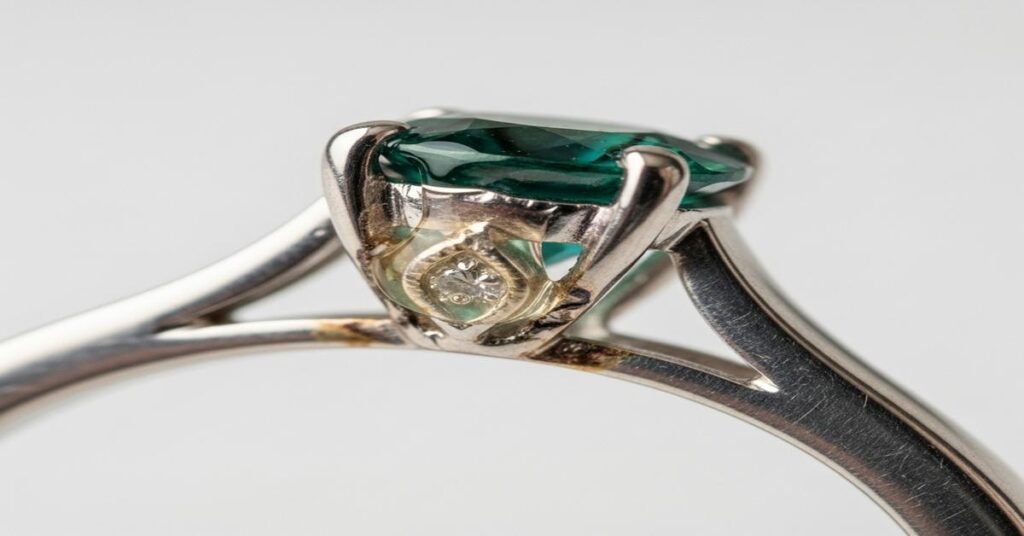
Intro: Superglue is cheap, fast and seems like a good fix when a prong breaks or a shank cracks. That is exactly why it causes so much trouble. What looks like a quick rescue often ruins the ring, hides structural problems, and makes professional repair harder and more expensive. Below I explain the chemistry, the common damage paths, and safe alternatives so you can make the right call next time.
Why superglue (cyanoacrylate) is a bad idea for rings — the technical reasons
Chemistry and heat: Superglue is a cyanoacrylate adhesive. It polymerizes quickly when exposed to trace moisture and releases heat during curing. That exotherm can reach roughly 80–120°C in a thick blob. Many gemstones and organic materials (opal, emerald, amber, pearl, turquoise, coral) can crack or craze with that sudden heat. For example, an opal with internal water content is especially vulnerable; a 1–2 mm thick glue lump can produce enough heat to shock it.
Bonding and blockage of soldering/laser welding: Jewelry repair often requires clean metal for capillary soldering or laser welding. Even a thin layer of cyanoacrylate prevents solder from wetting the metal and blocks laser energy. A 0.1–0.2 mm film is enough to stop a proper solder fillet. That means what began as a glued quick-fix usually needs the glue removed before any correct repair — adding time and cost.
Chemical residues and contamination: Cyanoacrylate leaves hard, sometimes yellowish residues that are chemically different from the alloy. These residues don’t always dissolve with acetone and can char when heated, leaving carbon deposits on solder joints. Flux won’t flow properly over contaminated surfaces, and the resulting joint can be weak or brittle.
Damage to finishes and plating: Many rings are rhodium plated (white gold) or have patina. Acetone or mechanical removal needed to get glue off will strip plating or dull polished surfaces. Replating is the only fix after aggressive glue removal. So a “free” fix by superglue often turns into replating and re-polishing costs.
Interaction with stones and settings: Cyanoacrylate will wick under unset stones and into prong junctions. Once under a stone, it blocks inspection for fractures and internal damage. It also changes how vibration and stress transfer through the setting, increasing the chance a partially cracked stone (like an emerald) will break later. For small melee diamonds, glue can hide loss points and ruin future cleanings or stone swaps.
Porous and soft materials: Pearls, coral, turquoise and some treated stones are porous or organic. Cyanoacrylate soaks in, changes surface luster, and cannot be safely removed without sanding off surface layers or permanently dulling the gem. For a 7–8 mm cultured pearl, even a small glue smear can destroy the nacre luster beyond economical recovery.
Risk of accelerated damage from “home fixes”: People often try to speed cure or remove glue with heat, baking soda, or solvents. Baking soda with cyanoacrylate causes a fast, exothermic reaction that can foam and heat further, often burning metal and stone edges. Acetone works on fresh cyanoacrylate but will swell or dissolve resin-based gems (like composite opals or triplet opals), and prolonged soaking will damage some treatments.
Health and safety: Cyanoacrylate fumes irritate eyes and lungs. Skin bonding is common — if a finger gets glued to a ring, careless attempts to force it off can tear skin. These risks matter anywhere: labelling, ventilation and first aid are constant needs whether you’re in New York or Nairobi.
Practical consequences for repair and resale
- Higher repair cost: Jewelers must remove the glue before soldering or welding. That takes time (micro-sanding, solvents, ultrasonic cleaning) and may require removing or replacing stones, replating and re-polishing.
- Hidden structural issues: Glue hides broken prongs, stress fractures in the shank, and worn seats. Fixing the visible problem without a full inspection risks repeat failures and lost stones.
- Lower resale or insurance value: A ring with glued repairs is documented as amateur work and reduces value. Insurers or buyers prefer a documented professional repair.
If you’ve already used superglue — what to do next
- Stop trying to heat or accelerate curing. Heat risks stone fracture and worsens adhesive char.
- Do not solder, laser weld or force the ring open. Tell a jeweler what you applied; that helps them plan removal safely.
- If the glue is on non-porous metal and fresh, a brief acetone swab on a hidden area can soften it. But don’t soak a ring with pearls, opals or resin gems in acetone — that can destroy them.
- Bring the ring to a reputable jeweler or lapidary. Professionals remove glue mechanically with scalpels, fiberglass brushes, or controlled solvents, then reflow solder or laser-weld after cleaning. Replating and repolishing may be required.
Safer temporary measures
- If a stone is loose and you can’t reach a jeweler immediately, use low-tack microspore tape or a small square of wax to hold it gently in place. Tape is reversible and won’t damage most metals or stones.
- If a prong is cracked but still holds the gem, store the ring in a safe container and avoid wearing it. Do not attempt gluing — the temporary hold is misleading and probably harmful.
- For emergency removal of a stuck ring from a swollen finger, see medical guidance; do not use glue-removing chemicals on skin.
Bottom line
Superglue is the worst ring rescue because it creates chemical and mechanical problems that professional repair must undo. It can crack sensitive gems through heat, block proper soldering, ruin finishes and hide structural damage. The fix rarely saves money or time. If you need a quick, reversible hold, use tape or wax and see a jeweler as soon as possible. If the glue is already applied, tell the jeweler exactly what product was used — that knowledge changes the safest removal method.

I am G S Sachin, a gemologist with a Diploma in Polished Diamond Grading from KGK Academy, Jaipur. I love writing about jewelry, gems, and diamonds, and I share simple, honest reviews and easy buying tips on JewellersReviews.com to help you choose pieces you’ll love with confidence.