
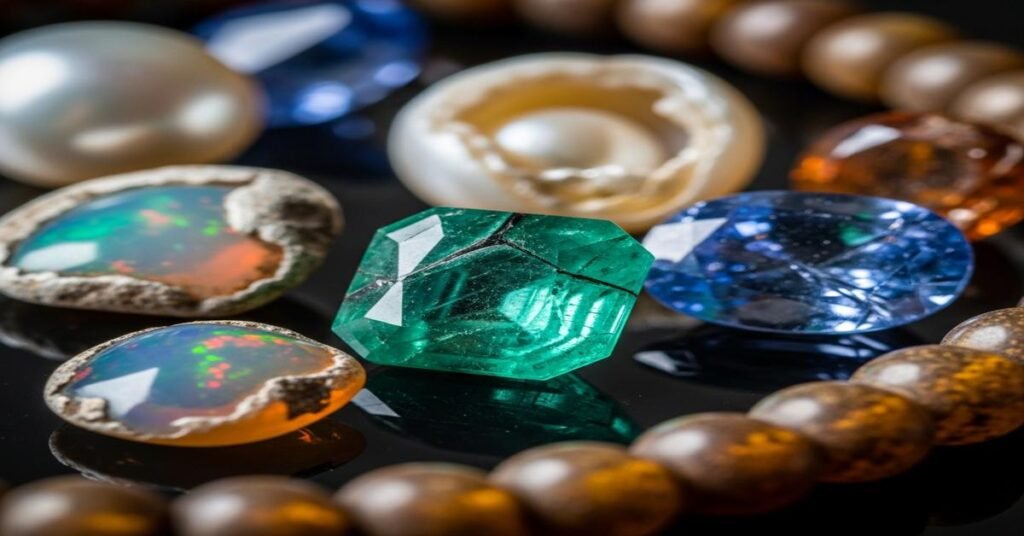
Ultrasonic cleaners look simple: drop in your jewelry, push a button, and the gunk vanishes. But that fast, invisible action can crack stones, loosen settings, and strip treatments. Jewelers use ultrasonics daily—and they also see the damage they cause. If you own gemstones, you need to know when to avoid them and what to do instead.
What an ultrasonic cleaner really does
Ultrasonic tanks send high-frequency sound waves through liquid. Those waves create and collapse tiny bubbles, a process called cavitation. When the bubbles implode, they fire micro-jets of liquid against the surface. Think of millions of microscopic hammers striking every second.
The agitation shakes dirt loose, even from tight crevices. Many units also warm the solution, which boosts cleaning power. That same force and heat amplify risk. Cavitation pushes into pores, fissures, adhesives, and under prongs. If your stone or setting is already vulnerable, the ultrasonic finds the weakness.
Why gemstones crack, cloud, or fall out
Gemstones are not all alike. Some are tough; others are brittle or porous. Many stones are treated with oils, resins, dyes, or glass to hide cracks or improve color. Ultrasonics can remove or shatter those additions. Rapid pressure changes also stress internal flaws. Heat softens glues and old solder joints. Vibration can back screws out of watch bracelets and loosen micro-prongs you can barely see. Damage often starts where you cannot see it: inside a fracture, behind a bead, or under a crown.
Never put these 5 types of jewelry in an ultrasonic machine
-
Emeralds and any fracture-filled, oiled, dyed, or coated gemstones
Why: Ultrasonic action drives liquid into fractures and forces fillers out. Heat and vibration can crack glass fillers or lift thin surface coatings. The stone may whiten, turn hazy, or show new lines that were hidden before.
- Examples: Emerald (almost always oiled or resin-treated), glass-filled ruby, fracture-filled diamond, coated topaz or quartz, dyed jade or onyx.
- What goes wrong: Oiling leaks, leaving chalky fissures. Glass filler breaks, creating pits and a frosted look. Coatings peel, showing uneven color.
-
Pearls and other organic gems
Why: Organics are layered and porous. They are sensitive to heat, chemicals, and vibration. Pearls are often glued onto posts or knotted on silk. Ultrasonics can delaminate nacre, loosen glue, and fray thread.
- Examples: Pearls (all types), coral, amber, ivory, shell, jet.
- What goes wrong: Luster dulls, spots appear, beads detach, strands weaken, and natural oils are stripped.
-
Opal, turquoise, lapis lazuli, malachite, and other soft or porous stones
Why: These materials absorb liquids and are easily scratched. Some are stabilized with resins or wax. Opal contains water and is prone to “crazing” when stressed or heated. Ultrasonic cleaning can force liquid in, lift treatments, or start cracking.
- Examples: Opal (solid or doublet/triplet), turquoise (especially stabilized or reconstituted), lapis, malachite, chrysocolla, howlite, rhodochrosite.
- What goes wrong: Color blotches, surface etching, lifted caps on doublets/triplets, new hairline cracks.
-
Tanzanite, topaz, kunzite, and other brittle gems with cleavage
Why: Some gems split cleanly along internal planes (cleavage). Cavitation hammers those planes. Even a small pre-existing feather can run. Heat swings add stress.
- Examples: Tanzanite, topaz, kunzite (spodumene), zircon, fluorite, andalusite.
- What goes wrong: Chips at facet edges, new fractures across the table, sudden breakage at the girdle.
-
Micro-pavé, invisible-set, tension-set, glued, plated, or antique pieces
Why: Tiny beads and prongs can loosen from vibration. Glue softens with heat. Plating at edges lifts. Old solder joints and enamel are fragile. Invisible settings rely on thin rails that can shift.
- Examples: Micro-pavé engagement rings, invisible-set princess bands, tension-set solitaires, costume jewelry with glued stones, rhodium- or gold-plated fashion pieces, enamel or antique items.
- What goes wrong: Stones fall out in the tank, plating peels at corners, enamel chips, repairs open up, glue-mounted stones detach.
How to spot risky pieces before you clean
- Assume treatment when common: Emeralds are usually oiled; many rubies on the market are glass-filled; black onyx is often dyed; turquoise is often stabilized.
- Look for clues: Rainbow flashes in cracks (glass filler), bubbles in fissures, color concentrated along edges, too-perfect clarity in an emerald, a glued pearl cap, or a layered opal doublet.
- Check the setting: Micro-pavé beads, tension or invisible settings, very thin prongs, or any stone that rattles when you tap it means “no.”
- Consider age and repairs: Vintage pieces, items with visible solder seams, or anything previously resized or rebuilt is high risk.
- Read the paperwork: Lab reports or appraisals note treatments. If you do not know, treat it as treated.
Safer ways to clean jewelry at home
- Most rings and metal settings: Mix warm water with a drop of mild dish soap. Soak 10–15 minutes. Brush gently with a soft toothbrush under the gallery and behind the stone. Rinse and pat dry with a lint-free cloth.
- Pearls and organics: Wipe with a barely damp soft cloth after wearing. Never soak. If grimy, very briefly wipe with diluted mild soap on a cloth, then plain water, then dry. Restring when the knots darken or stretch.
- Soft or porous stones (opal, turquoise, lapis, malachite): Quick dip in lukewarm soapy water, gentle wipe only. Keep water out of layers on doublets/triplets. Dry right away.
- Silver with tarnish: Use a silver polishing cloth on the metal only. Keep compounds off porous stones and pearls.
- Gold chains and solid metal pieces: Soak in warm soapy water, agitate gently by hand, then brush and rinse.
When an ultrasonic is appropriate
Ultrasonic cleaning can be safe for tough materials in secure settings, but only when you confirm there are no hidden risks.
- Usually safe: Plain gold or platinum jewelry; loose metal parts; diamond, ruby, or sapphire that are untreated (or only heat-treated), eye-clean, and firmly set.
- Use this checklist: No fractures reaching the surface; no filler, dye, or coating; no delicate setting; no loose stones; no organics nearby; no enamel; no plating you care about keeping perfect; no old or thin solder seams.
- Still uncertain? Do not use the ultrasonic. The cost of one mistake can exceed any cleaning benefit.
If you still choose to use an ultrasonic
- Use the gentlest setup: Room-temperature distilled water with a tiny drop of mild, non-ammonia dish soap. Avoid strong chemicals and ammonia on copper alloys and porous stones.
- Short cycles: 30–60 seconds, then check. Long runs increase heat and risk.
- Basket only: Suspend items in the basket. Do not let jewelry touch the tank bottom.
- One piece at a time: Prevent pieces from knocking each other and chipping.
- Lid on, heat off: Keep temperature stable. Heat accelerates damage to treatments and glue.
- Inspect before and after: Check prongs with a toothpick. If anything seems loose or you see new haze, stop.
Common myths that cause damage
- “Hardness means safety.” Hardness resists scratching, not breaking. Diamonds can be hard and still chip or suffer if fracture-filled.
- “It survived last time, so it’s fine.” Each cycle can widen a micro-crack or loosen a bead. Failure often happens suddenly on the next run.
- “If the jeweler uses one, it must be safe at home.” Professionals screen stones, know treatments, and control power, heat, and time. They accept risk only when appropriate.
Bottom line
Ultrasonic cleaners are powerful, but they are not gentle. They can eject filler, lift coatings, crack brittle stones, shake loose tiny prongs, and dissolve glue. Never put the five categories above in the tank. When in doubt, clean by hand or ask a pro. A careful, mild approach keeps your jewelry bright—and your gemstones intact.

I am Satyam Pandey, a gemologist with a Diploma in Polished Diamond Grading from KGK Academy, Jaipur. I love writing about jewelry, gems, and diamonds, and I share simple, honest reviews and easy buying tips on JewellersReviews.com to help you choose pieces you’ll love with confidence.