
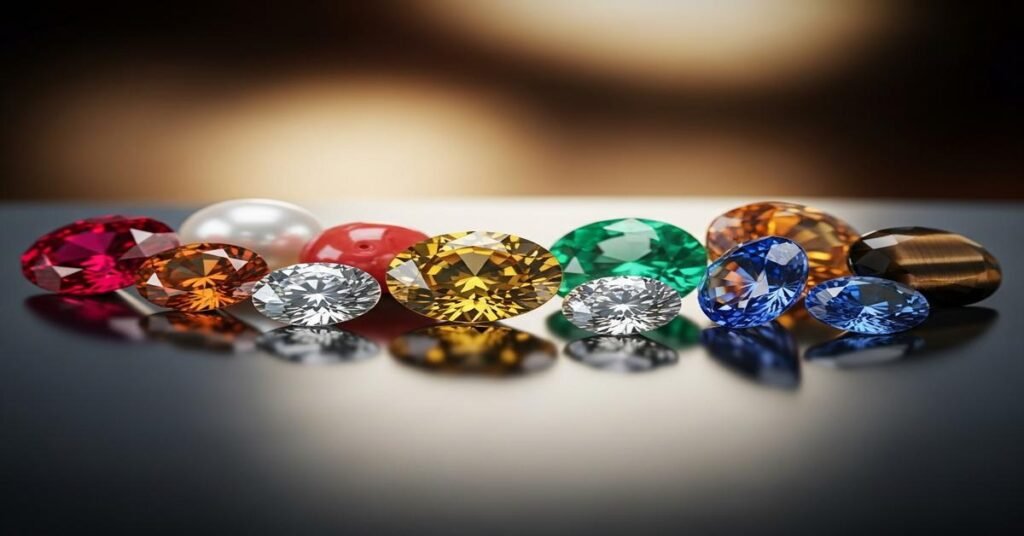
Gemstones have been linked to planets in Vedic astrology for centuries. Each planet is paired with a primary gem because of color, optical properties and longstanding cultural association. As a jeweler I focus on the practical side: mineral type, durability, how to set the stone, minimum sizes, treatments to watch for, and how to care for the gem. Below you’ll find the primary gem for each planet from the Sun to Ketu, why it’s used, and clear buying and care guidance.
Sun — Ruby (Manik)
Why: The Sun is represented by bright red. Ruby is red corundum (Al2O3 with chromium). Chromium gives the red color and strong fluorescence that reads as “solar” energy.
- Quality: Pure pigeon‑blood to deep pigeon‑blood reds are prized. Look for strong, even red; light or brownish red is weaker.
- Size: Aim for 3–8 ct for a ring (≈7–10 mm cabochon or brilliant). Smaller stones are fine in pendants.
- Setting metal: Traditional: high‑karat yellow gold (18k–22k). Gold conducts heat and resists corrosion.
- Durability: Mohs 9. Very wearable. Avoid stones with lead‑glass filling (can be damaged by heat/acid).
- Certification & tests: Ask for a lab report specifying whether it’s natural, heat‑treated only, or glass filled.
- Care: Warm soapy water and soft brush. Ultrasonic usually safe for unfilled rubies; not safe for glass‑filled stones.
Moon — Pearl (Moti)
Why: Moon is linked to white, lustrous light. Natural or cultured pearls reflect that luminance.
- Type: Saltwater Akoya, South Sea (larger, cream to white) or high‑quality freshwater. Natural pearls are rare.
- Size: For a ring, 7–12 mm is typical. For a pendant, 9–14 mm for stronger presence.
- Setting metal: Silver, white gold or platinum. Silver is traditional; platinum is durable and non‑reactive.
- Durability: Mohs 2.5–4 (soft). Pearls are organic and sensitive to acids, perfume and heat.
- Care: Wipe with soft cloth after wear. Avoid ultrasonic, steam cleaning and chemicals. Re‑string cultured pearl necklaces periodically.
Mars — Red Coral (Moonga)
Why: Mars is red and active. Red coral (a calcified organic material) gives a vivid red/orange color.
- Quality: Even, deep red to deep pinkish red with minimal pits.
- Size: 5–10 mm cabochons or 2–6 ct equivalents for rings.
- Setting metal: Gold or copper alloys work well—these warm metals are traditional.
- Durability: Mohs ~3.5–4. Soft — avoid abrasives and heat.
- Care: Gentle cleaning with warm water; avoid acids and perfumes. Store padded and separate from harder gems.
Mercury — Emerald (Panna)
Why: Mercury corresponds to green and intellect. Emerald is green beryl (Be3Al2Si6O18), rich in chromium/vanadium.
- Quality: Deep, slightly bluish green with good saturation and eye‑clean to lightly included stones. In emeralds, inclusions are common.
- Size: 1–5 ct for rings; larger stones often have more inclusions.
- Setting metal: Yellow gold (18k) is common; it complements green and gives warmth.
- Durability: Mohs 7.5–8 but often oiled to improve clarity—avoid harsh cleaning.
- Care: Do not use ultrasonic or steam on oiled emeralds. Clean with mild soap and a soft brush.
Jupiter — Yellow Sapphire (Pukhraj)
Why: Jupiter’s color is yellow. Yellow sapphire is corundum colored by iron and titanium, bright and durable.
- Quality: Pure, bright canary to golden yellow with good transparency.
- Size: 3–8 ct is common for rings to ensure visible color and contact with skin.
- Setting metal: Yellow gold (18k–22k) is traditional and complements yellow tones.
- Durability: Mohs 9, very wearable. Watch for heat treatment disclosure.
- Care: Soapy water and a soft brush. Ultrasonic safe if untreated or only heat treated.
Venus — Diamond (Heera)
Why: Venus represents luxury, beauty and brilliance. Diamond offers maximum brilliance and hardness.
- Quality: Colorless to near colorless (D–H) and VS–SI clarity typical choices. Cut quality matters more than carat for sparkle.
- Size: 0.5 ct or larger for a visible ring focal point; 1 ct+ gives stronger presence.
- Setting metal: Platinum or white gold highlights brilliance; yellow gold adds warmth.
- Durability: Mohs 10. Extremely durable and suitable for everyday wear.
- Care: Ultrasonic and steam are generally safe. Clean with mild detergent and soft brush.
Saturn — Blue Sapphire (Neelam)
Why: Saturn is associated with deep blue and seriousness. Blue sapphire is corundum colored by iron/titanium with intense blue hues.
- Quality: Even, deep velvety blue with good saturation and strong clarity.
- Size: 1–5 ct for rings. Saturn stones are often smaller but must show strong color.
- Setting metal: Silver, platinum or iron‑tone metals are traditionally associated with Saturn’s austerity.
- Durability: Mohs 9. Very durable. Natural, unheated stones are rare and preferable.
- Care: Soapy water and soft brush. Avoid fracture after hard knocks despite high hardness.
Rahu — Hessonite (Gomed)
Why: Rahu is linked to smoky, reddish‑brown shades. Hessonite is a grossular garnet (Ca3Al2(SiO4)3) with deep honey to brown‑orange color.
- Quality: Transparent to semi‑transparent with spicy honey color. Avoid glassy imitations.
- Size: 3–8 ct for ring presence; cabochons are common.
- Setting metal: Silver or gold according to preference; secure bezel settings recommended.
- Durability: Mohs ~6.5–7 — handle with moderate care.
- Care: Clean with mild soap. Avoid strong heat and chemicals.
Ketu — Cat’s Eye Chrysoberyl (Lehsunia)
Why: Ketu is associated with mysticism and the cat’s eye effect (chatoyancy). Chrysoberyl (BeAl2O4) produces a sharp, moving eye.
- Quality: Strong, centered eye that moves with light. Golden to greenish tones are desirable.
- Size: 2–8 ct cabochon to show a distinct cat’s eye line.
- Setting metal: Gold or silver—secure bezel to protect the domed cabochon.
- Durability: Mohs 8.5, quite durable and suitable for daily wear.
- Care: Mild soap and soft brush. Avoid ultrasonic if there are fractures or surface reaching inclusions.
Buying, Certification and Practical Tips
Certification: Always request a reputable lab report (GIA, IGI, SSEF, or national labs). Certificate should list origin, treatments (heat, oiling, filling), and whether the stone is natural or synthetic. Treatments change both value and how to care for the stone.
Minimum size rationale: Many traditions require the gem to touch the skin. I recommend ring stones with clear visible presence (see sizes above) so the stone sits properly and can be inspected for natural features and treatments.
Setting tips: Use bezel or secure prong settings for softer or cabochon stones (pearls, coral, cat’s eye). For hard gems (ruby, sapphire, diamond), prongs are fine but check regularly for wear.
Watch for synthetics and enhancements: Lab‑grown corundum and diamonds mimic natural gems. They have the same physical properties but different provenance. Some treatments (lead‑glass filled ruby, heavily oiled emerald) require special care and reduce durability. Ask for full disclosure.
Choosing a planetary gem is both a cultural and practical decision. Know the mineral, insist on documentation, pick a size that makes skin contact likely, and match the metal and setting to the gem’s hardness and care needs. That way you get beauty, durability and the best possible value for your purchase.

I am G S Sachin, a gemologist with a Diploma in Polished Diamond Grading from KGK Academy, Jaipur. I love writing about jewelry, gems, and diamonds, and I share simple, honest reviews and easy buying tips on JewellersReviews.com to help you choose pieces you’ll love with confidence.