
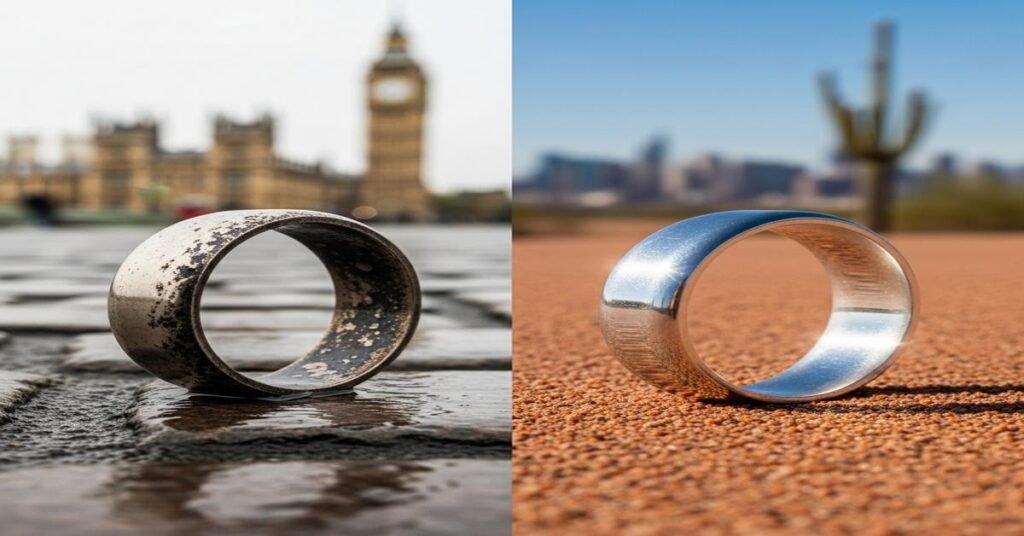
Intro: If your sterling silver turns black while you’re in London but stays bright in Phoenix, you’re not imagining things. Silver itself doesn’t “rust” like iron; it reacts with sulfur and certain corrosive agents in the air to form silver sulfide (Ag2S), a black layer we call tarnish. Differences in air chemistry, humidity, alloy makeup, and what you wear or store your jewelry with explain why the same piece behaves differently in two cities.
What sterling is and why it tarnishes: Standard sterling silver is 92.5% silver and 7.5% copper (marked “925”). The copper makes the alloy harder and more durable, but it also increases the metal’s tendency to react. Tarnish forms when silver and copper on the surface meet sulfur-containing gases or compounds and, in the presence of moisture, form metal sulfides (for silver, Ag2S). Moisture and ions act as a medium that speeds up the chemical reactions.
Key differences between London and Phoenix that matter:
- Humidity: London’s average relative humidity often runs 60–80%. Phoenix is much drier, frequently 10–30% humidity. Moist air acts like an electrolyte, helping sulfide ions move and react with metal. More moisture = faster tarnish.
- Sulfur-containing pollutants: Silver tarnish is driven by sulfur species such as hydrogen sulfide (H2S) and organic sulfur compounds. Urban areas with older infrastructure, sewage vents, restaurants, and some industrial emissions tend to have higher levels of airborne sulfur compounds. London’s dense urban environment and older utilities can lead to more localized sulfur fumes than desert Phoenix.
- Pollution mix: Phoenix has more photochemical smog (ozone, NOx) and dust. Ozone doesn’t create classic black silver sulfide the way sulfur does. So even if Phoenix air is “dirty,” it’s often less likely to create dark silver sulfide quickly.
- Indoor sources: Hotels, laundries, or rooms with wool carpets, rubber, cardboard, or certain toiletries can emit volatile sulfur compounds. Cooking (eggs, garlic), smoking, or even some scented products release sulfides. If you left rings on a bathroom sink or boxed them with wool in London, that could accelerate tarnishing there but not in a dry Phoenix house.
- Coastal chloride vs. desert dust: Sea salt (chlorides) accelerates some corrosive processes and can cause pitting. London is not as salty as a seaside town, but proximity to wet maritime air still matters. Phoenix’s alkaline dust can even deposit a protective film in some cases.
Why alloy and finish matter: Two sterling pieces can tarnish very differently. A plain 925 sterling ring with high exposed copper will blacken faster than the same design plated with rhodium or made from a tarnish-resistant alloy. Argentium sterling adds a small amount of germanium (typically around 1% or so) which forms a surface oxide that slows sulfide formation. Rhodium plating creates a thin, inert barrier. So if your piece is Argentium or rhodium-plated, it will resist blackening regardless of city.
Real-world example: You wear a 925 silver chain in London after a rainy day, leave it in the bathroom overnight, and it turns dark within 24–48 hours. The humidity creates moisture on the chain; sulfur-bearing vapors from plumbing or hotel cleaning products provide the reactive species; copper in the alloy forms sulfides quickly. In Phoenix, low humidity and a lack of sulfur vapors mean that same chain can stay bright for weeks.
How to test whether air chemistry is the culprit:
- Keep one identical piece in a sealed plastic bag with silica gel and an anti-tarnish strip while traveling. If the unsealed piece tarnishes in London but the bagged piece doesn’t, airborne agents are the problem.
- Note where you store jewelry: bathroom, suitcase, or next to wool clothing. Change locations and observe differences.
Practical prevention (what to do before and during travel):
- Store jewelry in airtight bags with silica gel and anti-tarnish (activated carbon or silver chloride) strips. This cuts off moisture and reactive gases.
- Choose tarnish-resistant options: Argentium sterling, rhodium plating, or gold vermeil over silver. These reduce or block sulfide formation.
- Remove jewelry before showering, swimming, or using heavily scented products. Chlorine and some cosmetics can change surface chemistry and speed reactions.
- Wipe jewelry with a soft lint-free cloth after wearing to remove sweat and oils. Human sweat is slightly acidic and contains salts that encourage reactions.
- Avoid storing silver with rubber, wool, or painted cardboard; they can emit sulfurous volatiles.
Safe cleaning methods and cautions:
- For light tarnish, use a quality silver polishing cloth. These are impregnated with cleaners and a small protective layer; they remove sulfide without heavy abrasion.
- For more stubborn blackening on plain silver, the aluminum foil + baking soda electrochemical bath works: line a glass bowl with aluminum foil, add very hot water and about 1 tablespoon baking soda per cup of water, immerse the silver so it touches foil. The reaction converts silver sulfide back to silver and forms aluminum sulfate. Rinse thoroughly and dry. Do not use this if your piece has porous or delicate gemstones (pearls, opals, turquoise) or on intentionally oxidized finishes.
- Avoid silver dips on mixed-metal or stone-set jewelry unless the product advises it. Dips can remove plating and damage soft stones or glue.
- If a piece is heavily corroded or has fine stones, take it to a jeweler for professional cleaning and possible replating.
Bottom line: Location matters because the atmosphere differs. London’s higher humidity and greater chance of sulfur-bearing vapors create the right conditions for sterling (925) to form silver and copper sulfides and turn black. Phoenix’s dry, largely sulfur-free air tends to slow or prevent that specific chemistry. You can prevent most problems by selecting tarnish-resistant alloys or finishes, storing jewelry in sealed, buffered conditions, and cleaning or wiping pieces after wear.

I am G S Sachin, a gemologist with a Diploma in Polished Diamond Grading from KGK Academy, Jaipur. I love writing about jewelry, gems, and diamonds, and I share simple, honest reviews and easy buying tips on JewellersReviews.com to help you choose pieces you’ll love with confidence.