
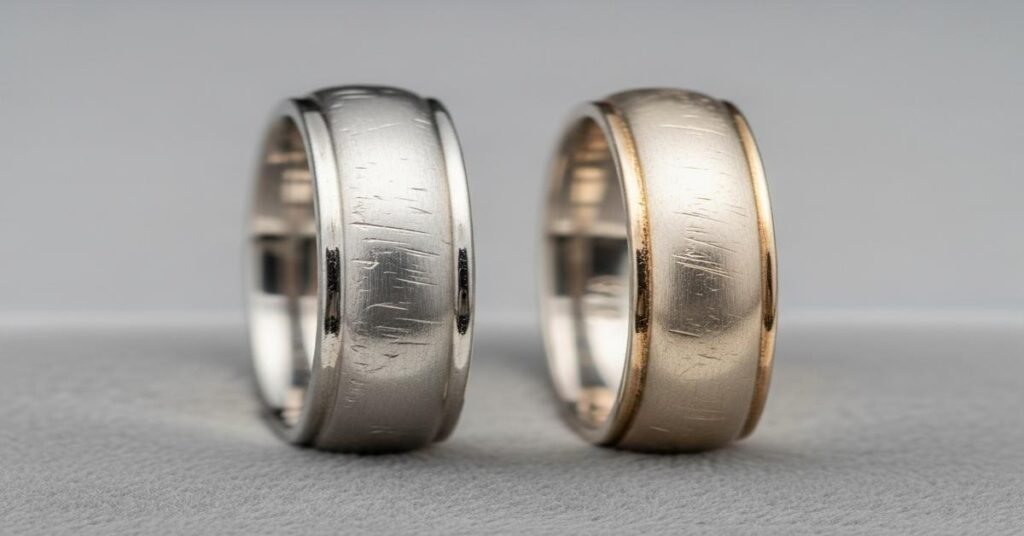
Platinum and white gold look similar in the case. On the hand, they behave very differently. If you’re choosing a metal for an engagement ring, wedding band, or everyday piece, you’ll hear strong opinions. Some say platinum is “better.” Others say it scratches too easily and costs too much. Here’s a clear look at what really matters: scratches, weight, maintenance, and long-term value—so you can pick the right metal for how you live and wear jewelry.
What Platinum and White Gold Really Are
Platinum jewelry is usually 950 platinum (95% platinum, 5% alloy like ruthenium or cobalt). It’s naturally white, dense, and very ductile. That ductility lets it bend and “cold-flow” under pressure rather than chip.
White gold is yellow gold alloyed with white metals. Common mixes are 14k (58.5% gold) or 18k (75% gold) with nickel or palladium plus other metals. Because gold is yellow, most white gold is rhodium plated to create a bright, icy-white surface. The plating is thin and wears off.
Why this matters: the alloy recipe changes hardness, color, maintenance needs, and how the metal wears over decades.
Scratches: Why Platinum Looks Scratched More but Loses Less Metal
Myth: “Platinum doesn’t scratch.” It does. The difference is how it scratches.
- White gold tends to scratch by abrasion—tiny bits of metal are removed. Over years, that loss can thin prongs and shanks.
- Platinum tends to scratch by displacement—metal shifts, creating a soft, gray patina. The surface can look scuffed sooner, but the metal mostly stays in the ring.
Why: Many white-gold alloys are harder than common platinum alloys, so they resist marks at first. But when they do mark, material is literally gone. Platinum is softer at the surface but tougher overall; it moves instead of breaking off. That’s why engravings and crisp milgrain often last longer in platinum—the details deform rather than erode away.
Practical takeaway: Expect more visible micro-scratches on platinum early on. Expect more gradual metal loss on white gold over the long run, especially at high-wear points like the bottom of a ring or prong tips.
Weight and Feel: How Much Heavier Is Platinum?
Platinum is dense. You feel it.
- Platinum is roughly a third heavier than 18k gold and about half again heavier than 14k gold for the same design.
- On a slim band, that’s a pleasant, “quality” heft. On a wide men’s band, it can be substantial.
Why weight matters: Some people love the reassuring feel. Others prefer something lighter for all-day wear, sports, or stacking. Try sample bands in your ring size to sense the difference before you decide.
Color and Maintenance: Rhodium Plating vs. Patina
White gold color: The base alloy is a warm gray-white. Jewelers plate it with rhodium to get a bright, mirror-white finish. That plating is thin—measured in microns—and wears off with handwashing, typing, and friction.
- Expect to re-plate every 12–24 months for a frequently worn ring. High-contact lifestyles may need it sooner.
- Without plating, 14k often looks slightly warmer than platinum. 18k can look a touch warmer still because of the higher gold content.
Platinum color: Naturally white with no plating needed. Over time, it develops a soft, gray patina. Some love the vintage glow; others prefer a high polish. A jeweler can re-polish platinum to a mirror finish when you want, but you don’t have to for color reasons.
Why this matters: If you want a bright, “chrome” white all the time with minimal upkeep, platinum makes that easier. If you don’t mind periodic rhodium appointments—or if your jeweler includes them—white gold can look just as bright in between touch-ups.
Durability and Stone Security
Prongs and pavé: Platinum’s toughness helps prongs hold their shape under knocks. Instead of snapping, a platinum prong may bend and still keep a stone captured. White gold prongs are often harder and feel “crisper,” but they wear down by abrasion and may need re-tipping sooner, especially on everyday rings.
Shank wear: The bottom of a ring rubs against desks, dumbbells, and steering wheels. White gold slowly loses metal there; platinum compresses. Over decades, a platinum shank often retains more mass and details.
Chemicals: Chlorine and harsh cleaners can weaken gold alloys over time. Platinum is more chemically inert. If you swim in pools or use bleach-based cleaners, platinum gives you a safety margin—but you should remove fine jewelry for those activities either way.
Costs Today vs. Over Time
Upfront price: Platinum costs more per gram and you need more grams for the same ring. Skilled labor for platinum is also pricier. Depending on design, platinum can run 30–100% more than 14k white gold.
Maintenance costs (typical ranges; local markets vary):
- Rhodium plating (white gold): often $40–$120 per visit.
- Polish/refinish: gold $50–$150; platinum $80–$200.
- Prong re-tipping (per prong): gold $25–$60; platinum $40–$90.
Because platinum needs no plating and prongs often wear slower, its maintenance can be less frequent but more expensive per visit. White gold may cost less per job but need more visits. The totals can end up closer than expected.
A simple 10-year example: For a daily-wear engagement ring:
- White gold: rhodium every 18 months (7 visits at $80 = $560) + one polish ($80) + light prong work ($150) ≈ $790.
- Platinum: two polishes over 10 years (2 × $140 = $280) + possible prong tune-up ($220) ≈ $500.
Depending on your jeweler’s warranty and your wear patterns, either metal could cost more or less. The point: platinum’s higher purchase price can be partly offset by lower routine upkeep.
Allergies and Skin Sensitivity
Nickel in many white-gold alloys can cause irritation. If you react to costume jewelry or earring posts, you might react to nickel white gold once the rhodium wears. Platinum (950) is naturally hypoallergenic. If you want gold without nickel, look for palladium white gold or “nickel-free” white gold; it’s not stocked everywhere and can be pricier.
Resale and Long-Term Value Beyond Cost
Retail jewelry rarely sells back for near what you paid. You generally recover only the scrap value of the metal plus whatever your stone can fetch. Platinum scrap is valuable, but so is gold scrap. The difference in resale is smaller than people think.
Real long-term value comes from:
- How well the ring ages: Will details hold? Will prongs stay robust?
- How much upkeep you need: Plating vs. polishing.
- How you wear it: Daily wear, sports, manual work, and chemical exposure all matter.
- Brand and craftsmanship: High-end makers may retain value better regardless of metal.
When Platinum Makes Sense vs. When White Gold Is Smarter
- Choose platinum if:
- You want a naturally white metal with no plating.
- You’re sensitive to nickel.
- Your ring has fine pavé or delicate prongs you’ll wear daily.
- You like the heft and don’t mind a gentle patina between polishes.
- You want crisp engravings and milgrain to last as long as possible.
- Choose white gold if:
- You prefer a lighter ring and a lower upfront price.
- You’re fine with periodic rhodium plating for that bright, mirror-white look.
- You want very sharp, hard-feeling prongs and edges at a lower cost.
- You’re selecting a thicker, sturdier design where long-term thinning is less of a concern.
Practical Buying Tips
- Ask about the alloy. For platinum, 950 with ruthenium tends to polish well and wear nicely. For white gold, ask if it’s nickel or palladium based. If you’re nickel-sensitive, request nickel-free.
- Try the weight. Put on the same ring style in platinum and white gold. Wear them for a few minutes to feel the difference.
- Decide on finish. High polish shows scratches sooner. Brushed or hammered finishes disguise daily wear on both metals.
- Plan the maintenance. What does the store include—polishing, rhodium, inspections? How often? Good care plans can outweigh metal differences.
- Consider your activities. If you lift weights, garden, or swim often, think about a lower-profile setting and the chemical resistance of platinum.
- Check repair capability. Not every shop is set up for platinum’s higher melting point. Make sure your jeweler can service what they sell.
- Think long-term thickness. Slightly thicker shanks and well-built prongs age better, especially in white gold.
The Bottom Line
Platinum is not “better” in every way, but it is better for certain needs. It’s heavier, naturally white, tough around stones, and ages with a soft patina instead of thinning fast. White gold is lighter, costs less up front, and—when rhodium plated—looks brilliantly white, but it needs periodic re-plating and can lose metal at wear points.
If you want a no-plating, hypoallergenic, heirloom-grade metal and you like some weight, choose platinum. If you prefer a lighter feel, a lower price, and don’t mind maintenance visits, white gold is a smart, durable choice. Pick based on how you wear your jewelry—not the myths in the display case.

I am Satyam Pandey, a gemologist with a Diploma in Polished Diamond Grading from KGK Academy, Jaipur. I love writing about jewelry, gems, and diamonds, and I share simple, honest reviews and easy buying tips on JewellersReviews.com to help you choose pieces you’ll love with confidence.