
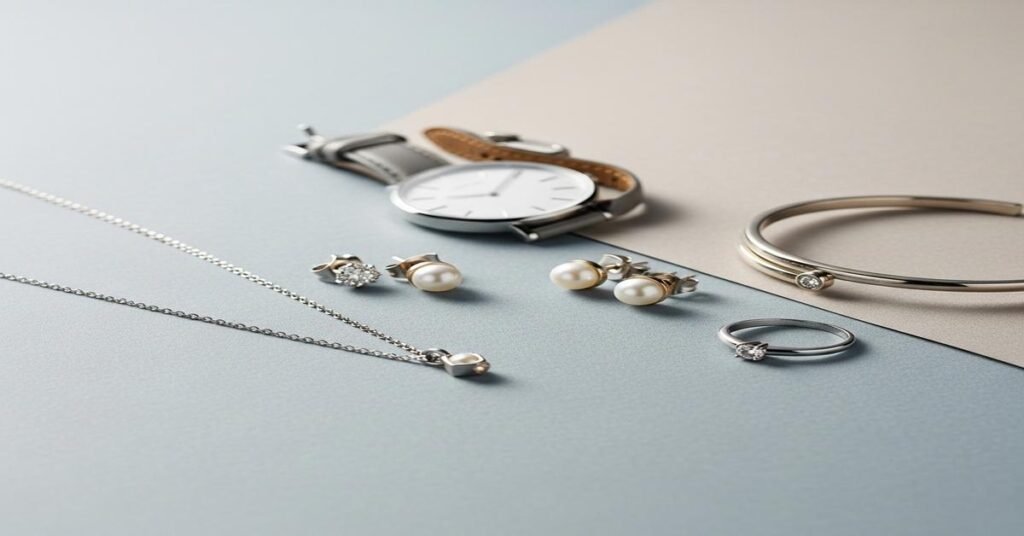
Office jewelry should do two jobs: look polished and stay out of the way. The right pieces add refinement without distracting coworkers or clients. Below are five specific, practical jewelry items that elevate work attire. For each piece I explain the why, give exact size and metal guidance, and show how to pair them so your look stays professional.
1. Classic stud earrings — 3–6 mm diamonds or pearls
Studs sit close to the ear and don’t move or jingle. That makes them ideal for meetings, phone calls, and commuting. Choose a size that balances presence and subtlety: 3–4 mm for a very low profile, 5–6 mm if you want more impact without drawing attention.
Metal and setting: 14k white or yellow gold is a good all-round choice because 14k balances durability and color. For white metal look, prefer rhodium-plated 14k white gold or platinum to avoid yellowing. If budget matters, sterling silver (925) works but will need occasional polishing.
Gemstone guidance: Small round diamonds up to 0.25 ct each (roughly 4 mm) read as professional and sparkle without shouting. Cultured pearls 6 mm work well if you prefer a softer, classic look. Avoid large colored gems that catch too much attention or appear overly decorative.
2. Sleek chain necklace — 16–18 inches, thin profile
A short, simple chain sits at the collarbone and complements necklines without interfering with lanyards or scarves. Aim for a fine chain 0.8–1.4 mm thick. This size is visible but not fragile on its own.
Length and pendant: 16–18″ is the safest range for most blouses and shirts. If you want a pendant, choose a small, flat pendant about 6–12 mm wide so it lays still. Avoid long pendants that swing when you move.
Metal and build: Choose 14k gold, platinum, or 316L stainless steel for daily wear. If you like the look of gold but are on a budget, gold vermeil (minimum 2.5 microns gold over sterling silver) offers better durability than thin plated styles. A cable or box chain offers strength without bulk.
3. Small hoops or huggies — 10–18 mm outer diameter
Hoops can be modern and neat when kept small. Huggies — hoops that sit close to the lobe — are especially office-appropriate because they don’t catch on clothing and create little sound.
Size and profile: 10–14 mm outer diameter is a true huggie. 15–18 mm is a small hoop that still looks composed. Choose a tube or flat profile rather than heavy, dangling designs.
Closure and comfort: Hinged or saddle closures keep the hoop secure and reduce the chance of loss. If you type a lot, flatter hoops lie against the ear and reduce friction against a headset or collar.
4. Minimal wristwatch — 28–36 mm case for women, 34–40 mm for men depending on style
A watch is jewelry and a tool. A slim, quiet watch signals preparedness without being flashy. Look for a case thickness under 9 mm; that slides under cuffed sleeves and reduces noise.
Size and design: For a delicate look, 28–32 mm cases suit slimmer wrists. For a unisex or modern look, 34–36 mm is still professional. Choose a plain dial (no loud colors), minimal markers, and no oversized chronograph buttons.
Bracelet options: Metal bracelets in 316L stainless steel or 14k gold are durable. Leather straps in black, brown, or navy read executive and are quiet. Avoid sporty rubber straps unless your workplace is casual.
5. Thin stackable ring or single band — 1.5–3 mm width
Rings are noticed in handshakes and typing. Thin bands stay visible but won’t hinder work. A 1.5–3 mm width fits most fingers without catching or feeling bulky.
Shapes and comfort: Choose slightly rounded bands (comfort-fit) to avoid pressure points when you grip objects. Flat bands show scratches more quickly; a satin or brushed finish hides wear better.
Metals and stacking: 14k gold (yellow, white, or rose) is durable for daily rings. Platinum is tougher and hypoallergenic but heavier and pricier. If you stack, limit to two to three thin bands so your hands still read professional. Avoid large solitaire stones on the dominant hand; they can snag and distract.
Practical tips: metals, durability, and workplace matching
Avoid thin plated fashion pieces: Cheap plating often wears off in 6–12 months. For regular office wear, choose 14k or 18k gold with solid metal, sterling silver (if you’re comfortable polishing), or stainless steel. If you like plated looks, choose gold vermeil with at least 2.5 microns of gold.
Hypoallergenic choices: If your skin reacts, pick platinum, titanium, niobium, or 316L stainless steel. Note that nickel-containing alloys can cause irritation; ask for nickel content under 0.05% if you’re sensitive.
Gemstone care and safety: Hard stones like diamonds, sapphires and rubies resist scratches and are safer for daily wear. Softer gems such as opal, emerald, or pearls need gentler handling and are better as occasional pieces.
How to combine pieces without overdoing it
- Keep a focal point: Choose one statement — a watch, a chain, or slightly larger studs — and keep other pieces subdued. This avoids a cluttered look and keeps attention where you want it.
- Match metal tones: Neutral workplaces benefit from matching metals (all gold or all silver). Creative offices can mix gold and silver, but keep finishes similar (matte with matte, polished with polished).
- Noise control: Avoid bracelets with dangling charms or chunky bangles if you use a keyboard or headset. Solid cuffs are fine if they’re slim and sit still.
- Daily rotation: Rotate delicate pieces to extend life. For example, wear studs and a thin chain daily, then alternate a watch and ring to reduce wear on each item.
These five pieces give you a polished, professional jewelry wardrobe. Each choice is about balance: visible, but not distracting; durable, but not showy. With the measurements and metal tips above, you can shop with confidence and keep your work look refined and practical.

I am G S Sachin, a gemologist with a Diploma in Polished Diamond Grading from KGK Academy, Jaipur. I love writing about jewelry, gems, and diamonds, and I share simple, honest reviews and easy buying tips on JewellersReviews.com to help you choose pieces you’ll love with confidence.