
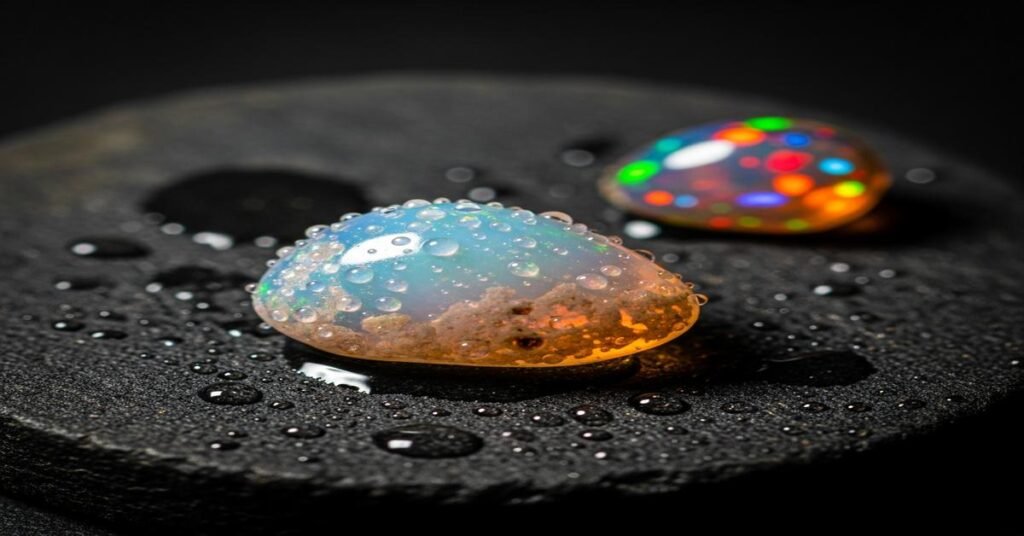
Your Ethiopian opal went cloudy after a swim, shower, or cleaning. The bright “fire” faded. Don’t panic. Many Ethiopian opals are hydrophane. They soak up water, oils, and even humidity. When that happens, light behaves differently inside the stone and the play-of-color weakens. Most of the time, the opal will recover as it dries. The key is knowing what’s normal, what’s permanent, and how to care for the gem so it stays beautiful for years.
What “hydrophane” means and why your opal went dull
Opal is a network of tiny silica spheres with water in the gaps. In hydrophane opal (common in Ethiopia’s Welo region), the structure is porous enough to absorb extra water. That water changes the stone’s refractive index. In plain terms, the contrast that splits light into rainbow flashes gets reduced. The color play looks muted or “dead” until the water leaves again.
Absorption is often fast. A quick hand wash or a humid day can be enough. Oils and lotions can do the same thing because they fill pores and change how light moves through the opal.
Is it ruined? Probably not—here’s how to tell
Most hydrophane opals recover fully after drying. Whether yours is permanently damaged depends on what happened while it was wet and how it dries.
- Temporary change (most common): Stone turns cloudy or slightly darker, fire weakens or shifts. No cracks appear. As it dries, the color returns. This can take hours to weeks, depending on how saturated it got.
- Permanent damage: You see cracks or a spiderweb pattern (“crazing”). Milkiness that doesn’t clear after weeks can also be permanent. Crazing happens when the stone swells with moisture and shrinks too quickly or unevenly as it dries.
- Adhesive failure (doublets/triplets): If an opal is layered with glue, water can turn glue lines white or cause delamination. Most Ethiopian opals are solid, but it’s worth confirming.
How to safely dry a hydrophane opal
Go slow. The goal is even drying with minimal stress.
- Step 1: Blot with a clean, lint-free cloth. Do not rub grit across the surface.
- Step 2: Place the jewelry on a soft cloth in a room with stable temperature and moderate humidity (around 40–60% RH). Normal indoor conditions are usually fine.
- Step 3: Let it air-dry. Small stones or light exposure may recover in 24–72 hours. A fully saturated stone in a closed-back setting can need 1–3 weeks, sometimes longer.
- Step 4: Check progress under diffuse light. Look for the return of play-of-color and any signs of stress.
What to avoid:
- No heat: Hair dryers, ovens, radiators, sunny windows, or hot cars can force rapid water loss and trigger crazing.
- No ultrasonic or steam cleaners: The pressure and heat cause damage.
- Be cautious with desiccants: Strong desiccants (like lots of fresh silica gel in a sealed box) can dry too fast. If you use one, keep it minimal and monitor daily.
How long should you wait before worrying?
- 24–72 hours: Many stones start to brighten again.
- 1–3 weeks: Deeply saturated opals in closed mounts often need this much time.
- 4–8 weeks: If the opal is still cloudy with no improvement, there may be permanent change or trapped residue (oil, soap) in the pores.
If you spot new cracks at any point, stop wearing the piece and consult a gem-experienced jeweler. Cracks rarely heal and can spread with wear.
Oil, soap, and stains: getting contaminants out
Oils and lotions mimic the effect of water by filling pores and flattening the color. They also attract dirt. Removal is tricky because soaking can add more moisture.
- Light residue: Wipe the stone gently with a barely damp microfiber cloth touched to diluted mild dish soap. Keep water off the rest of the piece. Immediately blot dry and let the opal air-dry.
- Surface oil only: Dust the stone lightly with plain cornstarch. Let it sit 15–30 minutes to draw surface oil. Brush off with a clean, soft brush and microfiber cloth. Repeat if needed.
- Heavy contamination: Seek a jeweler who understands hydrophane opal. Strong solvents can dehydrate or stain. Aggressive cleaning risks crazing.
Why this works: You’re removing surface films without soaking the stone or heating it, which keeps internal stress low.
Preventing future problems
Hydrophane opal rewards careful wear. The fewer absorption–drying cycles, the better.
- Keep it dry in daily life: Take off your ring before washing hands, showering, swimming, cooking, gardening, or applying lotions and perfumes.
- Avoid heat swings: No saunas, hot tubs, or sunbathing with the piece on. Thermal shock invites crazing.
- Choose smart settings: Open-back or vented mounts let moisture escape. A weep hole under a bezel helps drying. Protective bezels or halos shield edges from knocks.
- Storage: Soft pouch or lined box, away from harder gems that scratch. Normal room humidity is fine. Do not store opals in water; that’s an old myth and is risky for hydrophane.
- Cleaning schedule: Wipe with a dry microfiber cloth after wear. If needed, a barely damp cloth with mild soap on the cloth only—never a soak or ultrasonic.
Hydrophane vs. non-hydrophane opal
Not all opal behaves this way. Australian solid opal (Lightning Ridge, Coober Pedy) is usually non-hydrophane and doesn’t soak water quickly. Ethiopian Welo opal often is hydrophane. That’s why Welo stones can darken or go cloudy when wet, then recover. This trait is natural, not a defect, but it means you must treat them differently.
When to see a professional
- Cracks or crazing: Stop wearing it. A jeweler can assess whether recutting or resetting will stabilize it. Some stones are too stressed to save.
- Prolonged cloudiness: If no improvement after 4–8 weeks of careful drying, you may be dealing with permanent change or contamination.
- Set in a closed-back: Moisture can get trapped. A jeweler might open the back or add a vent to help future drying.
- Repairs: Any torch heat near opal is risky. Jewelers should remove the stone before soldering and avoid steam cleaning.
What about treatments and “stabilization”?
Some opals are smoke- or sugar-acid treated to darken the body color and boost contrast. Resins or polymers can be used to fill pores. These treatments can change the look, affect value, and still may not prevent crazing. They also complicate future repairs. If you value a natural look and stable care, stick with untreated stones and baby them. If a seller claims “stabilized Ethiopian opal,” ask what method was used and understand the trade-offs.
Buying tips for a durable Ethiopian opal
- Inspect under different humidity/temperature: If possible, view the stone on separate days or ask how it behaves when wet. You want a piece that shows strong play-of-color in normal indoor conditions.
- Look for a clean surface: Fewer surface-reaching fractures means less chance of water pathways and future cracking.
- Prefer protective settings for rings: Rings get the most abuse. Bezels and low profiles help. Pendants and earrings are lower risk.
- Ask about return and service policies: Good sellers are upfront about hydrophane care and stand behind the sale.
FAQ: quick answers
- Will my opal’s fire come back? Usually yes. If there are no cracks, most hydrophane opals recover as they dry, sometimes taking weeks if heavily saturated.
- Can I speed it up? Not safely. Gentle room-temperature air is best. Heat and strong desiccants increase risk.
- Should I keep my opal in water? No. That’s outdated advice and harmful for hydrophane stones.
- Is cloudiness always bad? Right after exposure, it’s normal. Persistent milkiness or new cracks are red flags.
- Is Ethiopian opal “fragile”? It’s sensitive, not weak. With smart wear and minimal water exposure, it can be a beautiful everyday piece—pendants and earrings more than rings.
Bottom line
Your Ethiopian hydrophane opal likely isn’t ruined. It absorbed water, which dulled the fire. Let it dry slowly at room conditions and watch for improvement over days to weeks. Avoid heat, soaking, and harsh cleaning. If you see cracks or no recovery after a couple of months, get a professional opinion. With careful handling and smart settings, natural opal can stay lively for years.

I am Satyam Pandey, a gemologist with a Diploma in Polished Diamond Grading from KGK Academy, Jaipur. I love writing about jewelry, gems, and diamonds, and I share simple, honest reviews and easy buying tips on JewellersReviews.com to help you choose pieces you’ll love with confidence.