
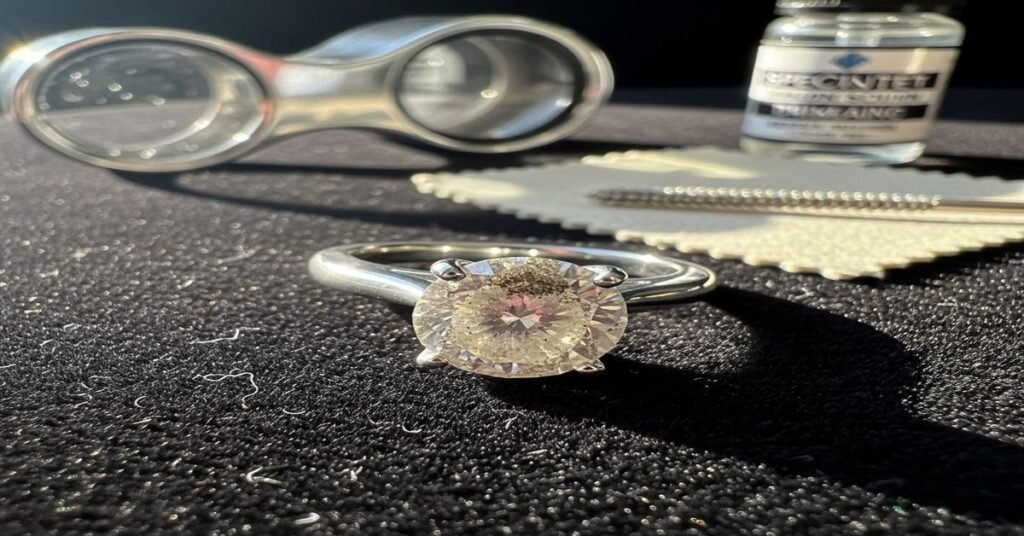
Your diamond hasn’t changed. The surface has. If your ring looks cloudy, the cause is almost always a thin film of soap, lotion, skin oil, and hard‑water minerals stuck to the stone’s underside. Light can’t enter or bounce back cleanly, so the sparkle dies. The fix is simple if you know what jewelers actually do: remove the film, especially under the stone, with the right solution, the right brush, and a proper rinse. Here’s the why and how.
The real reason diamonds turn cloudy
A diamond looks bright because light travels in, reflects off the pavilion (the pointed underside), then returns to your eye. Anything on the surface blocks or scatters that light. The usual culprits are:
- Soap and sanitizer residue. Many soaps and sanitizers have moisturizers. Those conditioners cling to the stone. You can’t “rinse them off” with more soap; you need a degreaser and a full flush.
- Skin oil and lotion. Oils spread into a thin film. Diamonds are oleophilic—oil sticks easily—so a tiny amount dulls the entire face.
- Hard water minerals. Calcium and magnesium leave a microscopic crust. That turns a clean stone hazy again even after a good scrub if you don’t manage the rinse.
Less common causes exist, and they matter:
- Worn facet edges. Micro‑abrasion from daily wear makes edges frosty. Cleaning won’t fix this; a jeweler can repolish.
- Internal “cloud” inclusions. If the diamond itself has a milky area, it won’t clean away.
- Strong fluorescence haze. Some diamonds look milky in daylight due to fluorescence. Again, not a cleaning issue.
The one mistake making your ring look dull
Washing your hands with the ring on and assuming that cleans it. It does the opposite. Soap and conditioners get pushed under the setting and dry into a film on the pavilion. Then each new wash adds another layer. Wiping the top of the stone helps a little, but the real traffic is under the diamond. Until you clear the underside, the stone will stay gray.
A jeweler’s at‑home method to restore brilliance
This is the same logic we use at the bench: degrease, break the film, lift it mechanically, and flush it away. The details matter.
What you need
- Grease‑cutting dish soap (plain “blue” type, no lotion)
- Clear household ammonia or an ammonia‑based glass cleaner
- Two bowls or mugs (ceramic or glass)
- Very hot water (as hot as your tap can safely go)
- Soft baby toothbrush or a soft interdental brush
- Small plastic strainer or mesh tea infuser (so you don’t lose the ring)
- Lint‑free cloth or clean microfiber
- 70% isopropyl alcohol (optional but excellent for spot‑free drying)
Before you start: quick safety check
- Look for loose stones or bent prongs. Gently tap the ring near your ear. If you hear a rattle, do not brush. Get it tightened first.
- Skip ammonia and heat if your diamond is clarity‑enhanced (fracture‑filled) or if the ring also has emerald, opal, pearl, or other porous/soft gems. Use dish soap only and lukewarm water in those cases.
Step‑by‑step
- Mix the solution. In Bowl 1, combine 1 cup very hot water with 1 teaspoon dish soap and 1 teaspoon clear ammonia (or 6–8 sprays of ammonia‑based glass cleaner). Why: dish soap cuts oils; ammonia breaks the film so it actually releases from the stone.
- Soak 10–20 minutes. Place the ring in the solution. The heat softens built‑up residue; time lets chemistry work so you don’t have to scrub hard.
- Brush from the underside. Hold the ring in the strainer. With the soft brush, angle bristles under the stone. Brush the pavilion and the back of the prongs from multiple directions. Why: the pavilion drives brilliance; cleaning just the top leaves most of the blockage in place.
- Prepare a clean hot rinse. Fill Bowl 2 with fresh very hot water. Move the ring into it to dislodge loosened debris. Why: you don’t want to rinse in dirty water.
- Flush under running hot water. Keep the ring in the strainer and rinse 10–20 seconds. Hot water lowers surface tension so water (and residue) sheets off instead of beading and drying back on.
- Optional alcohol dip. Briefly dip the ring in isopropyl alcohol. Why: alcohol displaces water and evaporates cleanly, preventing spots and lifting any last traces of oil.
- Dry properly. Blot with a lint‑free cloth. Don’t rub with tissues; they can leave fibers and micro‑scratch metal. Air‑dry face‑down on a clean towel if needed.
Why this works: You solved the real problem—the film on the pavilion—by degreasing, mechanically lifting it, and rinsing in water hot enough to flush surfactants. The alcohol finish keeps minerals from spotting the surface as it dries.
Fast weekly routine (60 seconds)
- After showering, workouts, sunscreen, or cooking, do a quick soak in warm water with a drop of dish soap.
- Brush the underside for 15–20 seconds.
- Rinse hot, then a quick alcohol dip. Blot dry.
Why weekly: residue builds fast. Light daily prevention plus one focused clean keeps the stone in “freshly polished” territory without effort.
If it still looks cloudy after cleaning
- Check for a white haze you can’t rub off. Under a bright light, tilt the ring and look for a uniform frostiness on facet edges. That’s wear. A jeweler can polish the facets and restore edge sharpness.
- Use your phone’s macro mode. If you see a milky area that moves inside the stone as you tilt it, that’s an inclusion cloud. Cleaning won’t change it.
- Look for a “milky” look outdoors only. Strong blue fluorescence can make some diamonds look hazy in sunlight. Not a dirt issue.
- See rainbowy flashes inside a fracture. That “flash effect” can signal a fracture‑filled diamond. Avoid heat and ammonia; ask a jeweler for the right cleaning approach.
Tools and tricks jewelers actually use
- Soft brush angles. A baby toothbrush with a small head fits under most galleries. For tight halos, an interdental brush slides between prongs without stress.
- Mesh strainer. Always handle over a strainer or closed sink. Rings are slippery when soapy.
- Distilled water. If your tap water is hard, make your final rinse with distilled water or follow with the alcohol dip to avoid spots.
- Steam cleaning. Pros use steam to blast residue. At home, the hot‑water flush is the safe substitute.
What to avoid (and why)
- Toothpaste, baking soda, and powdered cleansers. These are abrasives. They scratch gold and can frost facet edges over time.
- Bleach and chlorine. They attack gold alloy and can weaken prongs and solder joints.
- Boiling water at home. Rapid temperature swings risk thermal shock, especially with included stones or older settings.
- Ultrasonic cleaners without judgment. They’re great for sturdy solitaires, but can shake out micro‑pavé, older channel settings, or stones with filled fractures. If you can’t inspect and tighten prongs, skip it.
- Paper towels. They contain wood fibers that can scratch metal. Use microfiber or a lens cloth.
Care habits that keep your diamond bright
- Remove your ring for lotion, sunscreen, and hair products. These are engineered to stick to keratin and skin; they also stick beautifully to diamonds.
- Take it off before showering. Shampoo and conditioner leave a film that’s hard to rinse from the pavilion.
- Store it clean. Put the ring away only after a quick rinse and blot. Storing it oily transfers residue to the box and back onto the stone.
- Schedule a pro check twice a year. Jewelers will tighten prongs, deep‑clean, and catch wear before you lose a stone.
Quick answers to common questions
- Can I use glass cleaner? Yes, if it contains ammonia. Use it diluted in hot water and rinse thoroughly.
- Is hand sanitizer bad? Alcohol isn’t the issue; the added thickeners and emollients leave film. Clean the ring after frequent sanitizer use.
- Which metals are safe with ammonia? Platinum and gold are fine. Skip ammonia on porous gems, glued settings, or fracture‑filled diamonds.
The takeaway: your diamond looks cloudy because residue builds up under the stone, especially when you wash your hands with the ring on. The jeweler’s fix is simple: a hot degreasing soak, a gentle brush from the underside, a thorough hot rinse, and a spot‑free dry. Do that, and you’ll get the crisp, bright sparkle you remember—without a trip to the shop.

I am Satyam Pandey, a gemologist with a Diploma in Polished Diamond Grading from KGK Academy, Jaipur. I love writing about jewelry, gems, and diamonds, and I share simple, honest reviews and easy buying tips on JewellersReviews.com to help you choose pieces you’ll love with confidence.