
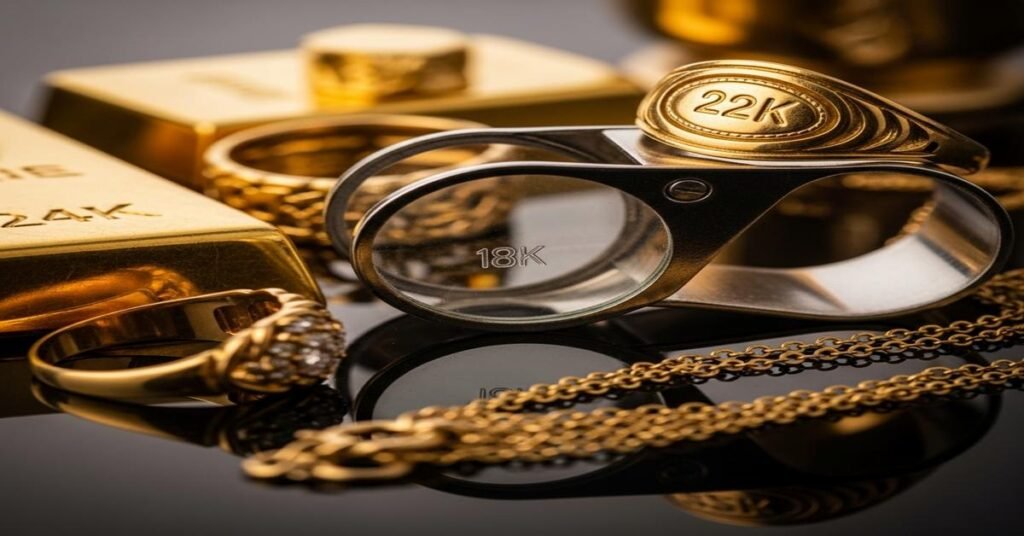
Gold purity affects color, durability, price and how a piece should be worn or serviced. This guide explains the real differences between 24K, 22K and 18K gold, how common alloys change properties, and how to read hallmarks so you can check what your jeweler actually sold you. I’ll give practical examples and simple tests you can use at the store or home.
What the numbers mean: Karats vs fineness
Karat (K) measures the fraction of pure gold in an alloy out of 24 parts. So:
- 24K = 24/24 = ~100% gold (often stamped 999 or 999.9)
- 22K = 22/24 = 91.6% gold (stamped 916)
- 18K = 18/24 = 75% gold (stamped 750)
- Other common marks: 14K = 58.5% (585), 9K = 37.5% (375)
Why it matters: higher karat = more gold content, richer yellow color, higher melt value, but softer metal. Lower karat = harder, more durable, and often a paler color if heavily alloyed.
How alloys change color and strength
Pure gold is ductile and soft. Jewelers add metals to make it wearable and to change color. Exact recipes vary, but these are typical mixes for 18K and 22K examples:
- 18K yellow: ~75% Au, ~12.5% silver, ~12.5% copper. Balanced yellow tone with good durability for rings.
- 18K rose (pink): ~75% Au, ~22% copper, ~3% silver. More copper deepens the red/pink color and increases hardness.
- 18K white: ~75% Au + ~25% palladium or nickel. White alloys are usually rhodium-plated for brightness; nickel can trigger allergies.
- 22K typical: ~91.6% Au + ~8.4% copper/silver mix. Very yellow and soft; common in bangles and traditional jewelry.
Why it matters: Rose gold needs more copper, so it’s stronger. White gold may require re-plating over time. 22K and 24K wear faster at points of friction and can dent.
Practical uses: Which karat for what
- 24K (999): Best for investment bars and coins. Jewelry in 24K is soft and bends easily—unsuitable for daily rings.
- 22K (916): Common in South Asian jewelry and for bangles/pendants. Great color but not ideal for thin bands or pronged settings.
- 18K (750): A good balance: attractive color, strong enough for engagement rings and settings that hold gemstones. Higher resale gold value per gram than 14K.
- 14K/9K: Harder and better for heavy wear (men’s rings, thin bands). Lower pure-gold content reduces melt value but improves durability.
Reading hallmarks so you can verify claims
Hallmarks give two reliable clues: gold content and origin/assay. Look inside a ring band, clasp, or earring post for small stamps. Common marks you’ll see:
- Karat mark: “18K”, “22K”, “14K”, etc.
- Fineness number: “750” (18K), “916” (22K), “999” (24K), “585” (14K), “375” (9K).
- Maker’s mark / assay office: A small symbol or initials identifying who tested or made the piece.
- Other marks: “Au” (gold), “Pd” if palladium used, or country-specific assay stamps.
Example reading: “750 18K [maker mark]” = 75% gold, confirmed 18K, tested by the maker or assay office. If you see only a metal content claim with no maker or assay mark, treat it cautiously.
How jewelers sometimes mislabel — and how to catch it
Mislabeling usually falls into three categories: wrong karat claim, plating passed as solid gold, or missing hallmark. Quick checks you can do:
- Visual hallmark check: No clear stamp = ask for documentation. A worn inscription is not proof. Ask to magnify the mark.
- Magnet test: Real gold is non-magnetic. If a piece is strongly attracted to a magnet, it contains ferrous fillers or steel cores. This doesn’t prove purity, but it flags a fake.
- Look for plating stamps: “GP”, “HGE”, “EP” mean plated. “GF” or “G.F.” = gold-filled (thicker layer). “Vermeil” means gold plated over sterling silver—usually at least 2.5 microns of gold and minimum 10K gold.
- Check wear spots: Plated pieces will show base metal at edges or where the finish rubs off.
- Weigh and calculate: For pure value check: weight (g) × market price per gram × fineness. Example: 18K ring 10 g with pure-gold price $60/g → intrinsic gold ≈ 10 × 0.75 × $60 = $450. If the jeweler’s “gold-only” price is much lower or much higher without explanation, ask why.
Professional and at-home testing options
- XRF analyzer (professional): Non-destructive, gives exact alloy breakdown in seconds. Jewelry shops or pawn brokers may offer this.
- Acid test (professional): Drops of nitric acid on a scratch plate indicate karat range. Accurate when done correctly but slightly invasive.
- Density check (home/pro shop): Measure weight and water displacement to estimate purity. Works reasonably well for solid pieces but fails if core materials are mixed inside plating.
- Visual and hallmark check: Fast and free. Always ask for a clear photograph of the hallmark if buying online.
Allergies, repair and resale considerations
Nickel in white gold can cause reactions. Ask if a white-gold piece is nickel- or palladium-based. White gold is usually rhodium-plated; plating wears and will need re-plating every few years depending on wear.
For resale, higher karat increases melt value but does not guarantee higher retail value—design, gemstones and workmanship matter. Keep purchase receipts, hallmark photos and any assay certificates to preserve resale value.
Final checklist before you buy
- Find and photograph the hallmark (karat + fineness + maker). If none, ask why.
- Ask for alloy and whether the piece is plated. Look for “GP/EP/HGE”, “GF”, or “vermeil” stamps.
- Request XRF or acid test if you suspect mislabeling. Reputable shops will accommodate.
- Weigh the piece and run the simple gold-value calculation to sanity-check the price.
- Check for nickel if you have allergies and ask about rhodium re-plating for white gold.
Knowing the math behind karats and the meaning of common hallmarks removes most surprises. Use the hallmark, simple tests and a direct question list when buying. That’s how you make sure the gold you pay for is the gold you get.

I am G S Sachin, a gemologist with a Diploma in Polished Diamond Grading from KGK Academy, Jaipur. I love writing about jewelry, gems, and diamonds, and I share simple, honest reviews and easy buying tips on JewellersReviews.com to help you choose pieces you’ll love with confidence.