
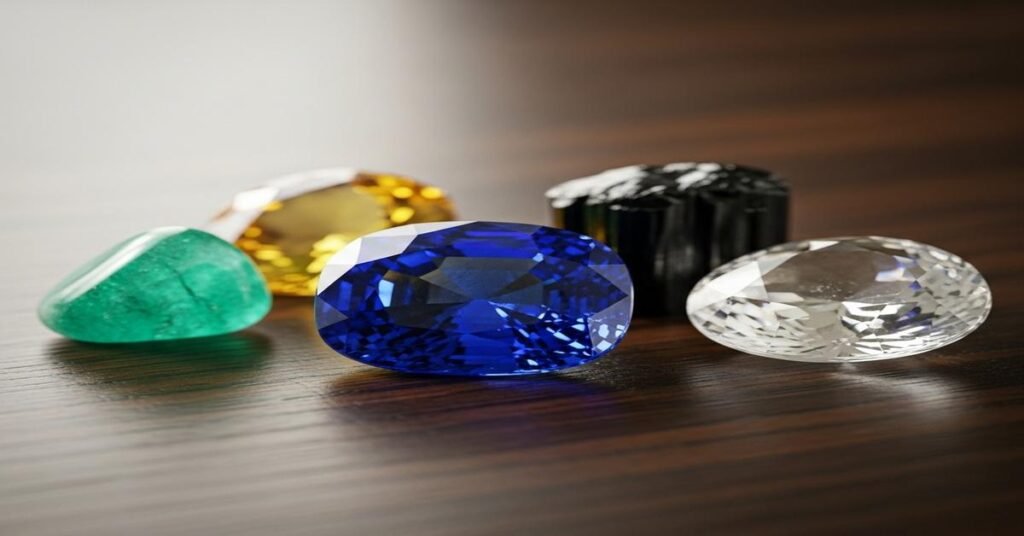
Want to get noticed at work or make a strong impression in interviews? A gemstone can be a practical tool, not a magic shortcut. The right stone can boost your confidence, sharpen focus, and signal competence. That matters because promotions and job offers often hinge on how clearly you present value, how confident you look, and how others perceive you. Below I explain which stones suit specific career goals, why they help, how to wear them at work, and which metals and sizes make the most sense for everyday professional life.
Why a gemstone can help your career
Gemstones influence outcomes in two main ways. First is psychology: wearing a stone you value becomes a small ritual that raises confidence, reduces anxiety, and improves posture and eye contact. That changes how others perceive you. Second is social signaling: quality jewelry communicates taste and status. A neat 5–6 mm blue sapphire set in 14k yellow gold looks intentional and professional; a well-chosen piece can make you seem more competent.
Match stone qualities to career goals
Pick a stone for a specific aim. Below are common goals and stones that align with them, plus the practical reasons why each works.
- Leadership & authority: Ruby or garnet. Red tones read as decisive and energetic. Ruby (Mohs 9) is durable and projects presence. A 0.6–1.5 ct round ruby (5–7 mm) in a low-profile bezel ring signals strength without shouting.
- Negotiation & decision-making: Blue sapphire. Blue conveys trust and calm. Sapphires are hard (Mohs 9) and hold up to daily wear. A 0.5–1.2 ct oval sapphire (4.5–6.5 x 3.5–5 mm) in 14k white gold has a clean, executive look.
- Communication & sales: Aquamarine or blue topaz. Cooler blues sharpen clarity and ease conversation. Choose well-cut stones with eye-clean clarity; a 6–8 mm cushion aquamarine pendant sits near the collarbone and is visible in meetings.
- Networking & visibility: Citrine or yellow sapphire. Yellow/gold tones attract the eye and convey optimism. Citrine (6–7 Mohs) makes an approachable pendant; a 6 mm round citrine in a sturdy bezel is bright without being flashy.
- Creativity & problem-solving: Amethyst or moonstone. Purple and pearly tones stimulate imagination. For office-safe wear, a 6–8 mm amethyst in a simple silver or 14k setting reads thoughtful and artistic.
- Financial goals & promotions tied to revenue: Emerald or green tourmaline. Green signals growth and prosperity. Emeralds can be included and brittle (Mohs ~7.5–8) — choose cabochon or protective settings and avoid daily-wear rings if your job is hands-on.
- Grounding and authority in high-pressure jobs: Black onyx, black spinel, or hematite. Dark stones read as disciplined and controlled. Black spinel has good durability (Mohs ~7.5–8) and polished pieces in a simple gold bezel look modern and strict.
How to choose metal, setting, and size for the office
Choose combinations that match your workplace and daily tasks.
- Metal choices: 14k yellow gold (58.3% gold) reads warm and traditional. 18k white gold (75% gold alloyed with palladium or nickel) looks modern but may need rhodium re-plating over time. Platinum (typically 95% Pt) is durable and hypoallergenic but heavier. Sterling silver (92.5% Ag) is budget-friendly but scratches easier. Pick metals that suit your wardrobe and skin tone.
- Setting: Bezel or flush settings are safest for rings and work-heavy hands. Prong settings expose more stone brilliance but snag more easily. For pendants and brooches, bezel or closed-back settings last longer and look professional.
- Size: For conservative offices, aim for 4–7 mm (approx. 0.25–1.25 ct depending on the stone). A 5 mm round sapphire (~0.50 ct) is noticeable but not distracting. For creative fields, you can go slightly larger—6–8 mm stones are common.
Durability and care
Durability matters. If you wear a ring every day, pick stones with Mohs hardness of 8–10: sapphire, ruby, spinel, topaz (topaz is hard but cleaves), or diamond. Softer stones (opal, moonstone, peridot, turquoise) are better as necklaces or pins.
Tips:
- Clean weekly with warm water, mild soap, and a soft brush for faceted stones. Avoid ultrasonic cleaners for emeralds or heavily included stones.
- Remove rings for heavy typing, data entry that risks knocks, or manual tasks.
- Store pieces separately to prevent scratches. Use soft pouches or compartments.
How to wear a gemstone to get noticed—practical placement
Where you wear a stone affects visibility and ritual impact.
- Ring: Best for daily reminder and action. Wear on the index or middle finger if you want to appear assertive. Keep stones small to medium (4–7 mm) for office appropriateness.
- Pendant: Place near the collarbone for visibility in meetings. A 6–8 mm stone in a simple bezel on a 16–18 inch chain is visible but refined.
- Earrings: Tiny studs (3–5 mm) in diamonds or sapphires read professional and polished. They catch attention without dominating.
- Brooch or lapel pin: Useful for suits and jackets. It’s visible during handshakes and interviews and won’t interfere with typing.
Activation, intention, and how stones actually work
Set a simple intention when you put the piece on. Say aloud or think a clear statement: “I will speak clearly in today’s meeting” or “I will ask for the raise.” That ritual focuses your mind. The gemstone doesn’t force outcomes. It triggers psychological changes—confidence, reduced nervousness, and clearer behavior—which influence how bosses and colleagues respond.
Final practical checklist before you buy
- Choose a goal (leadership, communication, creativity) and pick a matching color/gem.
- Match stone hardness to intended wear (rings need harder stones).
- Pick a conservative size for formal workplaces (4–7 mm). Use a bezel setting for durability.
- Choose a metal that fits your wardrobe and budget—14k gold or platinum for long-term investment; sterling silver for lower-cost options.
- Set an intention and wear the piece consistently during key moments (presentations, interviews, performance reviews).
Ultimately, a gemstone is a tool. Choose one that fits your style, your work environment, and the behavior you want to encourage. Worn well, it helps you feel sharper, appear more intentional, and get noticed for the right reasons.

I am G S Sachin, a gemologist with a Diploma in Polished Diamond Grading from KGK Academy, Jaipur. I love writing about jewelry, gems, and diamonds, and I share simple, honest reviews and easy buying tips on JewellersReviews.com to help you choose pieces you’ll love with confidence.