
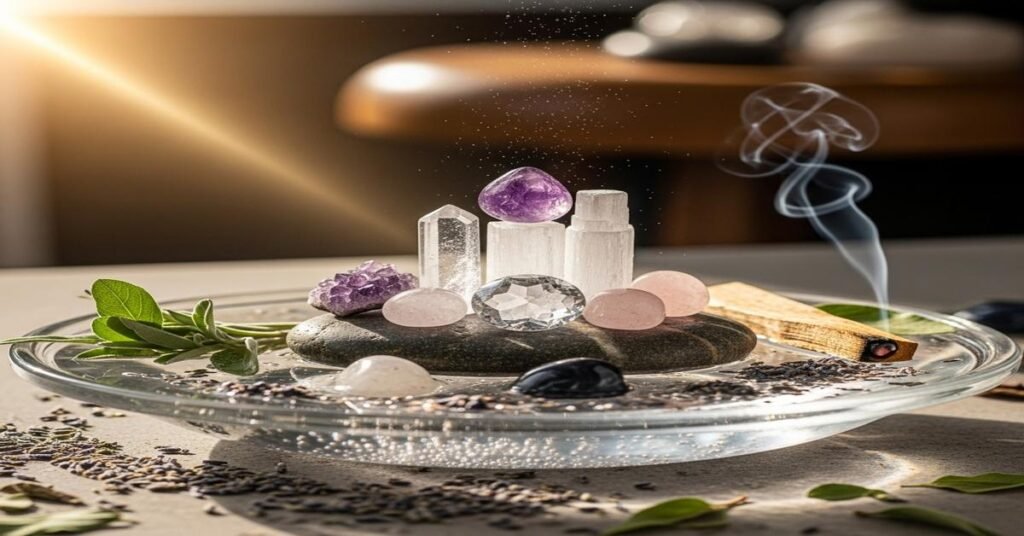
Preparing a gemstone before you wear it is part care and part intention. The physical cleaning removes oils, dust and residues that can hide a stone’s color and brilliance. The energetic purification and activation help you set a clear purpose for the piece so it acts as a practical reminder and focus. Below you’ll find a reliable, step-by-step ritual that respects both gemology and the practical limits of different stones and metals.
1. Inspect and identify the stone and setting
Why: Different gems and settings need different care. Identifying treatments and the mounting prevents accidental damage.
- Look at the stone: note hardness (Mohs), porosity, and visible chips. Examples: diamond (hard, Mohs 10), sapphire (9), emerald (7–7.5 often included and fracture-prone), opal and pearl (soft, porous), kunzite and amethyst (can fade in strong light).
- Check treatments: oil-filled emeralds, fracture-filled stones, heat-treated sapphires — these are sensitive to ultrasonic or steam cleaning.
- Examine the metal: 14k gold is ~58.3% Au and relatively durable; 18k is softer but richer in gold; sterling silver (92.5% Ag) tarnishes and reacts with salt and chemicals. Rhodium plating on white gold can wear off with abrasive cleaning.
2. Clean safely (physical cleansing)
Why: Oils and residues mask color and block light. Cleaning first ensures your energetic work is not done on a dirty surface.
- Simple and safe for most stones: warm water, a drop of mild dish soap, and a soft brush or cloth. Rinse with distilled water if available. Dry with a lint-free cloth.
- Time guidances: soak up to 10 minutes for sturdy stones (diamond, sapphire); brief 30–60 second rinse for porous or treated stones (opal, turquoise, emerald).
- Avoid: bleach, acetone, household ammonia, and abrasive cleaners. These can remove coatings or damage organic gems (pearls, amber) and delicate settings.
- Ultrasonic and steam cleaners: safe for unfaulted diamonds and sapphires. Not safe for fracture-filled, oiled emeralds, pearls, opals, or stones with cleavage (kunzite).
3. Energetic purification (gentle methods)
Why: This removes lingering energy associations without risking the stone. Use the gentlest effective method for the gem type.
- Running water: Safe for hard, non-porous gems (diamond, sapphire, quartz). Hold the gem under a gentle stream for 30–90 seconds. Avoid for opals, pearls, turquoise, and porous stones that absorb water.
- Smoke/smudging: Use sage, palo santo, or clean incense. Pass the gem through the smoke 3–7 times. This is safe for all stones and for delicate metals.
- Selenite or quartz clusters: Lay the stone on a selenite slab or next to a large clear quartz cluster for 10–30 minutes. Selenite is energetically neutral and doesn’t physically interact with the gem.
- Sound: A singing bowl or bell for 30–60 seconds disperses stagnant energy. Useful if you’re indoors and want a non-contact method.
4. Charging and activation (choose based on the stone)
Why: Charging helps you imprint a purpose. Different methods suit different stones because of light and heat sensitivity.
- Moonlight: Place the gem on a windowsill overnight under a full or waxing moon. This is gentle and safe for almost all stones. Recommended when you want calming, emotional intentions.
- Sunlight: Only for durable, stable stones (diamond, ruby, sapphire, some quartz). Limit to 1–3 hours. Avoid sunlight for amethyst, kunzite, topaz, and certain-treated stones because color can fade.
- Crystal clusters: Leave the stone on a clear quartz cluster for 2–12 hours to energize without light exposure.
- Earthing (burying): Bury in dry soil for 24–48 hours for grounding energy. Avoid if the gem is porous, fracture-prone, or set in a metal that can tarnish. Use a sealed container if you’re concerned about dirt or moisture.
5. Program your intention (practical, focused ritual)
Why: Clear intention guides how you use the piece. This is psychological reinforcement—your attention and habits will align with the stated purpose.
- Hold the gem: sit quietly, hold the stone between thumb and forefinger or place it on your palm. Breathe for 3–5 deep breaths to center yourself.
- State a concise intention: short, present tense, focused. Example: “I wear this ring to support calm focus during work,” or “This pendant supports recovery and clear sleep.”
- Visualize: imagine a color or light surrounding the stone and the area of your life you want it to affect. Spend 1–3 minutes on this visualization.
- Seal it with gesture: you can kiss the stone, hold it to your heart, or touch it to the exact spot where you’ll wear it (ring finger, throat for a necklace) as a symbolic seal.
6. Prepare for wearing and check settings
Why: Proper setting and fit keep the gem secure and prevent daily damage.
- Check prongs and bezel: gentle tug test (do not force) and visual inspection. A 6.5 mm round ~1 ct center on a ring needs strong prongs; smaller accent stones (2–4 mm) require inspection for looseness.
- Consider metal compatibility: avoid letting sterling silver contact saltwater during swims — silver corrodes and can discolor settings; 14k or 18k gold tolerates regular wear better.
- Allergy note: some people react to nickel in alloys. If you have sensitive skin, look for nickel-free alloys or high-karat gold.
7. Maintenance and periodic recharging
Why: Gems pick up oils and experiences over time. Regular maintenance preserves brilliance and your link to its purpose.
- Weekly: wipe with a soft cloth after wearing to remove oils and sweat.
- Monthly: perform a gentle cleaning and a short energetic cleanse (smudge or selenite) and re-state your intention if its purpose has shifted.
- Annually: have settings checked by a jeweler and do a full professional cleaning, especially for pieces worn daily.
Common mistakes and precautions
Why: Avoiding these keeps your stones beautiful and safe.
- Don’t salt-bath everything: dry sea salt can abrade and corrode metal and damage porous stones. If you use salt, place the gem in a small sealed bag or use a salt bowl only for hard, non-porous stones and never leave metal in direct salt for long.
- Don’t assume sunlight is always safe: many colored gems fade. When in doubt, use moonlight or selenite.
- Don’t use ultrasonic/steam without professional advice: fracture-filled or oiled stones look fine but will be damaged.
- Documentation: keep any lab reports or treatment notes. Knowing a 1 ct (≈6.5 mm round diamond) versus a heat-treated 1 ct sapphire changes cleaning choices.
Follow this process and you protect your gemstone physically while making your intention clear. The result: a piece that looks its best and serves as a consistent tool — practical and reliable — for the purpose you set.

I am G S Sachin, a gemologist with a Diploma in Polished Diamond Grading from KGK Academy, Jaipur. I love writing about jewelry, gems, and diamonds, and I share simple, honest reviews and easy buying tips on JewellersReviews.com to help you choose pieces you’ll love with confidence.