
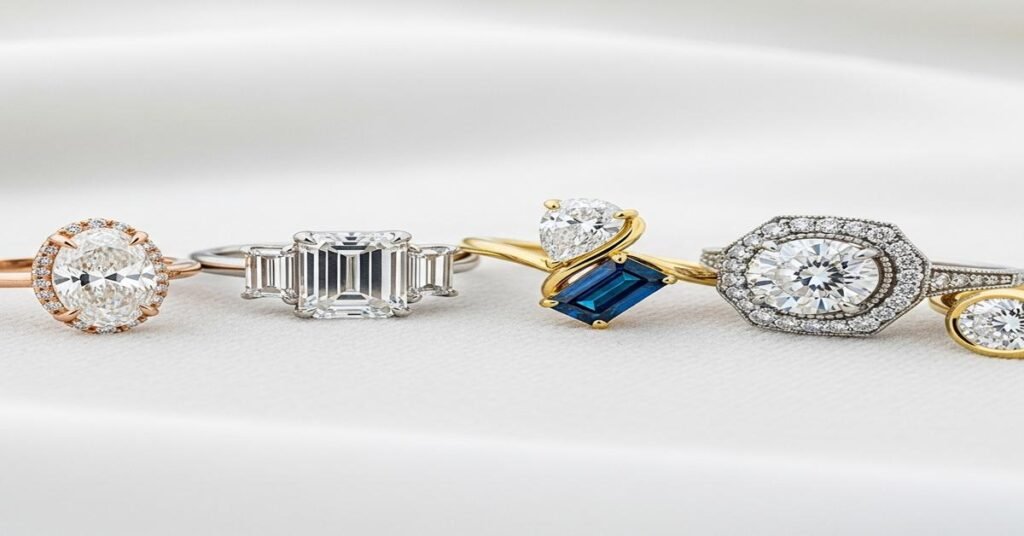
Engagement ring trends for 2026 blend clear-eyed practicality with personal expression. Buyers want rings that fit real life—durable metals, low-profile settings, and stones that match values as much as looks. At the same time, brides are choosing designs that tell a story: heirloom details, unexpected colors, or mixed metals. Below are the five ring styles dominating 2026, why they matter, and practical specifics to help you pick the right one.
1. Lab-grown diamond solitaires — classic look, modern sourcing
Why it’s trending: More couples prioritize sustainability and value. Lab-grown diamonds offer the same optical and chemical properties as mined stones but usually at a lower price and with fewer environmental concerns.
What to look for: Round or oval lab-grown stones in the 0.8–2.0 ct range are most popular. A 1.0 ct round typically measures about 6.5 mm across. Expect a colorless (D–G) or near-colorless (H–J) lab diamond with VS1–SI1 clarity for good visual impact without a premium price.
Metal and setting: Classic solitaires in 14k or 18k gold or platinum 950 are common. 14k gold contains ~58.3% gold and is harder than 18k, making it better for everyday wear. Platinum 950 (95% platinum) is heavier, hypoallergenic, and more durable for prongs. A four- or six-prong head with a 1.5–2.0 mm band balances security and elegance.
Who it suits: Couples who want a timeless look and measurable savings. Lab-grown options often cost 30–60% less than mined diamonds of similar specs, freeing budget for a larger carat or upgrade in metal.
2. Vintage-inspired halos with milgrain and filigree
Why it’s trending: Personalization and nostalgia are strong. Vintage details—milgrain edges, millegrain, and scrolled filigree—feel unique without requiring an actual antique. They add visual complexity and make center stones appear larger.
What to look for: A halo of melee diamonds (total 0.20–0.50 ct) surrounding a 0.75–1.5 ct center stone is common. Halo stones are typically 1.0–1.5 mm each. Look for quality pavé work so stones sit flush; good craftsmanship prevents stones from catching.
Metal and setting: 18k yellow gold (75% gold) and 14k rose gold are popular because they enhance warmth and vintage feel. For filigree, ask for reinforced gallery bars—thin openwork needs structural support. Band widths usually run 1.8–2.5 mm to maintain the delicate look while staying durable.
Who it suits: Brides who want romance and detail. This style works well with formal wardrobes and those willing to do a bit more maintenance—cleaning and occasional re-tipping of prongs or checking pavé setting tightness.
3. Colored-center-stone and three-stone rings
Why it’s trending: Color conveys personality. Sapphires, emeralds, and padparadscha—or even green tourmaline and spinel—offer a statement and can be more affordable than diamonds in larger sizes.
What to look for: Sapphire centers between 1.0–3.0 ct are common. Sapphire rates 9 on the Mohs scale, so it’s durable for daily wear. Emeralds are visually striking but typically softer (around 7.5–8) and may require a bezel or protective prongs. Three-stone setups often pair a colored center (1.0–1.5 ct) with two tapered diamonds (0.25–0.50 ct each).
Metal and setting: White metals (platinum or 18k white gold) highlight blues and greens. Yellow and rose gold intensify warm tones like padparadscha. Consider bezel or semi-bezel settings for softer gems; they protect edges and reduce the risk of chipping.
Who it suits: Brides who want a signature look and are willing to balance color and care. Colored stones add uniqueness while allowing thoughtful budget reallocation—spend on color rather than carat.
4. Low-profile, stackable bands and knife-edge rings
Why it’s trending: Lifestyle and layering. Many brides want rings that sit flush with daily activities and stack well with wedding bands or fashion rings.
What to look for: Profiles under 3.5 mm total height are “low-profile.” Band widths of 1.5–2.5 mm stack cleanly. Knife-edge bands (a subtle ridge along the center) add visual interest without bulk. Hidden gallery supports can keep a center stone secure while keeping the ring close to the finger.
Metal and setting: 14k gold (better scratch resistance) or palladium offer lighter-weight alternatives to platinum while keeping durability. Pavé or channel-shared stones for stackable bands usually use 1.0–1.5 mm melee diamonds to avoid overpowering the engagement ring.
Who it suits: Active brides or anyone who prefers minimal height. These rings are practical—less snagging and easier for manual work—while offering contemporary style.
5. Mixed-metal and asymmetric custom designs
Why it’s trending: Personalization and a rejection of one-size-fits-all. Mixed metals (for example, a platinum head with a yellow gold shank) let couples combine metals for durability and look. Asymmetric layouts—east-west ovals, offset side stones, or staggered halos—feel modern and bespoke.
What to look for: Pay attention to solder joints and matching alloys. A 950 platinum head soldered to a 14k gold shank must be constructed to avoid galvanic reactions and to allow proper resizing. Asymmetric designs often use oval or marquise centers 6–10 mm in length to maximize the effect.
Metal and setting: Platinum heads with 14k or 18k gold shanks are common. For a warm-cool contrast, try rose gold accents with white gold or platinum. Ensure prongs and soldering are done by an experienced jeweler; complex designs need reinforced settings.
Who it suits: Couples who want something distinctive and are comfortable with custom work. Customization adds cost but lets you match the ring to lifestyle, finger shape, and budget precisely.
How to choose the perfect style
Start with lifestyle. If she works with her hands, pick a low-profile or bezel-set ring. If she loves vintage details, choose a halo with milgrain and verify pavé quality. Decide on your budget in advance and allocate it to the attributes that matter most: carat size, cut quality, metal, or ethical sourcing.
Try rings on. A 1.0 ct round looks different on every finger. Bands of 1.8 mm versus 3.0 mm change balance and comfort. If you’re uncertain, pick a reputable jeweler who offers return or resizing options and provides clear certification for diamonds or lab-grown stones.
Care and long-term planning: Platinum and 14k gold require regular checks—prongs wear down, pavé may need re-tightening. Colored stones like emeralds will benefit from avoided ultrasonic cleans and more frequent inspections. Discuss warranties and service plans before buying.
Choosing an engagement ring in 2026 means balancing beauty, durability, and personal values. Use the specific details above—stone size, metal alloy, setting type—to match design to daily life and taste. That is how you find a ring she’ll wear every day for decades.

I am G S Sachin, a gemologist with a Diploma in Polished Diamond Grading from KGK Academy, Jaipur. I love writing about jewelry, gems, and diamonds, and I share simple, honest reviews and easy buying tips on JewellersReviews.com to help you choose pieces you’ll love with confidence.