
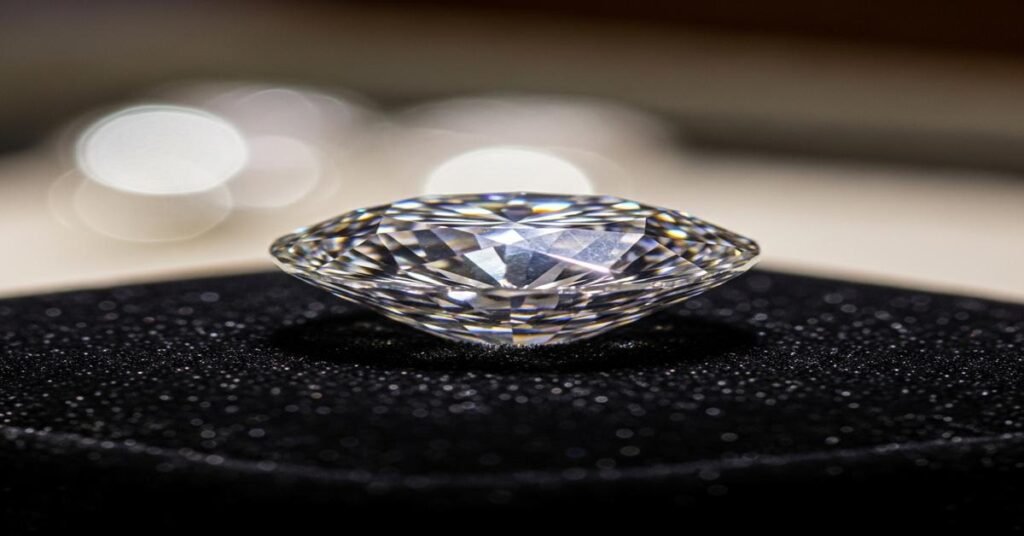
Buying your first diamond can feel overwhelming. The price tags are high and small differences in the 4 C’s — Cut, Carat, Color, and Clarity — can change appearance and cost a lot. This guide explains the practical trade-offs you actually need to make, with numbers and examples so you avoid a costly mistake.
Why cut matters most
Cut controls how a diamond returns light. Two diamonds with the same carat weight can look very different: one bright and lively, the other dull. That’s why cut is the single most important C for look and value.
- Round brilliant: Aim for a cut grade of Excellent or Ideal (GIA “Excellent” or AGS 0–1). Typical good proportions are depth ~59–62.5% and table ~53–57%. These ranges produce the best balance of brilliance and fire.
- Fancy shapes (oval, pear, emerald, cushion): There isn’t one universal proportion. Look at the stone’s light return, and ask for face-up photos or videos. For elongated shapes, pay attention to length-to-width ratio (e.g., oval 1.30–1.50). For step cuts (emerald), clarity becomes more important because inclusions are visible.
- Polish and symmetry: Don’t accept “Poor.” Aim for Good or better. Poor polish/symmetry reduces sparkle and can lower price for little benefit.
Carat and millimeters: size versus perception
Carat measures weight, not diameter. A 1.00 ct round is usually about 6.4–6.5 mm across. A shallower cut can look larger face-up but may lack sparkle. Here are typical diameter benchmarks for rounds:
- 0.50 ct ≈ 5.0 mm
- 0.75 ct ≈ 5.8 mm
- 1.00 ct ≈ 6.4–6.5 mm
- 1.50 ct ≈ 7.4–7.6 mm
- 2.00 ct ≈ 8.0–8.2 mm
Practical advice: if appearance is your main goal and budget is limited, you can choose a slightly lower carat to upgrade cut or color. A well-cut 0.90 ct will often look more appealing than a poorly cut 1.10 ct.
Color: match to metal and budget
Color scale runs D (colorless) to Z (light yellow/brown). The visible difference between adjacent grades is often small, but price differences can be large.
- D–F = Colorless. Best for platinum or buyers who want the absolute clean look.
- G–H = Near colorless. Excellent value. In white gold or platinum settings, G or H usually looks white to the eye.
- I–J = Near colorless to faint. Works well in yellow or rose gold settings because metal masks warm tones.
Also consider fluorescence. Medium or strong blue fluorescence can make a lower-color stone (J–K) appear whiter under daylight. However, very strong fluorescence can sometimes create a milky or oily look. Ask for photos under different lighting.
Clarity: where to save safely
Clarity grades run FL/IF (flawless) down to I3 (included). Most tiny inclusions don’t show to the naked eye. For most buyers, the sweet spot is:
- VS2–SI1 for rounds and fancy shapes if inclusions are not in the center. These grades often look clean face-up and cost significantly less than VVS/IF.
- VS1–VVS if you want extra assurance or if the setting exposes the table (e.g., solitaire). Step cuts (emerald) benefit from higher clarity because inclusions are more visible.
Ask for a clarity plot on the certificate and for close-up images. If an inclusion sits under a prong, it will be effectively hidden and you can safely save money.
Certification: read the report, not just the price
Always buy a certified diamond. GIA and AGS reports are the industry gold standard because they include consistent grading, measurements in mm, depth and table percentages, cut, polish, symmetry, and a clarity plot.
- Check the report’s carat weight versus the advertised weight. Expect measurements in mm on the certificate.
- Compare depth and table to recommended ranges. Extremely deep stones can look smaller face-up for their carat weight; extremely shallow stones may lack sparkle.
- Confirmed identity: certificate number should match the laser inscription on the girdle when present.
How to choose: three practical scenarios
- Best sparkle on a modest budget — Example: 1.00 ct, G–H color, VS2 clarity, Excellent cut, ~6.4 mm diameter, depth ~61% and table ~56%. Why: cut maximized, color near-colorless, clarity clean to the eye.
- Max size for your budget (appearance matters more than top grades) — Example: 1.50 ct, I–J color, SI1 clarity, Very Good cut, with a halo or bezel setting to add perceived size. Why: sacrifice color/clarity where it’s less visible and boost face-up size and setting design.
- Investment or heirloom quality — Example: 1.00+ ct, D–F color, IF–VVS1 clarity, Excellent/AGS Ideal cut. Why: top grades hold collector appeal and visual perfection.
Final checklist before you buy
- Get a GIA or AGS certificate and read the measurements (mm), depth, table, polish, symmetry, and fluorescence.
- Prioritize cut grade for brilliance. Don’t accept “Good” cut as a compromise unless you understand the visual loss.
- Match color to the metal: choose G–H for white metals, I–J for yellow/rose gold.
- Choose clarity where inclusions are not visible face-up. VS2–SI1 is often the best value.
- Ask for real photos or a video under daylight and incandescent light. Inspect or request a loupe image of the clarity plot area.
- Confirm return policy, warranty, and ask about laser inscription and appraisal documentation for insurance.
Diamonds are a mix of measurable facts and personal taste. Spend more where it changes appearance — cut and proportions — and be strategic about color and clarity based on setting and finger size. With a good certificate and clear photos, you can get a stone that looks great and avoids an expensive mistake.

I am G S Sachin, a gemologist with a Diploma in Polished Diamond Grading from KGK Academy, Jaipur. I love writing about jewelry, gems, and diamonds, and I share simple, honest reviews and easy buying tips on JewellersReviews.com to help you choose pieces you’ll love with confidence.