Blog

Welcome to the JewellersReview Blog, your go-to destination for everything jewelry! Here, we explore the latest trends, expert buying guides, gemstone education, and industry insights. Whether you’re looking for styling tips, learning about different metals and stones, or staying updated on ethical jewelry and sustainability, our blogs provide valuable information to help you make informed decisions. Stay inspired and discover the beauty, craftsmanship, and stories behind exquisite jewelry pieces.

Dyed Black Pearls: Your "Tahitian" Pearl Is Just a Cheap, Dyed Freshwater Pearl, How to Spot the Dye Concentration.

Dyed Black Pearls: Your “Tahitian” Pearl Is Just a Cheap, Dyed Freshwater Pearl, How to Spot the Dye Concentration.

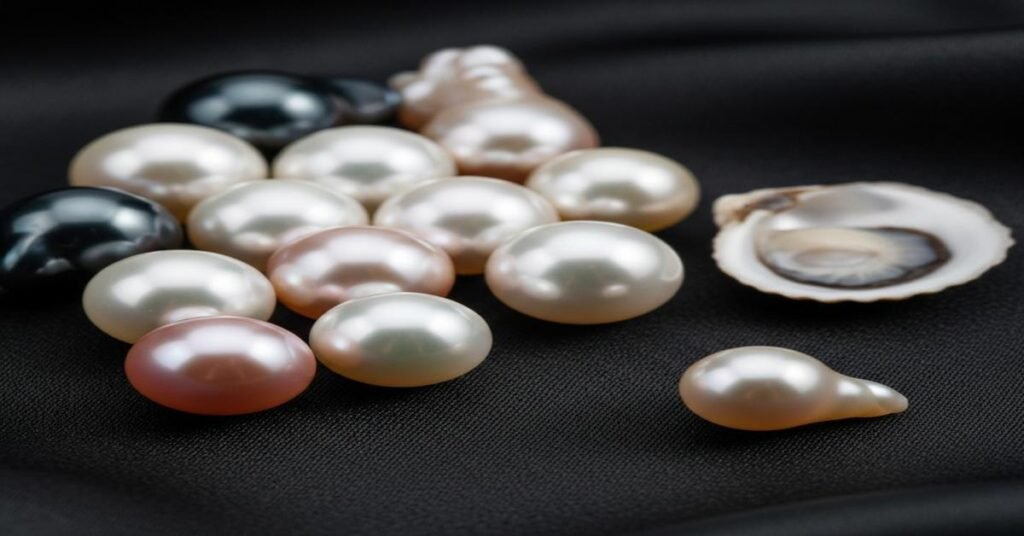
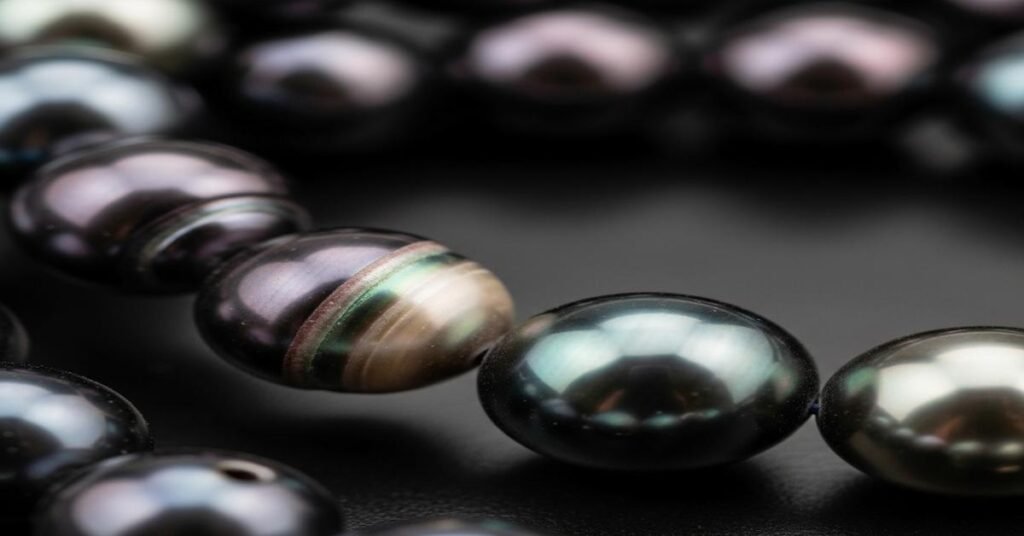
Black pearls are beautiful—and confusing. Many strands sold as “Tahitian” are actually inexpensive, dyed freshwater pearls. The price looks great, the color looks dramatic, and the description sounds exotic. But the chemistry of dyeing leaves clues. If you know where to look, you can spot dye concentration and avoid paying a premium for the wrong […]

Dyed Black Pearls: Your “Tahitian” Pearl Is Just a Cheap, Dyed Freshwater Pearl, How to Spot the Dye Concentration. Read More »

The "X-Ray" Test: The Only Way to Prove a Pearl Is 100% Natural and Not Cultured, A Look Inside the Rarest Gems.

The “X-Ray” Test: The Only Way to Prove a Pearl Is 100% Natural and Not Cultured, A Look Inside the Rarest Gems.

When serious money is on the line, guessing is not enough. With pearls, the question is simple but crucial: is it truly natural, or is it cultured? Many clues can hint at the answer, but only one method can prove it with certainty: an X-ray view of the pearl’s internal structure. This article explains why

The “X-Ray” Test: The Only Way to Prove a Pearl Is 100% Natural and Not Cultured, A Look Inside the Rarest Gems. Read More »

Akoya vs. Freshwater vs. South Sea: You Are Overpaying for Your Pearls, A Jeweler Explains the Real Difference in Value.

Akoya vs. Freshwater vs. South Sea: You Are Overpaying for Your Pearls, A Jeweler Explains the Real Difference in Value.

You probably paid too much for your pearls. Not because pearls are a bad buy, but because the market rewards branding and buzz more than the traits that actually create beauty and longevity. As a bench jeweler, I’ll show you what really makes Akoya, Freshwater, and South Sea pearls different, and how to spot value

Akoya vs. Freshwater vs. South Sea: You Are Overpaying for Your Pearls, A Jeweler Explains the Real Difference in Value. Read More »

"Lab-Grown Pearls" Are a Myth: But "Cultured" Pearls Aren't "Natural," A Guide to the Confusing World of Pearls.

“Lab-Grown Pearls” Are a Myth: But “Cultured” Pearls Aren’t “Natural,” A Guide to the Confusing World of Pearls.

“Lab-grown pearls” sound plausible in the age of lab-grown diamonds. But pearls aren’t crystals you can grow in a vessel. Every real pearl—whether wild or farmed—forms inside a living mollusk. That’s why the phrase is a myth. At the same time, most pearls sold today are not “natural” in the historical sense. They’re cultured, meaning

“Lab-Grown Pearls” Are a Myth: But “Cultured” Pearls Aren’t “Natural,” A Guide to the Confusing World of Pearls. Read More »

The "Pearl" in Your Necklace Is Plastic: How to Spot a "Majorica" or Shell Pearl, The "Tooth Test" Never Fails.

The “Pearl” in Your Necklace Is Plastic: How to Spot a “Majorica” or Shell Pearl, The “Tooth Test” Never Fails.

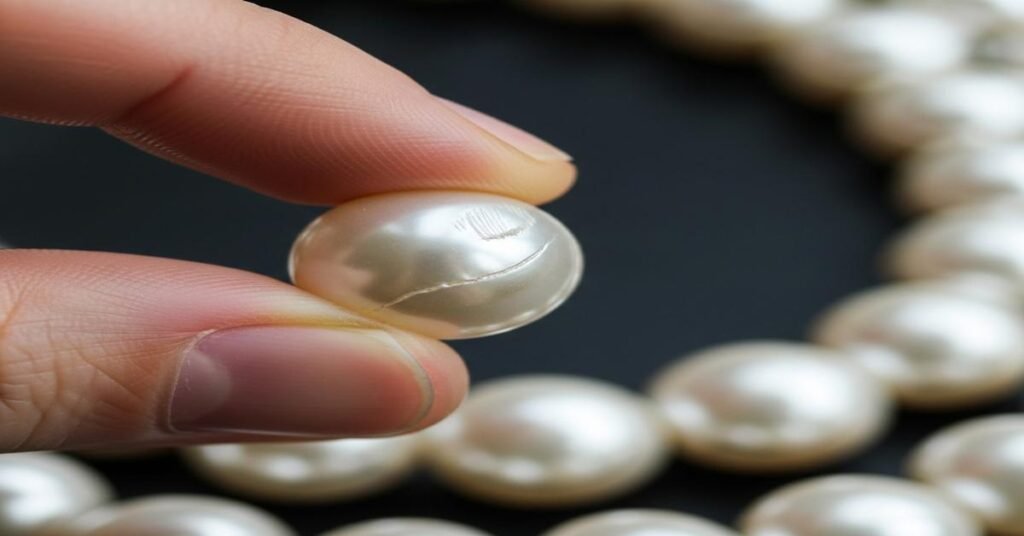
You bought a necklace that looks like pearls. It shines, it feels nice, and the clasp even looks fancy. But many “pearls” today are plastic, glass, or composite beads. Two names you will hear are “Majorica” (a high‑quality imitation from Spain) and “shell pearls” (mother‑of‑pearl cores with a coating). Here is how to tell what

The “Pearl” in Your Necklace Is Plastic: How to Spot a “Majorica” or Shell Pearl, The “Tooth Test” Never Fails. Read More »

"Smoked" Opals: The Deceptive Treatment That Turns a Worthless White Opal into an "Expensive" Black One, How to Spot It.

“Smoked” Opals: The Deceptive Treatment That Turns a Worthless White Opal into an “Expensive” Black One, How to Spot It.

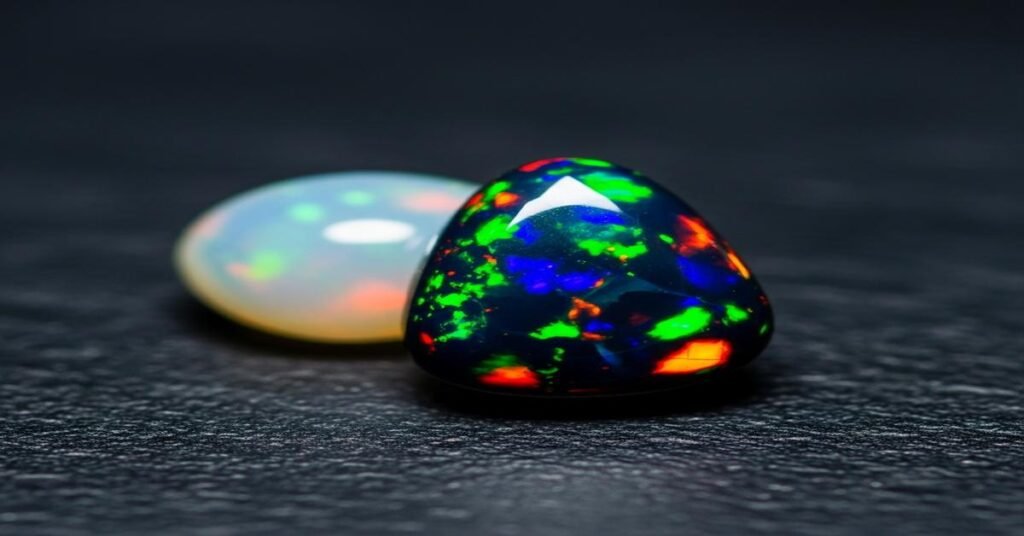
Some opals are naturally black and command high prices because their dark body makes the play-of-color explode with contrast. Others are cheap white opals that have been artificially darkened to imitate this effect. “Smoked” opals fall into that second group. Sellers may present them as natural black opals, but they are simply treated stones with

“Smoked” Opals: The Deceptive Treatment That Turns a Worthless White Opal into an “Expensive” Black One, How to Spot It. Read More »

"Hydrophane" Opal Warning: Your Ethiopian Opal Absorbed Water and Lost Its Fire, Is It Damaged Forever? A Guide to Natural Opal Care.

“Hydrophane” Opal Warning: Your Ethiopian Opal Absorbed Water and Lost Its Fire, Is It Damaged Forever? A Guide to Natural Opal Care.

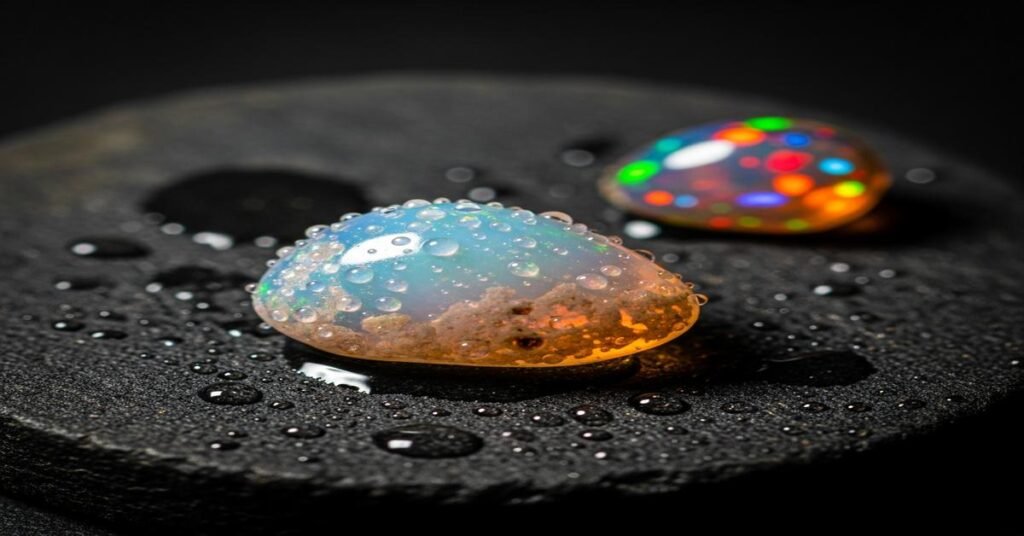
Your Ethiopian opal went cloudy after a swim, shower, or cleaning. The bright “fire” faded. Don’t panic. Many Ethiopian opals are hydrophane. They soak up water, oils, and even humidity. When that happens, light behaves differently inside the stone and the play-of-color weakens. Most of the time, the opal will recover as it dries. The

“Hydrophane” Opal Warning: Your Ethiopian Opal Absorbed Water and Lost Its Fire, Is It Damaged Forever? A Guide to Natural Opal Care. Read More »

Natural Opal vs. Gilson Synthetic: A Gemologist's Guide to Spotting the Difference in "Play-of-Color."

Natural Opal vs. Gilson Synthetic: A Gemologist’s Guide to Spotting the Difference in “Play-of-Color.”

Opal’s magic lives in its “play-of-color” — those sudden spectral flashes that dance as you move the stone. Natural precious opal and Gilson synthetic opal both show this effect, but they do it in different ways. If you know what to look for, you can tell them apart without damaging the gem. This guide explains

Natural Opal vs. Gilson Synthetic: A Gemologist’s Guide to Spotting the Difference in “Play-of-Color.” Read More »

"Doublet" and "Triplet" Opal Scams: Is Your Opal's Backing Made of Black Plastic? You've Been Fooled by a Composite Stone.

“Doublet” and “Triplet” Opal Scams: Is Your Opal’s Backing Made of Black Plastic? You’ve Been Fooled by a Composite Stone.

Opal’s color play is mesmerizing, so it’s no surprise that sellers try to stretch a small slice of opal into a bigger profit. One common trick is mounting a wafer-thin piece of precious opal onto a dark backing—or sandwiching it under a clear cap—then selling it as a “black opal.” If the backing is black

“Doublet” and “Triplet” Opal Scams: Is Your Opal’s Backing Made of Black Plastic? You’ve Been Fooled by a Composite Stone. Read More »

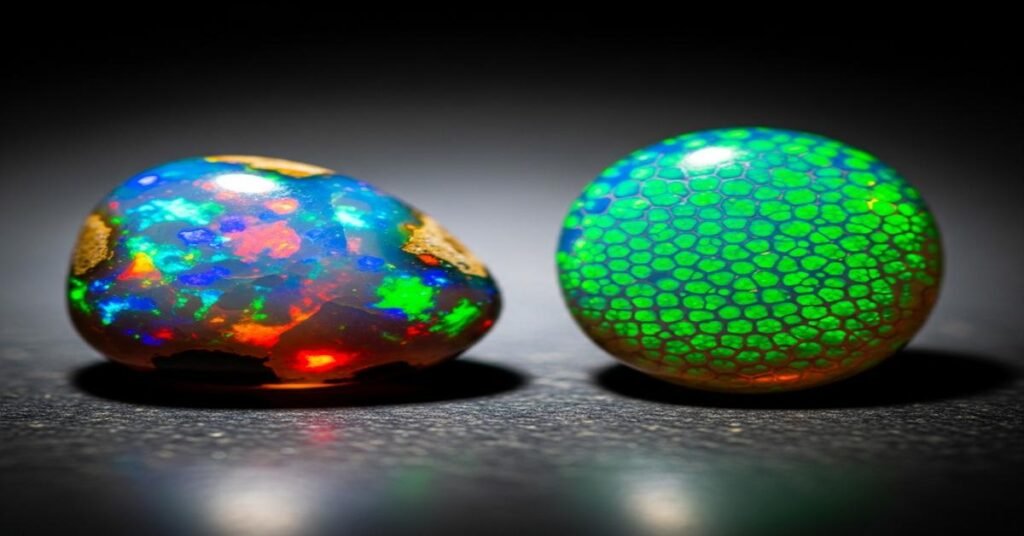
The "Lizard Skin" Pattern: The Dead Giveaway of a Lab-Grown Opal, How to Spot the Unnatural Columnar Pattern.

The “Lizard Skin” Pattern: The Dead Giveaway of a Lab-Grown Opal, How to Spot the Unnatural Columnar Pattern.

Opal can look like magic. Flashes of color jump as you tilt the stone. But not all opal forms in nature. One of the most reliable clues that an opal was grown in a lab is the so‑called “lizard skin” pattern. It is a surface mosaic made of repeating, neatly edged patches. That mosaic sits

The “Lizard Skin” Pattern: The Dead Giveaway of a Lab-Grown Opal, How to Spot the Unnatural Columnar Pattern. Read More »