
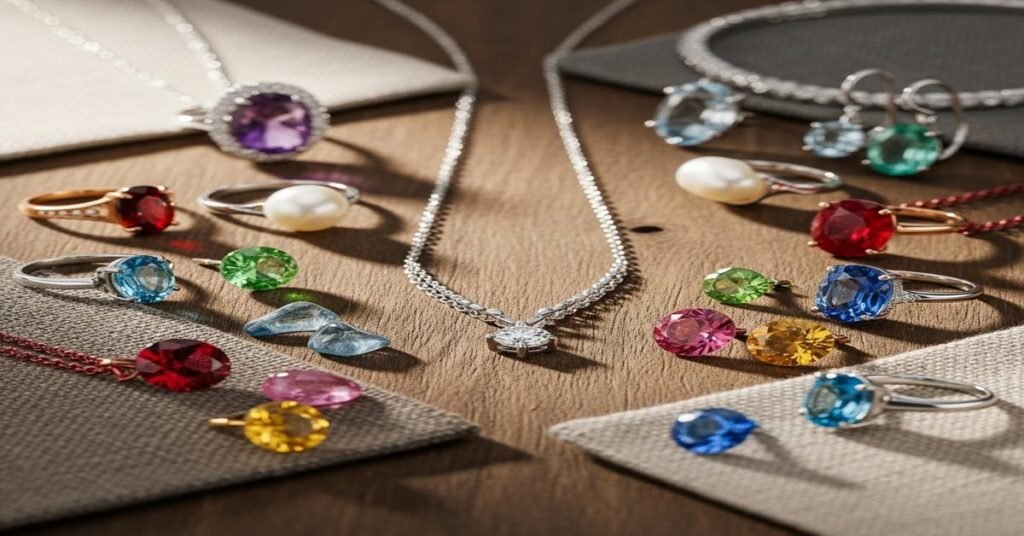
Birthstone jewelry is a thoughtful way to personalize a gift. A single gem can combine aesthetics, symbolism, and practicality. Choosing the right stone means matching meaning, durability, style, and budget. Below I explain what each month’s stone represents, how they differ in hardness and care, and practical buying tips so your gift lasts.
How to think about birthstone jewelry
Decide first how the piece will be worn. Rings see the most wear, so choose harder stones. Pendants and earrings can be softer. Why hardness matters: the Mohs scale predicts scratch resistance. A 9 (sapphire) will resist scratches far better than a 6 (opal). Also consider size. For a ring, 0.5–1.0 ct (about 5–6.5 mm for round cuts) balances presence and wearability. For pendants, 1–2 ct (6.5–8.2 mm) looks substantial without snagging.
Birthstones by month: meaning, durability, and buying notes
- January — Garnet
Meaning: protection and constancy. Hardness: ~6.5–7.5. Use: good for necklaces and earrings; rings require protective settings. Example: a 1.0 ct garnet (~6.5–7 mm round) in a bezel keeps the stone safe. - February — Amethyst
Meaning: calm and clarity. Hardness: 7. Best for everyday pieces if set securely. Example: 0.75 ct amethyst (5.5–6 mm) in 14k gold is a classic budget-friendly ring. 14k gold is roughly 58.3% gold and offers a durable balance of color and strength. - March — Aquamarine
Meaning: serenity and courage. Hardness: 7.5–8. Good for rings. Example: a 1.5 ct aquamarine (7–8 mm) in a four-prong setting shows off its blue with low risk of scratching. - April — Diamond
Meaning: endurance and clarity. Hardness: 10 (most durable). Choose cut, color, clarity, and carat based on budget. Example: a 0.5 ct round diamond is about 5 mm—good for delicate rings. Diamonds usually come in gold or platinum; platinum is ~95% Pt and very durable but costs more. - May — Emerald
Meaning: growth and renewal. Hardness: ~7.5–8 but often included (internal fissures). Why that matters: emeralds chip more easily despite hardness. Recommended: protective bezel or halo and avoid ultrasonic cleaning. A 0.75 ct emerald (~5.5–6 mm) looks lush in 18k gold (75% Au) to enhance color. - June — Pearl / Alexandrite
Meaning: purity (pearl), change/adaptation (alexandrite). Hardness: pearls 2.5–4.5 (very soft); alexandrite ~8.5. Pearls need gentle care and should not be set for heavy-wear rings. Alexandrite is an excellent ring stone when budget allows. - July — Ruby
Meaning: passion and courage. Hardness: 9. Rubies are durable and great for daily rings. Example: a 1.0 ct ruby (~6.5 mm) in a 4-prong 14k gold setting is resilient and vivid. - August — Peridot
Meaning: energy and growth. Hardness: ~6.5–7. Fragile to heat; avoid steam/ultrasonic cleaners. Good for studs and pendants. A 0.8 ct peridot (≈5.5–6 mm) in a bezel prevents chips. - September — Sapphire
Meaning: wisdom and loyalty. Hardness: 9. Excellent for rings and engagement jewelry when you want color. Example: a 1.5 ct blue sapphire (≈7–8 mm) in platinum complements the stone’s durability. - October — Opal / Tourmaline
Meaning: creativity (opal), balance (tourmaline). Opal hardness: ~5.5–6.5 (fragile, porous); tourmaline: ~7–7.5. Opals need protective settings and minimal exposure to chemicals. Tourmaline is better for daily wear. - November — Topaz / Citrine
Meaning: warmth (citrine), strength (topaz). Hardness: citrine ~7, topaz ~8. Both work well in rings and pendants; topaz can show cleavage so settings should be secure. - December — Turquoise / Tanzanite / Zircon
Meaning: prosperity and calm. Hardness: turquoise ~5–6 (porous), tanzanite ~6.5–7 (sensitive to heat), zircon ~6.5–7.5. Choose protective settings and avoid ultrasonic cleaning for softer stones. Tanzanite looks best in 14k or 18k gold to enhance color.
Metals and settings: why they matter
Metal choice affects durability and cost. Sterling silver (marked 925) is 92.5% silver—affordable but soft and can tarnish. 14k gold is about 58.3% pure gold; it balances color and strength for everyday wear. 18k is richer in color (75% gold) but softer. Platinum (~95% Pt) is very durable and hypoallergenic. For softer stones, choose bezel or halo settings. Why: bezels protect edges and reduce knocks that cause chips. Prongs highlight shine but expose edges to hits.
Lab-grown vs natural vs simulants
Lab-grown gems have the same chemistry and look as natural stones but cost less. They’re often more affordable and more traceable for ethics. Simulants (like cubic zirconia) mimic appearance but differ in durability and brilliance. For example, moissanite has a hardness near 9.25 and high fire, making it an excellent diamond alternative for engagement rings. Ask for gem reports when value matters.
Care, cleaning, and longevity
- Clean most stones with mild soap and a soft brush. Rinse and dry with a lint-free cloth.
- Avoid ultrasonic and steam cleaners for emeralds, opals, pearls, and treated stones. Why: treatments and inclusions can be damaged by vibration and heat.
- Store pieces separately to prevent scratches. Hard stones like diamond can scratch softer gems.
- For rings worn daily, inspect prongs and settings yearly. Loose stones are lost, not fixed.
Budgeting and personalization
Budget examples: under $200—small sterling silver pendant with a 3–4 mm gemstone (≈0.2–0.3 ct). $200–$1,000—0.5–1.0 ct colored stones set in 14k gold. $1,000+—high-quality emeralds, rubies, sapphires, or diamonds with certification. Personalization: engravings, mixed-metal combinations, or adding secondary accent stones (melee diamonds 0.01–0.02 ct each) increase sentiment without a huge price jump.
Final tips
Match the stone to how it will be used. Prioritize hardness for daily rings and choose protective settings for softer gems. Ask for a gem report when spending significantly. Consider lab-grown options for budget and ethics. With the right choice, a birthstone becomes a personal, beautiful item that lasts for years.

I am G S Sachin, a gemologist with a Diploma in Polished Diamond Grading from KGK Academy, Jaipur. I love writing about jewelry, gems, and diamonds, and I share simple, honest reviews and easy buying tips on JewellersReviews.com to help you choose pieces you’ll love with confidence.