
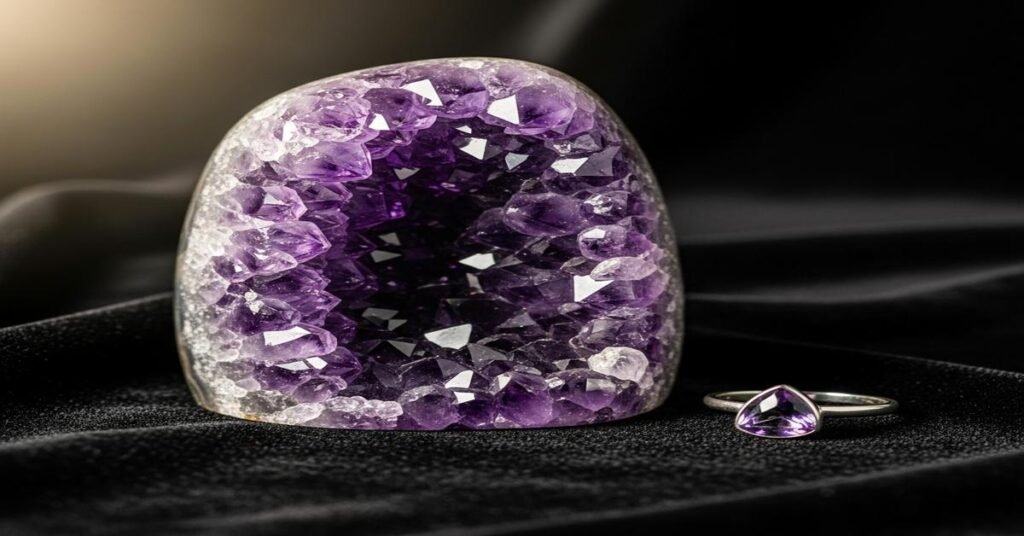
Amethyst (called jamunia in some Indian languages) is a purple quartz long used in jewelry and folk healing. Many people believe amethyst can help reduce cravings, calm the mind, and support breaking bad habits. Those effects come not from magic but from how the stone is used: its color and presence act as a consistent cue, and rituals around it encourage introspection and self-control. Below I explain the practical reasons amethyst can help, how to choose a real stone, and the step‑by‑step way to wear it for the best chance of meaningful change.
What amethyst is and why it’s linked to habit change
Amethyst is a variety of quartz. It rates about 7 on the Mohs hardness scale, so it is durable for everyday wear. Typical physical details: refractive index 1.544–1.553 and specific gravity ~2.65. Color ranges from pale lilac to deep violet; the deeper, more saturated purples are the most valued in jewelry.
Why do people say it helps with habits and addiction? There are three practical reasons:
- Visual and tactile cue: Wearing a distinct purple stone gives you a physical reminder at moments of temptation. That simple cue can interrupt automatic behavior.
- Ritual and intention: The act of choosing a stone, cleansing it, and setting an intention focuses attention. Focused attention strengthens self‑control over time.
- Calming association: The color and cultural meaning of amethyst are linked to calm and clarity. That association can reduce anxiety-driven urges, making habit change easier.
Choosing the right amethyst for maximum effect
Quality matters because clarity of color makes the cue stronger. Look for these specifics:
- Color: Aim for saturated violet to reddish‑violet. Pale stones still work, but they are less visually striking.
- Clarity: Clean eye‑clear material is best. Small inclusions are fine, but avoid heavily fractured stones that can chip.
- Cut and size: For rings, a faceted amethyst of about 3–8 ct (roughly 8–12 mm across) is practical and visible. For a pendant, 10–20 mm (5–15 ct) makes a good focal piece. Cabochons are softer visually and good if you prefer a smooth touch point.
- Treated or synthetic: Most commercial amethyst is natural; some stones are heat treated or synthetic. Heat treatment is common and acceptable. If authenticity matters, ask for gem testing or buy from a reputable jeweler.
Best metals and settings
Choose a metal and setting that suits wear and contact with skin.
- Metals: Sterling silver (marked 925) and 14k or 18k gold are common. 14k gold is 58.5% gold; 18k is 75%. Silver tends to pair nicely with amethyst color and is more affordable.
- Settings: A bezel setting protects the stone and keeps it close to the skin—good when you want the stone to be a tactile cue. Prong settings show more light and sparkle, which can strengthen the visual cue.
- Contact matters: For habit change, choose jewelry that touches skin—rings and pendants on a short chain are the most effective. Direct contact gives you a physical anchor to tap into during moments of craving.
How to wear amethyst for maximum effect—practical steps
Follow these clear steps to turn the stone into an effective tool for behavior change:
- Cleanse the stone: Rinse the new stone in warm, soapy water and dry it. Avoid strong chemicals. Amethyst can fade in prolonged direct sunlight, so dry indoors.
- Set an intention: Hold the stone and state your goal in one short sentence: for example, “I will pause and breathe when I crave cigarettes.” The phrasing should be specific and achievable.
- Choose where to wear it:
- If you want a constant reminder, wear a ring on your non‑dominant hand. This makes it easier to notice the stone without it being in your way.
- A pendant on a short chain stays near the chest and is good for emotional anchors and sleep use (if comfortable).
- Use it actively: When a craving or bad habit impulse arises, touch the stone and breathe for 60 seconds. This simple interrupt helps break the automatic loop and creates a new response pattern.
- Repeat and record: Wear the stone daily, especially during known high‑risk times. Keep a short journal: note when you used the stone and whether it helped. This builds awareness and shows progress.
- Refresh regularly: Reaffirm your intention weekly. You can re‑cleanse the stone under running water, then set the intention again to maintain its personal meaning.
Care, authenticity checks, and safety
- Care: Amethyst is hard but can chip from knocks. Clean with warm soapy water and a soft brush. Avoid harsh steam or strong chemicals. Avoid long sun exposure to prevent fading.
- Authenticity checks: Natural amethyst often shows two‑tone color and slight color zoning. Suspiciously perfect stones may be synthetic glass. If in doubt, ask for a gem certificate or a simple refractive index test from a jeweler.
- Safety: Wearing jewelry is safe for nearly everyone. If you have skin sensitivity to certain alloys, choose gold or nickel‑free silver. Remove jewelry for heavy manual work to prevent damage.
What to realistically expect
Amethyst is not a medical treatment. It does not cure addiction on its own. Instead, think of it as a practical tool that does three things: prompts mindfulness, provides a tactile/visual cue to pause, and supports ritualized behavior change. When combined with proven methods—therapy, support groups, habit‑replacement strategies, and, when needed, medical care—amethyst can be a useful ally.
Quick checklist:
- Choose saturated violet, eye‑clean amethyst, 8–12 mm for rings or 10–20 mm for pendants.
- Prefer bezel or prong settings in sterling silver or 14k/18k gold.
- Clean, set a short intention, and wear where it touches the skin.
- Use it actively: touch, breathe, and journal when urges arise.
- Combine with therapy or practical habit‑change techniques for best results.
If you want, tell me how you plan to use the stone (ring or pendant) and I’ll recommend a specific size, setting, and wearing schedule tailored to your routine.

I am G S Sachin, a gemologist with a Diploma in Polished Diamond Grading from KGK Academy, Jaipur. I love writing about jewelry, gems, and diamonds, and I share simple, honest reviews and easy buying tips on JewellersReviews.com to help you choose pieces you’ll love with confidence.