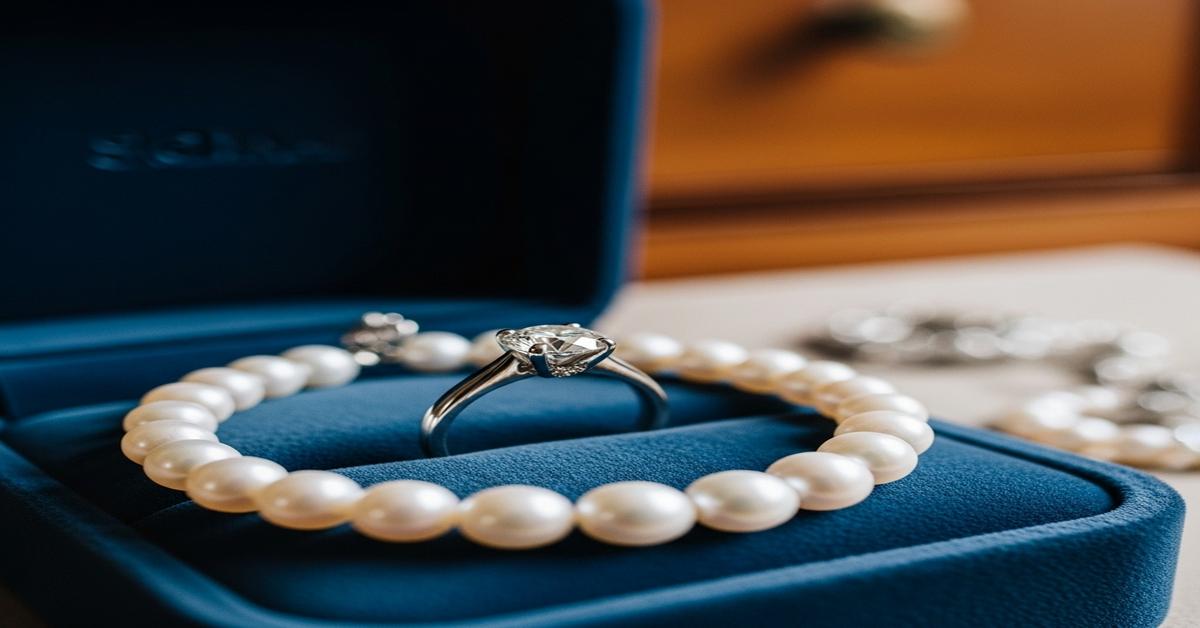
Expensive jewelry—engagement rings, heirloom necklaces, investment-grade gemstones—holds money and memory. Most people assume their homeowner’s or renter’s insurance covers those items. In many cases it does, but only up to a small limit and often not for the kinds of loss that actually happen. Knowing the difference between basic homeowner coverage and dedicated jewelry insurance will save you money and stress if a ring is lost, stolen, or damaged.
How homeowner’s insurance treats jewelry
Homeowner’s policies usually include personal property coverage that applies to jewelry. But this coverage often comes with a sublimit specifically for jewelry—commonly $1,000 to $2,000. That sounds reasonable until you compare it to the cost of a typical engagement ring or designer bracelet.
- Example: a 1.5 ct round brilliant diamond in a 14k white gold setting can easily be $6,000–$12,000 depending on cut, color, and clarity. A $2,000 sublimit would cover only a fraction of replacement cost.
- Policies also differ on perils. Some are “named perils” and exclude mysterious disappearance. If you misplace a loose diamond at home and can’t find it, a homeowner policy might deny the claim.
- Many homeowner plans pay a claim at actual cash value (ACV) rather than replacement cost. ACV factors in depreciation, which can reduce payout.
Why that small sublimit and exclusions matter
Insurance companies use sublimits to limit aggregate exposure. Jewelry is small, valuable, and easy to steal. That’s why standard policies protect the insurer by capping payouts. The practical effect: without extra coverage you can face large out-of-pocket costs after a theft or loss.
What jewelry insurance actually covers
Dedicated jewelry insurance—either a scheduled endorsement on your homeowner’s policy or a standalone policy from a specialist—fills the gaps. It typically provides:
- Full agreed or replacement value rather than ACV. You and the insurer agree on value up front. If a 2.0 ct sapphire ring is valued at $18,000, that amount is what you’ll receive or use toward replacement.
- Broader perils, including mysterious disappearance and worldwide coverage. That protects you if a bracelet goes missing overseas or a stone slips out and is gone.
- Options for repair or replacement and, in many policies, coverage for loss, theft, damage, and even loss of gemstones set into jewelry.
- Low or no deductible choices. With high-value items you often prefer a low deductible so you aren’t forced into expensive repairs yourself.
How to determine whether you need scheduled coverage
Start by checking your homeowner’s declarations page for the jewelry sublimit. If a single piece is worth more than that sublimit, schedule it.
- Example: homeowner’s policy sublimit = $1,500. Your vintage Art Deco diamond ring appraised at $8,500. You need a scheduled endorsement or separate policy.
- Consider scheduling if you travel with items often. Worldwide coverage prevents surprises if theft occurs while traveling.
- If you rely on the sentimental value, remembered value is not enough. Appraisals and grading reports document both monetary and gem specifics.
Practical steps to insure your jewelry correctly
Follow these steps to avoid claim problems and to get adequate protection.
- Get a current appraisal. Use an independent, qualified appraiser (look for GIA, AGS, or independent graduate gemologists). The appraisal should state replacement value, date, detailed description (stone weight in ct, mm dimensions, cut, color, clarity), and metal composition (e.g., 18k yellow gold = 75% gold).
- Keep lab reports for diamonds and colored gems. A GIA diamond report or colored stone lab report supports identity and quality. That speeds claims and prevents disputes.
- Photograph each piece. Include close-ups of hallmarks, engravings, and any damage. Store digital copies off-site and keep originals in a safe place.
- Decide replacement vs agreed value. Agreed value policies fix the payout in advance. Replacement cost policies commit to replacing like-for-like but may require time to find comparable stones.
- Compare endorsements vs standalone policies. A scheduled endorsement adds the piece to your homeowner policy. A standalone jewelry policy often has more flexible claims handling and quicker service for jewelry losses.
- Update appraisals every 2–5 years. Gem and metal market shifts, and fashion can change replacement costs. Reappraise when you alter the piece or when gold prices move significantly.
What to expect on a claim
If the worst happens, file promptly. Expect the insurer to request:
- Police report for theft.
- Appraisal and receipts.
- Photographs and lab reports.
- An inspection or subrogation if the item is recovered or replaced.
Insurers may offer repair, replacement, or cash settlement. If your policy is agreed value, you should receive the agreed amount, minus any deductible. If your homeowner policy paid ACV, the settlement could be lower than replacement cost.
Common mistakes to avoid
- Assuming all jewelry is covered fully by homeowner’s insurance. Check the sublimits.
- Using a retail receipt as the only documentation. Receipts show purchase price but not market replacement value or gem quality.
- Waiting to insure a newly upgraded or inherited piece. Coverage should start when value changes.
- Failing to mention changes in use—wearing a valuable necklace daily vs keeping it in a safe can affect risk and coverage.
Quick checklist to protect your jewelry today
- Find your homeowner policy and note the jewelry sublimit.
- Inventory and photograph every valuable piece. Record ct, mm, metal (14k vs 18k), and any lab reports.
- If any single item exceeds the sublimit, get an appraisal and schedule it or buy a standalone policy.
- Keep copies of appraisals, lab reports, photos, and receipts in a secure, separate location.
- Update appraisals every 2–5 years or after modifications.
Jewelry insurance isn’t an extra indulgence. It’s a practical step to protect high-value items that are easy to lose or steal. Check your homeowner policy today, document your pieces, and choose coverage that replaces your jewelry, not just reimburses its worn value.

I am Satyam Pandey, a gemologist with a Diploma in Polished Diamond Grading from KGK Academy, Jaipur. I love writing about jewelry, gems, and diamonds, and I share simple, honest reviews and easy buying tips on JewellersReviews.com to help you choose pieces you’ll love with confidence.