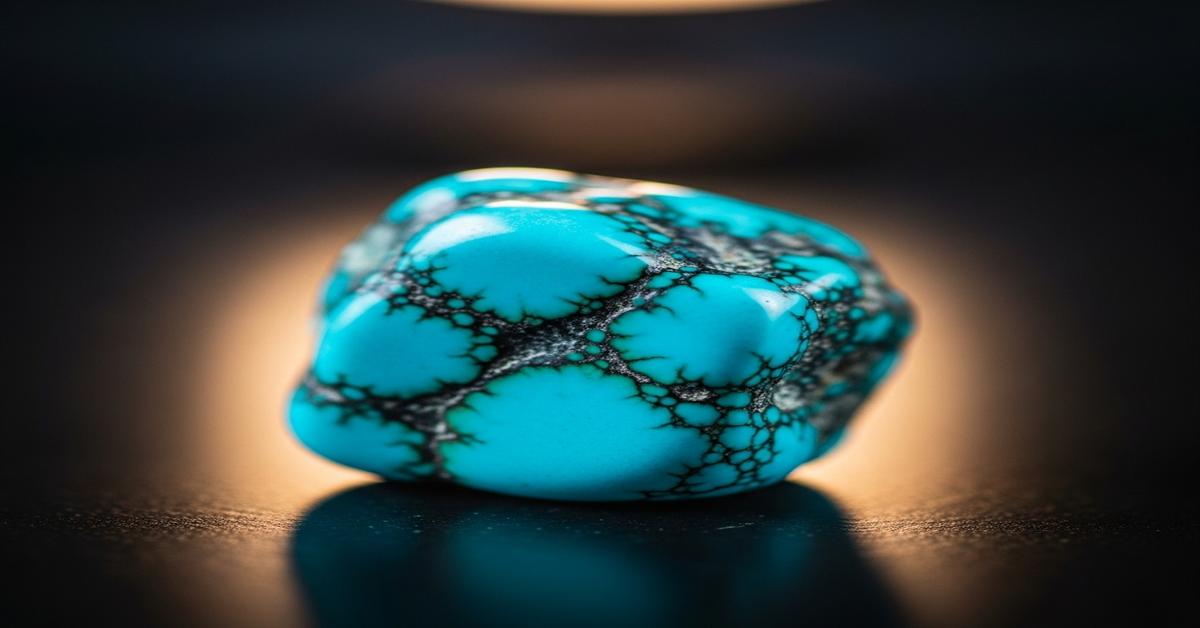
Turquoise — called firoza in Persian and many South Asian languages — has been worn as a shield against the evil eye for thousands of years. The stone’s blue-green color, cultural history, and physical properties combined to create a practical and symbolic talisman. This article explains why turquoise is considered protective, what “protection” has meant in different cultures, and how to choose and care for a genuine piece if you want to wear it as an amulet.
What is turquoise (firoza)?
Turquoise is a hydrated copper–aluminium phosphate. A commonly cited chemical formula is CuAl6(PO4)4(OH)8·4H2O. It forms in arid regions where copper-rich groundwater reacts with aluminous rocks. Color ranges from sky blue to green-blue to yellow-green. The stone’s hardness is about 5–6 on the Mohs scale, and specific gravity typically sits between 2.6 and 2.9. These physical traits explain why turquoise is often cut as a cabochon or used in beads — it is durable enough for jewelry but still fairly soft compared with quartz or corundum.
Why has turquoise been linked to protection against the evil eye?
- Color and symbolism: The blue of turquoise resembles the sky. In many cultures, the sky is associated with gods, fate, and watchful protection. Wearing a sky-colored stone symbolically brings that protective “overwatch” down to the wearer.
- Cross-cultural recurrence: Ancient Persians, Egyptians, Native Americans, Tibetans and Arabs independently used turquoise in amulets. When different cultures select the same object for the same purpose, the choice usually reflects both symbolic fit and practical results — the stone resists weathering, is visually striking, and signals status.
- Copper content and ancient medicine: Copper gives turquoise its blue shade. In older medical traditions, copper was thought to balance the body and dispel harmful influences. Whether or not that has physiological support, the belief strengthened turquoise’s reputation as a protective agent.
- Wear and visibility: Turquoise is highly visible at a distance. Historically, wearing an obvious amulet made intentions clear: it declared protection and invited social behaviors (respect, avoidance of envy). Social signaling is a practical form of protection.
How protection was practiced historically
Examples show practical uses rather than abstract belief. In Persia, turquoise (firoza) was set into horse bridles, dagger hilts, and women’s headpieces. In Egypt, the stone was inlaid into funerary items to ward off malevolent forces in the afterlife. Native American tribes placed turquoise on medicine bundles and necklaces to guard travelers. Across these uses, the stone functioned as a visible protective object, often tied to rituals—blessings, prayers, or placement over entrances—not merely as decoration.
Surprising benefits people associate with turquoise
- Soothing and focus: Many wearers report a calming effect when they touch the stone. Psychologically, a tactile amulet can reduce stress by providing a deliberate ritual — you touch it when anxious and refocus attention.
- Communication aid: In spiritual and folk traditions, turquoise is linked to the throat area and expression. People wear it during negotiations or public speaking to feel more confident. This is a cultural, symbolic benefit rather than a proven physiological effect.
- Identity and continuity: Wearing turquoise can signal membership in a cultural group or continuity with ancestors. That social belonging can reduce the perceived risk of social envy and provide practical protection through social cohesion.
How to use turquoise as a protective talisman
- Wear it often: The most common practice is a pendant near the chest or a ring on the right hand. These positions keep the stone visible and easy to touch when you want to invoke it.
- Choose the right setting: A bezel setting protects the stone’s edges and surface. Because turquoise is softer (Mohs 5–6), prongs can chip it. Silver and 14k gold are traditional metals; silver is most common in Persian and Native American work.
- Bead sizes: For everyday wear, bead strings of 6–8 mm are common. Cabochons for pendants are often 10×8 mm, 12×10 mm, or larger. A 10×8 mm cabochon typically weighs roughly 3–5 carats depending on thickness and porosity.
- Ritualize it: If you want the traditional protective effect, pair the stone with a brief, repeatable ritual—blessing, intention-setting, or carrying it in a specific pouch. Rituals create a memory anchor and increase the psychological sense of protection.
Care, treatments, and how to buy with confidence
- Treatments to know: Most turquoise on the market is stabilized. Stabilization uses resins to fill pores and improve durability. Untreated natural turquoise is rarer and more fragile. Reconstituted turquoise (powder bonded with resin) and dyed howlite or magnesite are common imitations.
- How to tell: Ask the seller for treatment disclosure. Look under a 10x loupe: natural turquoise often shows an irregular matrix of brown/black veins. Dye often pools in cracks or shows unnaturally even color. An acetone test may remove dye from treated pieces but can also damage the stone—only use this if you know what you’re doing.
- Cleaning: Use a soft cloth and mild soap. Avoid ultrasonic cleaners, steam, bleach, or acids. Because turquoise is porous, prolonged exposure to water, oils, or perfumes can alter color or stain the stone.
- Price and provenance: Persian (Iranian) turquoise and certain American mines (e.g., Sleeping Beauty, Nevada) command premiums for their stable, vivid blue color. Ask for origin and treatment. Prices reflect color intensity, matrix pattern, size, and treatment.
Final considerations
Turquoise’s reputation as the “ultimate protector” rests on a mix of visual symbolism, cultural continuity, and practical use as a visible amulet. The stone itself is not a literal barrier, but it performs reliably as a symbolic shield: it signals protection to others, anchors calming rituals for the wearer, and carries cultural authority. If you want a protective talisman, choose a well-set, honestly described turquoise, wear it where you can see and touch it, and maintain it with gentle care.

I am G S Sachin, a gemologist with a Diploma in Polished Diamond Grading from KGK Academy, Jaipur. I love writing about jewelry, gems, and diamonds, and I share simple, honest reviews and easy buying tips on JewellersReviews.com to help you choose pieces you’ll love with confidence.