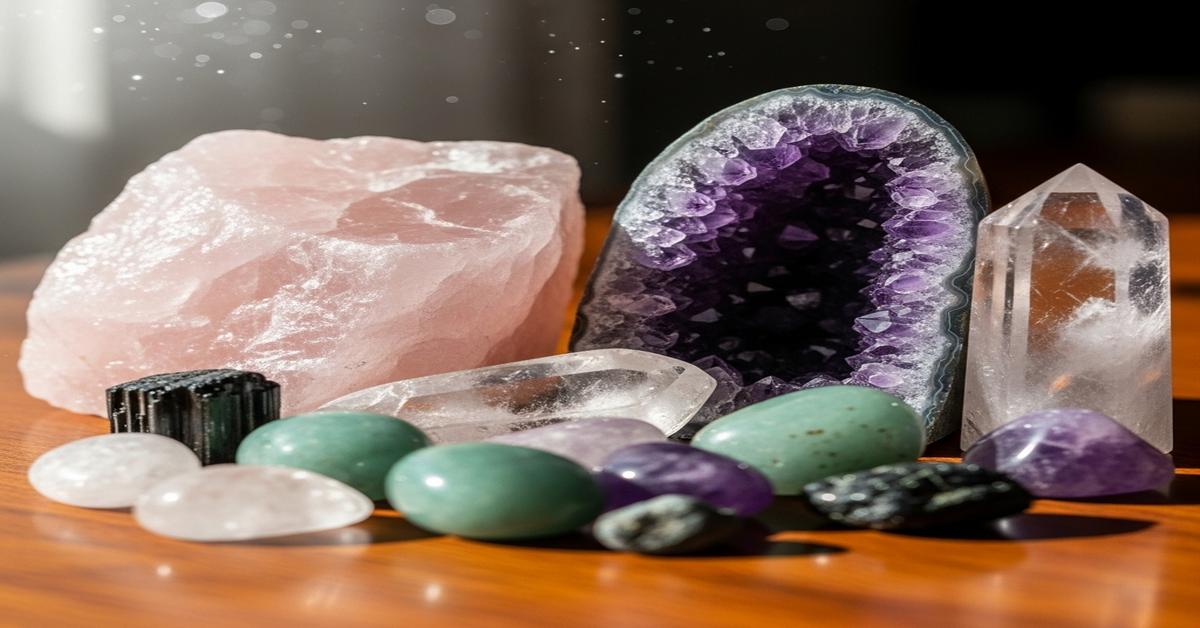
Crystal healing is a popular alternative therapy that claims certain stones—like rose quartz and amethyst—can influence mood, health, or energy fields. People wear them, place them on the body, or keep them on a nightstand hoping for reduced anxiety, better sleep, or emotional healing. This article looks at the scientific evidence behind those claims, explains how these stones actually work as minerals, and offers practical advice if you want to use crystals safely and effectively.
How crystal healing is supposed to work
Practitioners describe several mechanisms: crystals emit subtle energies, balance “chakras,” or interact with the body’s electromagnetic field. Those explanations are often vague. They rarely give measurable predictions that can be tested in the lab. That makes scientific evaluation difficult.
What science actually measures
Science asks three basic questions: Is there a plausible physical mechanism? Are results consistent and replicable? Do controlled trials show an effect beyond placebo? For crystal healing the answers are:
- Physical mechanism: No known mechanism links a stationary mineral to sustained changes in mood or health at the scale claimed. Quartz is piezoelectric—that is, it generates tiny voltages under mechanical stress—but those voltages are microscopic and require electrodes to be useful. They don’t produce meaningful biological effects when a stone sits on your skin.
- Consistency: Reports of benefit are inconsistent and subject to expectation and context. Different people report different outcomes with the same stone.
- Controlled trials: High-quality randomized controlled trials are few. Reviews of available studies show benefits are consistent with placebo effects and expectation. In short, there’s no reliable scientific evidence that crystals have specific healing properties beyond psychological effects.
Rose quartz: claims versus mineral facts
Claims: Rose quartz is often marketed as the “stone of love.” Sellers claim it boosts self-esteem, attracts relationships, or heals emotional wounds.
Mineral facts: Rose quartz is a variety of quartz—chemical composition SiO2—whose pale pink color comes from trace elements and microscopic inclusions such as titanium, iron, manganese, or fibrous minerals. It has a Mohs hardness of about 7, so it’s hard and durable. There is no known way those trace elements or inclusions would produce measurable emotional changes in another person just by proximity.
Bottom line: Any emotional benefits are likely psychological: ritual, symbolic meaning, and focused attention. Rose quartz can be a helpful reminder or a tool for mindfulness, but it’s not a proven biochemical therapy for mood disorders.
Amethyst: claims versus mineral facts
Claims: Amethyst is credited with calming the mind, aiding sleep, or reducing addiction and anxiety.
Mineral facts: Amethyst is purple quartz (SiO2). Its color arises from iron impurities and natural irradiation. Heating amethyst at high temperatures often converts it to yellow-orange citrine. Like other quartz, it’s piezoelectric, but again the effect is negligible for healing purposes.
Evidence: Scientific tests don’t show amethyst emits any specific calming energy. Reported sleep improvements are consistent with placebo and sleep-hygiene changes (for example, turning off screens, setting an intention to relax, or using the stone as part of a bedtime ritual).
Why people often feel better after using crystals
- Expectation and placebo: Expecting a benefit can produce real changes in mood, pain perception, and even measurable brain activity. Placebo effects can alter neurotransmitters (like dopamine and endogenous opioids) and signal pathways that modulate pain and mood.
- Ritual and attention: Holding a stone, breathing deeply, or journaling while using a crystal introduces mindfulness. That focused attention reduces ruminative thought and anxiety through well-understood psychological pathways.
- Behavioral activation: Using a crystal may lead someone to take other helpful steps—talking with friends, sleeping earlier, or exercising—which produce real benefits.
- Social meaning: Crystals often come with a supportive community or narrative. Feeling connected to others and supported can improve wellbeing.
Risks and practical advice
Crystals are low-risk physically, but there are real concerns to keep in mind:
- Don’t delay medical care. Using crystals instead of proven treatments for serious conditions (depression, infections, cancer) can be dangerous.
- Allergies or toxins: Some decorative pieces are dyed or coated with metals; low-quality jewelry can contain nickel or lead in settings. Clean and source pieces from reputable sellers if you have sensitivities.
- Cost and opportunity cost: Spending large amounts on “healing” stones has a financial cost. If the money replaces evidence-based therapy, that’s a problem.
- Placebo ethics: If you use crystals to support wellbeing, be honest with yourself about why you use them. Combine them with therapy, exercise, or medication where needed.
How to use crystals sensibly
If crystals help you feel calmer, there’s no harm in using them as a psychological tool—provided they complement, not replace, medical care. Practical suggestions:
- Use a crystal as a focal object during a 5–10 minute breathing or grounding practice.
- Keep a small stone on your desk to cue mindful breaks. A 25–40 mm palm stone is convenient.
- Pair crystal rituals with evidence-based actions: regular sleep times, cognitive behavioral techniques, or counseling.
- Ask sellers specific questions about origin and treatments. For example: “Is this natural or dyed? Was it heat-treated?” Natural amethyst is common; a deep purple usually indicates natural coloration, while overly bright or uniformly colored stones may be dyed or synthetic.
How to evaluate crystal claims
Use these practical tests when you encounter a health claim:
- Is there a specific mechanism that can be measured? Vague “energy” claims are a red flag.
- Are there controlled studies with clear outcomes? Anecdotes are not substitutes for trials.
- Could the effect be explained by placebo, ritual, or behavior change? If yes, the crystal may still help, but for psychological reasons rather than mineral physics.
- Does the claim encourage replacing medical treatment? If so, be skeptical and consult a clinician.
In short, rose quartz and amethyst are interesting and beautiful minerals with real geological stories. They do not have proven, specific healing powers beyond the strong psychological and social effects that come from belief, ritual, and focused attention. If you enjoy them, use them as tools for mindfulness and ritual—just don’t skip evidence-based care when you need it.

I am G S Sachin, a gemologist with a Diploma in Polished Diamond Grading from KGK Academy, Jaipur. I love writing about jewelry, gems, and diamonds, and I share simple, honest reviews and easy buying tips on JewellersReviews.com to help you choose pieces you’ll love with confidence.