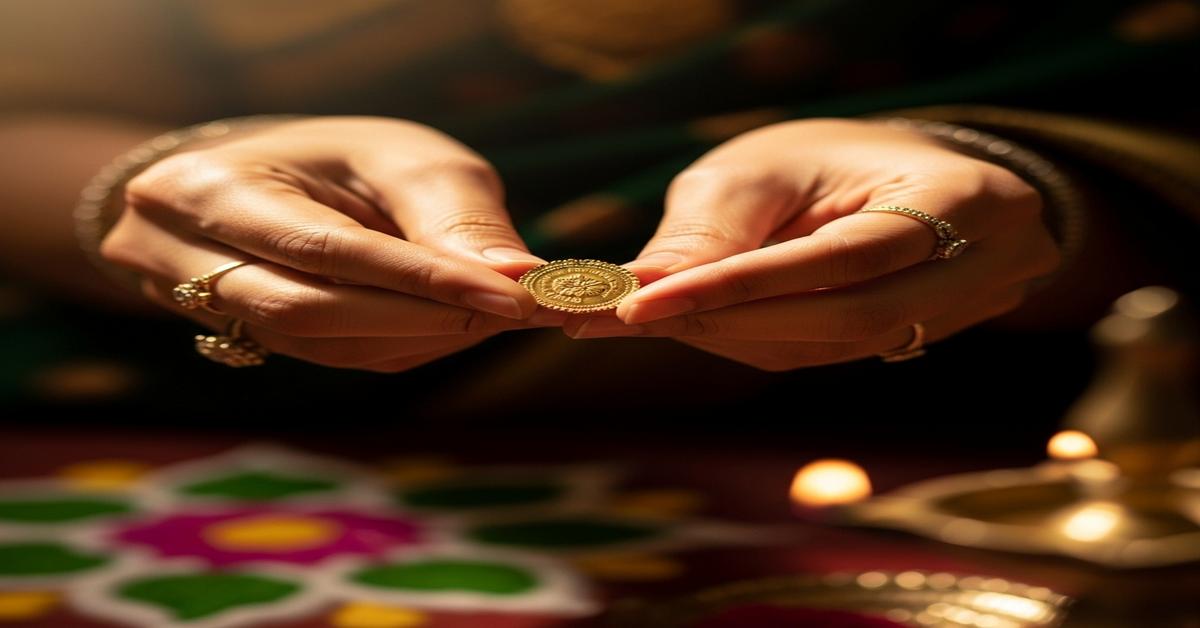
Akshaya Tritiya is one of the most popular days for buying gold in India. The name itself—”Akshaya” means inexhaustible—implies lasting gains. People buy coins, bars and jewelry on this day with the belief that such purchases multiply wealth and bring long-term prosperity. This article explains why the day is considered auspicious, how to pick the right time and what rituals and practical checks you should follow to get both spiritual satisfaction and financial sense from your purchase.
Why Akshaya Tritiya is considered auspicious for buying gold
Two practical reasons explain the tradition. First, culturally the day is linked to abundance: gods of wealth such as Kubera and Lakshmi are invoked on Akshaya Tritiya, so buying precious metal on that date is treated as inviting prosperity. Second, buying gold on a single agreed-upon day creates a ritual focus—people plan, save and commit to the purchase, which often translates into disciplined investing or gifting.
From a material point of view, gold bought as jewelry or coins on a festival day often becomes a family heirloom or a present for rites of passage. That social and emotional value is an important part of why the date became preferred.
Correct timings and what to avoid
Akshaya Tritiya follows the Tritiya tithi (third lunar day) in the bright half (Shukla Paksha) of the Vaishakha month. The auspicious window is the duration of the Tritiya tithi on that calendar day. Exact start and end times change with location, so verify the local panchang or ask the jeweller for the day’s tithi timings.
General timing guidance:
- Any time during the Tritiya tithi is considered auspicious. If the tithi stretches across two calendar days, buy during the portion that falls on Akshaya Tritiya as per your local panchang.
- Abhijit Muhurat (midday muhurta) is widely regarded as favorable in many traditions. The exact minute range depends on sunrise and sunset; a panchang lists it precisely for your location.
- Avoid Rahu Kaal. Rahu Kaal is an inauspicious interval each day. To approximate it quickly, divide the day (sunrise to sunset) into eight equal parts and use this standard weekday table for which part is Rahu Kaal:
- Sunday: 4th part
- Monday: 2nd part
- Tuesday: 7th part
- Wednesday: 5th part
- Thursday: 6th part
- Friday: 3rd part
- Saturday: 8th part
- Tip: Because sunrise and sunset times change by place and season, calculating Rahu Kaal precisely requires local sunrise/sunset. If you prefer certainty, consult a local panchang or ask the temple/jeweller for the day’s auspicious muhurta.
Ritual steps to maximize fortune (simple, commonly followed actions)
Rituals vary by family. Here are steps people commonly follow that are easy to do and align with the spirit of the day:
- Clean and pure start: Take a bath, wear clean clothes, and perform a short Ganesh-Lakshmi puja at home or at the shop. Invoke prosperity before you hand over payment.
- Buy new items: New, unused gold is preferred for auspicious purchases. If buying coins or bars, accept factory-sealed items where possible.
- Touch and offer: When the gold is handed to you, touch it to your forehead or offer it on your puja plate. Many families then place a small vermillion (kumkum) and rice grain on the gold or coin.
- Wrap and store respectfully: Keep the item in the provided cloth or box and place it in your puja corner or a clean wooden box—avoid keeping directly on the floor.
- First wearing: If the jewelry is for you, wear it after performing a short blessing or after the evening aarti, rather than immediately at night.
How to buy wisely — purity, type, and resale considerations
Buying on an auspicious day is one thing. Buying well is another. Use these specific checks:
- Purity (hallmark): In India, 22K jewellery is common and stamped 916 (91.6% gold). 24K bullion or coins are stamped 999 (99.9%). 18K is 750 (75%). Check the BIS hallmark and the refiner’s mark.
- Alloy composition: 22K jewellery’s balance (8.4%) is usually copper and silver; this gives strength and a warm yellow color. 24K is very soft and used mainly for coins and bars. Choose 18K or 14K if you want stronger alloys for everyday wear or colored stones.
- Coins vs jewellery: Coins/bars have lower making charges and better resale value per gram. Jewellery carries making charges and design premiums. If the goal is investment, prefer BIS hallmark coins/bars. For rituals and wear, jewellery is fine—just know the resale loss on making charges.
- Making charges and invoice: Ask for a written breakup—gold price, making charges, and taxes. Making charges vary by design and weight; simple designs cost less per gram than heavy, intricate pieces. Insist on a proper bill; you will need it for resale or insurance.
- Gemstones and settings: If the piece has diamonds or gemstones, check certificates for stones above 0.25 ct. Settings affect durability: prong settings need periodic checks; bezel settings protect small stones better.
- Storage and insurance: For coins and bars, keep original assay cards and boxes. Insure high-value purchases and note weight and hallmark details on the policy.
Example plan: Buying an 8 g gold coin on Akshaya Tritiya
Here is a practical step-by-step example you can follow.
- Morning: Wake early, have a short puja at home and plan to leave after sunrise but outside Rahu Kaal.
- At the shop: Ask for a sealed 8 g 999 gold coin (example: 8 g, 999 purity). Check the BIS/assay mark and the weight on the certificate. Get a printed invoice with breakup: gold rate × 8 g, minimal making charge (usually none for coins), and taxes shown.
- Ritual: Accept the coin, touch it to your forehead and place it on your puja plate with a small offering (rice and kumkum). Carry it home in its box; place it in the puja cupboard or a safe box that is kept clean.
- Follow up: Insure the coin if its value is significant to you and record the hallmark and serial number.
Key takeaway: buying gold on Akshaya Tritiya mixes tradition and financial behavior. Respect the auspicious timing (avoid Rahu Kaal), perform a short ritual that feels meaningful to you, and do standard quality checks—hallmark, weight, invoice—so your purchase is both spiritually satisfying and financially sound.

I am G S Sachin, a gemologist with a Diploma in Polished Diamond Grading from KGK Academy, Jaipur. I love writing about jewelry, gems, and diamonds, and I share simple, honest reviews and easy buying tips on JewellersReviews.com to help you choose pieces you’ll love with confidence.