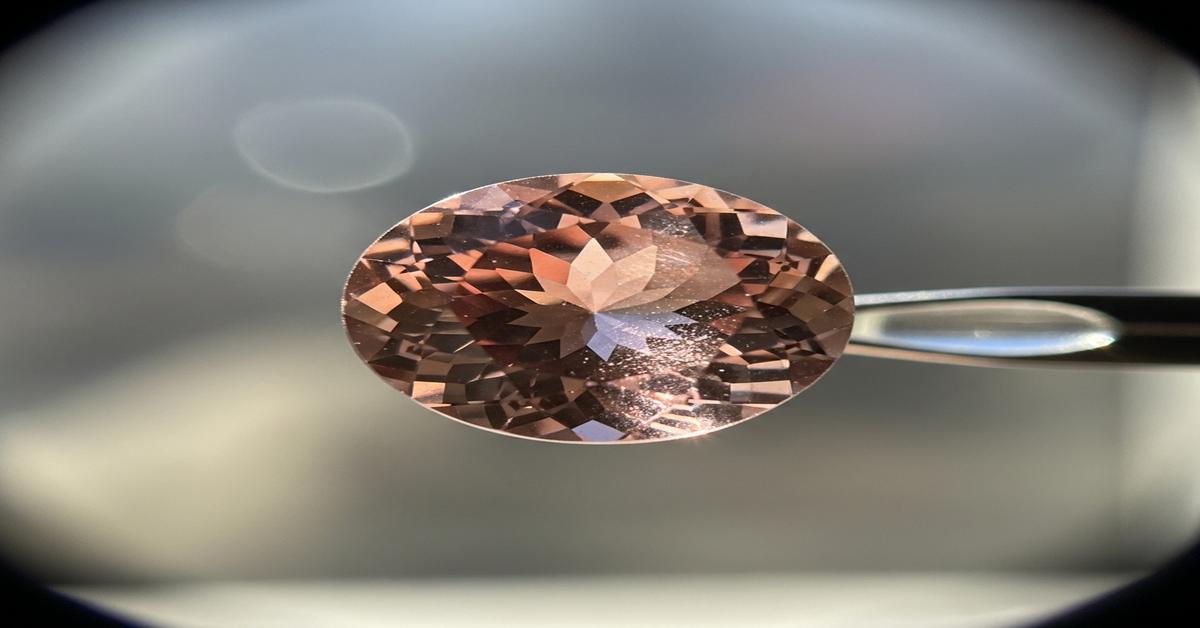
Morganite, the peachy-pink cousin of emerald and aquamarine, looks romantic, large, and affordable—especially in rose gold. That is why it’s everywhere in engagement rings and social feeds. But here’s the part you rarely hear: many morganites don’t keep their color under real-life wear. The pink can lighten over time, and resale value is weak. If you’re thinking long-term—either color retention or investment—morganite is a poor bet. Below, I explain why, what jewelers often leave out, and what to choose instead if you want a durable pink stone.
What morganite is and how it gets its color
Morganite is a variety of beryl, the same mineral family as emerald and aquamarine. Its pink color comes mainly from manganese inside the crystal lattice. That manganese can sit in different forms (oxidation states), and that matters for stability.
Most morganite on the market has been treated to improve appearance. Two common treatments are:
- Heat: Removes yellow or orange tones, making the stone look a cleaner pink. This is standard and usually stable.
- Irradiation: Boosts a pale stone to a stronger pink. This color can be less stable and is more likely to fade with sunlight or heat over time.
Why treat it? Natural morganite is often very light. Enhancing the color helps it compete with pink sapphire while keeping prices low.
Does morganite fade? The real answer
Some morganite fades in sunlight and with heat—especially if the color was created or strengthened by irradiation. UV exposure can change the color centers, slowly draining saturation. You won’t see it in a day, but months of daily wear, bright office light, or sun through a car windshield can make a difference. Heat from jewelry steamers or repair work can also lighten the stone.
Not every morganite is equally vulnerable. Here’s the nuance:
- Heat-only stones are generally more stable, but they’re often light to begin with, so even a small loss is noticeable.
- Irradiated stones can start stronger pink but are more likely to fade to a paler peach or even near-colorless in parts.
- Cut and size matter. Large stones with shallow cuts already look washed out (they “window”). Any fading becomes obvious.
If you already own a morganite and want to check stability, you can try a simple test: cover half the stone with opaque tape and leave it in a bright window for a week. If you see a line when you remove the tape, your stone is sensitive. This isn’t a lab test, but it is practical.
Everyday wear risks beyond fading
Morganite is hard enough but not tough. On the Mohs hardness scale it’s around 7.5–8, which resists scratching by dust and daily contact. But beryl is brittle and can chip at facet edges. Engagement rings see constant knocks, and morganite’s large sizes make corners and girdles more exposed.
Other real-world issues:
- Color looks weaker when dirty. Oils and soap films lower brilliance, so pale stones appear even paler.
- Rose gold “boost” is optical, not intrinsic. The warm metal makes the pink seem stronger by contrast, but it doesn’t fix fading or light saturation.
- Repairs can risk color. Heat from retipping prongs or steam cleaning can lighten irradiated stones.
Why jewelers rarely bring this up
Most salespeople are not gemologists, and many rely on supplier descriptions. Also:
- It’s a popular bridal look. Morganite in rose gold sells because it’s big and on-trend at a friendly price. Mentioning instability risks the sale.
- Treatment disclosure is inconsistent. Heat is routine and often undisclosed. Irradiation should be disclosed, but traceability is weak and some shops genuinely don’t know.
- Fading is gradual. The customer may not notice for months, by which time returns and warranties are over.
This isn’t a conspiracy. It’s a mix of sales incentives, limited training, and the fact that morganite is marketed as a fashion stone, not a heirloom gem.
Why morganite is a weak investment
Investment value depends on rarity, durability, demand, and transparent grading. Morganite struggles on several counts.
- Supply is ample. Large, clean crystals occur in multiple countries. Big sizes are common, so size alone doesn’t command premiums.
- Treatments blur value. Untreated, richly colored stones can be attractive, but they’re rare in stores. Most goods are treated and sold without detailed documentation, which hurts resale confidence.
- Low secondary demand. Buyers chasing pink will pay more for sapphire or spinel. Pawn and resale markets discount morganite heavily.
- Color risk. If the stone lightens, you lose the very quality you paid for. That uncertainty keeps values down.
- High markups at retail. The spread between what you pay and what you can sell for is wide. You’re paying for design and brand, not scarcity.
If you want a gem as a store of value, morganite isn’t it. Think of it as a fashion purchase.
How to shop smarter if you still want morganite
If you love the look and accept the risks, you can reduce disappointment.
- Ask about treatments in writing. Specifically: “Has this morganite been irradiated? Is the color stable to light and heat?” If they don’t know, assume it may be sensitive.
- Prefer deeper, slightly smaller stones. Medium to medium-strong pink shows better over time than very pale peach. Depth in the cut helps avoid windowing.
- Choose protective settings. A bezel or halo protects edges. Prongs alone on big ovals can chip corners.
- Consider a pendant or earrings rather than a daily-wear ring. Less impact and sunlight exposure.
- Get a return window. Wear it in your normal lighting for a couple of weeks. If it looks weaker or underwhelming, return it.
Protecting a morganite you already own
If you own one, you can stretch its looks and life.
- Limit UV and heat. Don’t leave it on sunny windowsills or car dashboards. Remove it in tanning beds, saunas, and hot tubs.
- Clean gently and often. Warm water, mild dish soap, soft brush. Rinse well. Avoid steamers and ultrasonics if you suspect irradiation or any filling.
- Store in the dark. Keep it in a soft pouch in a closed jewelry box.
- Service with care. Ask jewelers to avoid heat during repairs. Re-check prongs annually to prevent chips.
- Insure the piece. If it’s an engagement ring, insure it for loss or damage. Don’t expect an “appreciation” value—just replacement.
Better alternatives for durable, stable pink
If your priority is lasting color and value, consider:
- Pink sapphire (corundum): Excellent hardness (9), no cleavage, strong market demand, color is stable. Costs more, but you keep value and longevity.
- Pink spinel: Hard (8), tough, vivid colors, usually untreated, color-stable. Often better value than sapphire for brightness.
- Rubellite tourmaline: Vivid color and better resale than morganite, though softer (7–7.5) and can have inclusions. Color is stable.
- Lab-grown sapphire or spinel: Same chemistry and durability as natural counterparts, much lower cost, stable color. Great for large looks without worry.
If you simply want soft pastel pink and low cost, rose quartz is honest about being affordable and light. Just don’t expect investment value from any pastel quartz or beryl.
A note on “re-treating” faded morganite
People ask if a faded stone can be “re-irradiated” or re-heated to restore color. In practice, this is unreliable and risky. You’d need a lab willing to accept the stone, the result isn’t guaranteed, and the stone can be damaged. It’s usually cheaper to replace the center stone.
Bottom line
Morganite is pretty, but it’s not built for permanence or profit. The pink you fall in love with can fade, especially in irradiated stones, and resale is weak. If you still love the look, buy it as fashion and protect it from sun and heat. If you want a durable, stable pink with real staying power, go for sapphire, spinel, or a lab-grown equivalent. Your future self will thank you.

I am Satyam Pandey, a gemologist with a Diploma in Polished Diamond Grading from KGK Academy, Jaipur. I love writing about jewelry, gems, and diamonds, and I share simple, honest reviews and easy buying tips on JewellersReviews.com to help you choose pieces you’ll love with confidence.