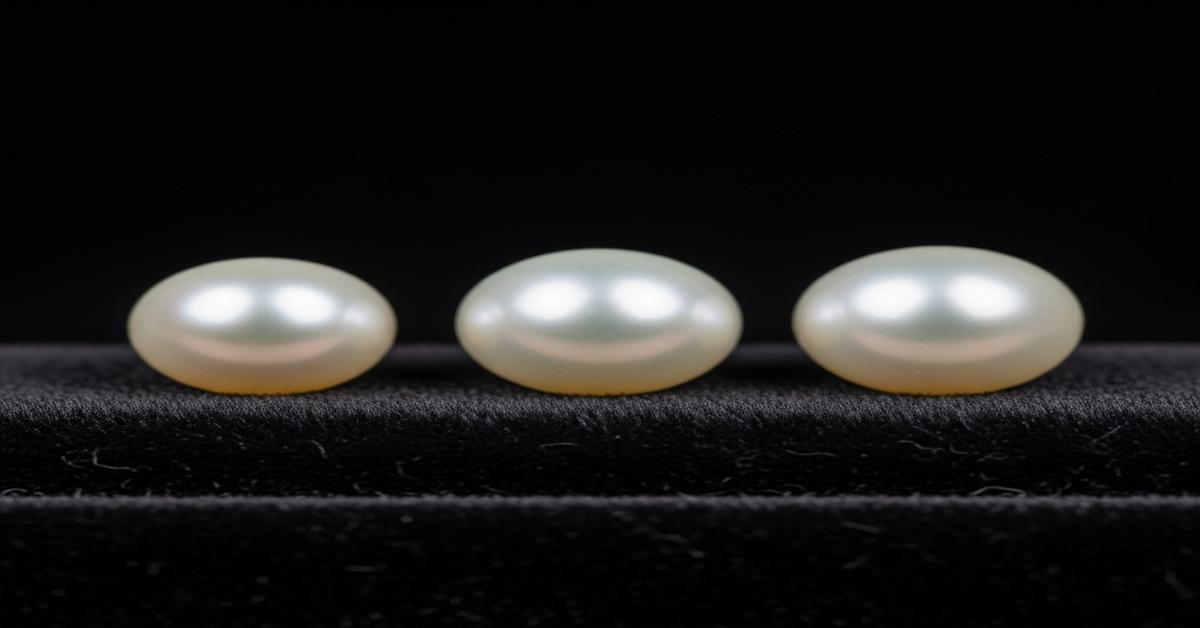
You probably paid too much for your pearls. Not because pearls are a bad buy, but because the market rewards branding and buzz more than the traits that actually create beauty and longevity. As a bench jeweler, I’ll show you what really makes Akoya, Freshwater, and South Sea pearls different, and how to spot value without the markup traps.
What actually drives pearl value
Five traits set the price: luster, nacre thickness, surface, size, and matching. Shape and color matter too, but those five do the heavy lifting.
- Luster: This is the mirror-like shine. It comes from light bouncing through thin layers of aragonite crystals in the nacre. The tighter and more even those layers, the sharper the reflections. High luster makes the pearl look “alive.” Low luster looks milky or chalky. Buyers often pay for brand first and luster second. That’s backwards.
- Nacre thickness: Nacre is the actual pearl. Thin nacre chips and dulls faster. Thick nacre keeps luster for decades. Why thickness varies: species biology, farming time, and nucleus type. If you want wearability, buy thickness over size.
- Surface: Fewer pits, bumps, and growth lines means more value. But some tiny marks are normal; perfect surfaces skyrocket price because they’re rare.
- Size: Each extra millimeter can double the price because fewer oysters produce big pearls and grow time increases. Pay for size only after luster and nacre meet your standards.
- Matching: A necklace strand’s cost jumps when the maker spends hours sorting pearls that match in tone, overtone, shape, and luster. You’re paying for labor and scarcity of “twins.”
How each type is farmed—and why that changes price
- Freshwater: Grown in mussels (freshwater farms, mainly China). Traditionally tissue-nucleated, so the pearl is essentially solid nacre—excellent for durability. Modern “Edison” freshwater pearls use bead nucleation to get larger sizes and roundness, still with thick nacre. Grow time: ~1–3 years. Many pearls per mussel lowers cost. Result: Best value per dollar, and modern high-grade freshwater can rival or beat average Akoya in luster.
- Akoya: Grown in saltwater Pinctada fucata oysters (Japan, Vietnam, China). Always bead-nucleated, usually one pearl per oyster. Grow time: ~10–18 months. Nacre is thinner than South Sea and many freshwater pearls, but top Akoya shows razor-sharp luster and classic white/pink-silver overtones. Result: You pay for the “classic” look and the sorting required to get fine strands. Durability depends on nacre thickness; insist on details.
- South Sea: Grown in large Pinctada maxima oysters (Australia, Indonesia, Philippines). Grow time: ~2–4 years. Nacre is very thick; pearls are larger (often 10–15+ mm). Colors are white to golden; deeper golden costs more because it’s rare. Yield is low and farming is high risk. Result: Highest base cost, especially for clean, round pearls with strong luster.
Side note: “Tahitian” pearls are also saltwater and part of the South Sea family, grown in Pinctada margaritifera. They’re known for natural charcoal to peacock colors. The same rules (luster, thickness, surface, size) apply.
Where buyers overpay
- Brand premiums: Big name boxes can add 2x–5x without better luster or thickness. You’re paying for marketing, not the pearl layers that make beauty.
- Vague grades: “AAA” means nothing without the seller’s grading standard. There is no universal A-to-AAA scale across retailers. Ask what the grade means in luster, surface percent clean, and nacre thickness.
- Round obsession: Perfectly round pearls are rare and costly. Near-round pearls can look identical on the neck and cost far less. You pay heavily for roundness you can’t see in wear.
- Thin-nacre Akoya: Some Akoya strands look bright under store lights but have thin nacre. They dull faster with wear. A top-grade freshwater with thick nacre will outlast and outshine a thin-nacre Akoya.
- “South Sea” label creep: Not all South Sea pearls are clean or lustrous. A dull, spotty South Sea isn’t better than a glowing Akoya or freshwater. Pay for luster and surface, not just the name.
- Color treatments: Bleaching and pinking are common on Akoya; dyeing or irradiation appear in some freshwater and Tahitian. Treatments are not evil, but undisclosed treatments can mask lower natural quality. Natural saturation (especially in golden South Sea and peacock Tahitian) commands real premiums.
Practical price benchmarks (so you don’t guess)
These are typical retail ranges, not auction or luxury brand prices. Market shifts happen, but the gaps hold.
- Freshwater (7–8 mm strand): Good everyday quality: roughly $120–$400. Fine round, high-luster “metallic” or Edison: $400–$1,200.
- Akoya (7–7.5 mm strand): Commercial bright: roughly $250–$800. Fine high-luster, clean, well-matched: $800–$2,500. Big brand versions can be $3,000–$8,000+ at the same size.
- South Sea white (10–12 mm strand): Entry clean/lustrous: roughly $2,000–$8,000. Fine to exceptional: $8,000–$25,000+. Deep golden South Sea of similar size can exceed these ranges due to rarity.
Why such wide ranges? Small differences in luster, surface, and matching multiply costs; every extra millimeter in size is rarer; and retailer markups vary (independents might be ~2× cost, department stores can be far higher). You are not crazy if two similar strands are priced wildly apart—their backstories and cost structures are different. Your job is to see the pearl, not the price tag.
How to examine pearls in person
- Luster test: Hold the pearl 12–18 inches from your eye. Can you see sharp reflections of your facial features? Crisp edges mean strong luster. Fuzzy, gray reflections mean weak luster.
- Side-light check: Step away from direct overhead lighting. Use a window or phone flashlight from the side. Side light exposes surface blemishes and true luster.
- Drill-hole inspection (Akoya especially): Look at the hole rim. If you see a distinct inner bead or a stark “painted” edge, nacre may be thin. A soft, seamless lip suggests thicker nacre.
- Surface mapping: Slowly roll each pearl. Minor pinpricks are fine; clusters of pits and grooves lower value. One or two small marks can hide near the clasp—don’t overpay for “perfect.”
- Matching: Lay the strand flat. Do the pearls share the same body color and overtone? Any dull “ringers” among shinier neighbors? A single off-luster pearl drags down the whole strand.
- Shape sanity: Near-rounds can look round when worn. Compare price jump between near-round and true round; many people pick the near-rounds once they see them on the neck.
Smart buying strategies
- Choose luster before size: A 7.5 mm pearl with razor luster beats a 9 mm with milkiness. Your eye notices sparkle first.
- Consider top freshwater over low Akoya: For the same budget, you can often get thicker nacre and brighter luster with high-grade freshwater. It will also be more forgiving for daily wear.
- Ask for nacre info on Akoya: Reputable sellers can provide nacre thickness ranges or at least confirm it’s not “ultra-thin.” If they dodge, reconsider.
- Buy pairs loose: For earrings, you can select the best-matched pair from a parcel. You’ll get finer matches for less money than buying pre-packaged sets.
- Don’t overpay for grade letters: Ask what the grade means in measurable terms: percent clean surface, luster description, and nacre thickness. If there’s no definition, the grade is just ink.
- Accept tiny surface marks: A microscopic blemish that you can’t find at 12 inches should not cost you hundreds more.
- Natural color premiums: Deep golden South Sea and vivid peacock Tahitian are naturally rare. If a price seems too good, assume treatment unless proven otherwise.
- Return and restringing policy: You want at least 14–30 days to inspect at home under different lights, and an offer to restring when needed.
Longevity and care (why thickness matters again)
- Thicker nacre lasts: Freshwater (often solid nacre) and South Sea (thick nacre) handle routine wear better than thin-nacre Akoya.
- Chemical caution: Pearls are calcium carbonate. Perfume, hairspray, acids, and chlorinated pools etch the surface. Put pearls on last, take off first, wipe with a soft cloth.
- Restring regularly: Silk stretches and absorbs oils. If you wear them often, restring every 12–24 months with knots between each pearl. It protects from rubbing and loss if the strand breaks.
Common myths to ignore
- “South Sea is always best.” Not if luster is weak or surface is poor. A top Akoya or freshwater can look better and cost less.
- “AAA is a universal grade.” It isn’t. Every seller uses their own scale. Demand definitions.
- “Bigger is better.” Only if luster, surface, and nacre are also there. Otherwise, you’re buying size and compromising beauty.
- “Only perfect round is valuable.” Near-rounds can look identical when worn and save you hundreds or thousands.
- “The tooth test is all you need.” Gritty vs. smooth can separate real from plastic, but it won’t tell you luster quality or nacre thickness.
Type-by-type quick advice
- Freshwater: Hunt for “metallic” luster and clean surfaces. Great daily-wear choice. Edison pearls offer larger, rounder options with strong shine.
- Akoya: Go for top luster and confirmed adequate nacre thickness. Classic white with pink/silver overtones is the traditional look. Avoid paying brand premiums for average luster.
- South Sea: Expect higher prices. Pay only for pearls that deliver thick nacre, even luster, and clean surfaces. Deep golden and large rounds are rare and costly—make sure the beauty justifies the premium.
A jeweler’s checklist before you buy
- Do the reflections look crisp from arm’s length?
- Is nacre thickness discussed (especially for Akoya)? Drill-hole lip looks healthy?
- Are surface marks minor and placed toward the clasp on a strand?
- Are color and overtone consistent across the strand?
- Is the price jump for roundness worth it compared with near-round?
- Is the grade defined, not just a letter?
- Is the return window clear, and will they restring when needed?
The bottom line: You overpay when you buy a name, a letter grade, or a perfect circle. You get value when you buy luster, nacre thickness, and smart matching. That’s true whether you choose Akoya, Freshwater, or South Sea. Let the pearl’s glow—not the marketing—set the price you’re willing to pay.

I am Satyam Pandey, a gemologist with a Diploma in Polished Diamond Grading from KGK Academy, Jaipur. I love writing about jewelry, gems, and diamonds, and I share simple, honest reviews and easy buying tips on JewellersReviews.com to help you choose pieces you’ll love with confidence.