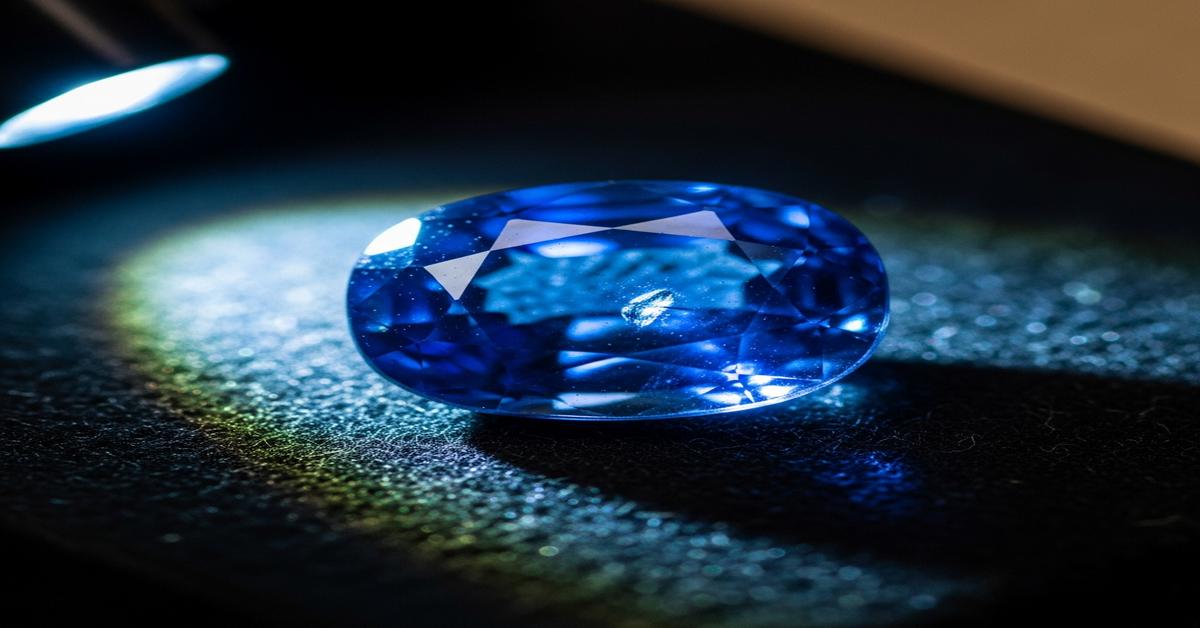
Real Kashmir sapphires are rare. Their price invites fakes, upgrades, and wishful thinking. Lately, I keep seeing “Kashmir sapphires” that look glassy—clean, sharp, and a little too bright—sold as “velvety” Kashmir. That word matters. True Kashmir stones have a soft, even glow you can see and prove with a loupe. If you remember one thing, remember this: Kashmir’s beauty is built on fine, dense silk inside the gem. No silk, no Kashmir look.
Why Kashmir Sapphires Are Different
Kashmir sapphires come from a small, mostly exhausted deposit in the Himalayas. They became famous in the late 1800s for a specific color and texture. The color is a rich, medium to medium-dark blue with a hint of violet—often called cornflower blue. The texture is the key: a soft, velvety glow that slightly diffuses light. It is not glassy, not brittle-looking, and not hyper-clear. The “why” comes down to micro-inclusions.
Inside many fine Kashmir sapphires, tiny rutile needles—called “silk”—are spread evenly. They are extremely thin and dense. They scatter light in a way that smooths the color, hides harsh facet reflections, and creates that velvet impression. It is beauty born from controlled imperfection.
The One Sign You Can’t Miss
Under a 10x loupe, a real Kashmir look shows very fine, intact rutile silk spread like a soft mist, usually oriented in three directions.
Here is how to see it:
- Use a clean 10x loupe. Stand by a window or use neutral, white light.
- Tilt the stone slowly. In a true Kashmir look, you will catch extremely fine, hair-like lines crossing at about 60-degree angles. They are not big or messy. They are very fine and even.
- The overall effect: the stone’s color looks smooth and slightly “sleepy,” but still bright. Facet edges look a bit softened by the internal haze. That is the velvet.
If instead the stone looks aggressively clear, with mirror-sharp facets and no fine silk, be cautious. Many sellers call this “velvety” because the color is nice. But the texture is wrong. That glassy look is common in heated sapphires from other origins, synthetics, and glass imitations.
Why “Glassy” Is a Red Flag
“Glassy” means harsh reflections, sharp facet mirrors, and a clean, hollow look. The center often “windows” (goes pale) when you look straight down, because the cut is shallow. The stone may be bright but lacks depth and diffusion. Kashmir’s silk reduces windowing and evens the color, so the center does not collapse to pale when faced up.
Also, heat treatment can melt or break silk. Many non-Kashmir sapphires are heated to improve color and clarity, which pushes them toward a cleaner, glassy look. Kashmir stones are often unheated, keeping their intact, fine silk. This is why “intact fine silk” is the one sign you should never ignore.
What Fakes and Lookalikes Show Under a Loupe
- Glass imitations: Swirly flow lines and round gas bubbles that look like tiny spheres. The surface facet junctions can look slightly “soft.” The blue may look inky and flat.
- Synthetic flame-fusion sapphire: Curved growth lines that arc like faint rainbows. Natural sapphires do not show curved striae.
- Heavily heated sapphire (any origin): Very clean interior with partially melted or broken silk, discoid “heat halos” around crystals, and a crisp, glassy face-up look.
- Madagascar or Sri Lanka sapphire sold as Kashmir: Often shows nice color but either too clean or with coarse, uneven silk. The velvety diffusion is missing or patchy.
How to Check a “Kashmir” Claim in Two Minutes
- Loupe the silk: Look for fine, even rutile needles, intact and oriented in three directions. If you cannot find any, ask why. Some genuine Kashmir stones are cleaner—but “zero silk” should drop the price and push you to a lab report.
- Face-up texture: Does the color feel smooth and deep rather than flashy and mirror-like? Kashmir is more glow than glare.
- Cut and windowing: Kashmir stones are often cut a bit deeper. A shallow cut with a pale center is not typical of top Kashmir look.
- Dealer story vs. paperwork: Origin is not a guess. If the price is premium, an independent lab report is a must.
What a Reliable Lab Report Should Say
A serious Kashmir claim needs a report from a respected gem lab that does origin determination. You want these lines:
- Species/variety: Natural corundum (sapphire)
- Treatment: No indications of heating, if unheated
- Origin opinion: Kashmir (if they conclude that)
Origin is an expert opinion based on multiple clues: microscopic inclusions, trace elements, and growth features. No single property can guarantee origin. But the presence of fine, intact silk consistent with Kashmir rough is a strong piece of the puzzle.
Common Seller Lines—and What They Really Mean
- “It’s the classic velvety Kashmir.” Ask to see the silk under 10x. If you see none, ask for a lab report. “Velvety” without silk is marketing, not gemology.
- “Old antique setting, must be Kashmir.” Age is not proof. Stones get swapped over decades.
- “Dealer’s certificate included.” Many shop certificates are not independent. You want a recognized lab, not the seller’s printer.
- “It scratches glass.” So will many cheap materials. That test is useless here.
Price Reality Check
True fine Kashmir sapphires are extremely expensive per carat—often many times the price of similar-looking stones from other origins. If you see a “2-carat Kashmir, unheated” offered for a bargain without a top lab report, assume it is not Kashmir until proven otherwise. Price does not prove authenticity, but a low price predicts trouble.
Advanced Clues (If You Have Tools)
- Dichroscope: Kashmir blue often shows balanced dichroism, with neither direction turning grayish or pale. Strong uneven dichroism can signal a different origin or a cut issue.
- UV reaction: Many Kashmir sapphires show weak to no fluorescence. Some Sri Lankan stones can glow more. This is not decisive, just supportive.
- Spectroscope: Iron-content differences can hint at origin, but this is a specialist tool and not conclusive.
Heat Treatment and the Kashmir Look
Heat can dissolve silk and pump color. Most sapphires on the market are heated. Kashmir stones prized for their velvet usually owe that look to intact silk. A Kashmir origin stone that has been heated may lose the very texture buyers pay for. If a seller calls a glassy-clean stone “Kashmir,” the treatment history matters even more. Ask for treatment disclosure in writing and verify with a lab.
Buying Checklist You Can Use Today
- Carry a 10x loupe. Always inspect under neutral light.
- Look for fine, intact rutile silk creating a soft glow. No silk = big question mark.
- Watch out for glassy clarity, curved striae, gas bubbles, or a pale windowed center.
- Insist on an independent lab report for any “Kashmir” claim, especially at premium price.
- Get treatment status in writing. Unheated plus Kashmir should have paperwork to match.
- Be wary of “too good to be true” pricing. It usually is.
Bottom Line
“Velvety” is not a slogan. It is the optical outcome of fine, dense silk that scatters light. That silk is the one sign you cannot miss. If a so-called Kashmir sapphire looks glassy clean and shows no fine silk under a loupe, step back. Ask for a serious lab report or walk away. Real Kashmir is rare, expensive, and distinctive. Your eyes—and your loupe—can save you from an expensive mistake.

I am Satyam Pandey, a gemologist with a Diploma in Polished Diamond Grading from KGK Academy, Jaipur. I love writing about jewelry, gems, and diamonds, and I share simple, honest reviews and easy buying tips on JewellersReviews.com to help you choose pieces you’ll love with confidence.