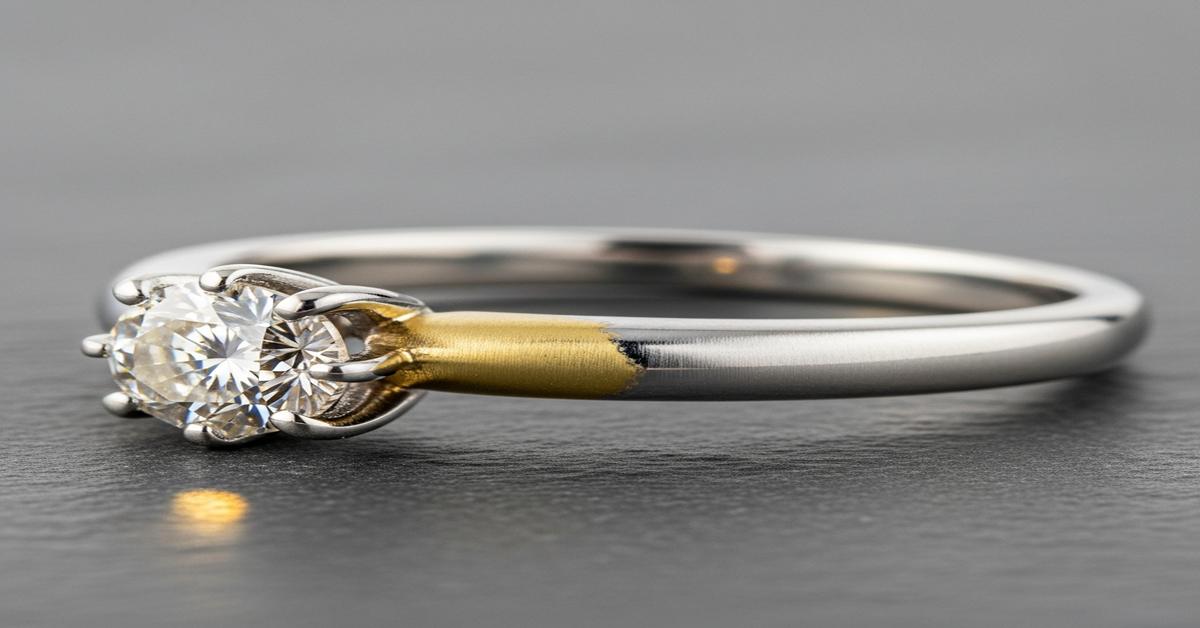
Noticing yellow tones on your “white gold” ring can be a shock. The good news: your jewelry isn’t defective. You’re seeing the rhodium plating wearing off, revealing the natural color of white gold underneath. That’s normal. Here’s why it happens, how to restore the bright white look, what it costs, and how to make the finish last longer.
Why white gold looks yellow over time
White gold isn’t naturally bright white. It’s a gold alloy mixed with white metals (often nickel or palladium). The base metal still has a warm tint—stronger in higher karats because there’s more gold. That’s why an 18k white gold ring often looks creamier than a 14k one when the plating thins.
Rhodium supplies the “crisp white” color. Rhodium is a platinum-group metal. It’s very white and hard, so jewelers plate a thin rhodium layer over white gold to give it that mirror-bright, cool tone. Over months or years, that microns-thin layer wears off from friction, soaps, and skin contact, especially on the palm side of rings.
Wear patterns depend on your life and the alloy.
- Karats: 10k and 14k white gold are usually closer to white; 18k shows yellow sooner when plating thins.
- Alloy choice: Nickel-based white gold looks whiter than palladium alloys under plating, but nickel can cause allergies.
- Lifestyle: Constant keyboard use, gym grips, and abrasive cleaners wear plating faster. Chlorine and harsh chemicals attack the underlying gold.
How jewelers make white gold look white
Rhodium plating isn’t just a dip. A proper job involves:
- Polish and prep: Scratches are removed. Rhodium doesn’t fill pits; it only follows the surface. Good prep is what creates the mirror look.
- Deep clean: Ultrasonic and steam remove oils; then an acid activation bath improves adhesion.
- Electroplating: The ring is plated in a rhodium bath. Thickness is measured in microns (μm). For rings, 0.3–0.5 μm is a solid target for durability without risking brittleness. Earrings/pendants can be thinner because they see less friction.
Alternative: embrace the natural white. Some people skip rhodium and keep a high-polish white gold finish. It looks warmer, not chrome-white. If you want true white without plating long-term, consider palladium white gold alloys or platinum for future pieces.
Is your ring defective?
Probably not. Yellowing is a normal sign that the plating has done its job and worn thin. It’s “cosmetic wear,” like sneakers losing their shine.
Possible workmanship issues to rule out:
- Very thin initial plating: Budget mass production may use ~0.1 μm, which shows wear quickly.
- Poor prep: If the ring wasn’t polished and cleaned well, plating can look blotchy or peel early.
- Visible solder seams: Joining points can show color differences sooner. That’s normal, but a better prep can minimize it.
How to fix it (options)
- Re-plate with rhodium. This restores the bright white color. Ask for 0.3–0.5 μm on rings. Expect to be without the ring for 1–5 days, depending on the shop and stone safety.
- Polish only, no rhodium. You’ll get a warm white sheen. This works if you prefer a more natural tone and fewer maintenance cycles.
- Upgrade prongs or the head to platinum. If prongs keep looking yellow or thinning, replacing the head with platinum gives white color and better wear where it matters.
- Design shift. Two-tone designs (white head, yellow shank) make the warmth intentional and reduce expectation of a pure white shank.
Stone safety matters. Diamonds, sapphires, and rubies are usually fine during plating. Porous or heat-sensitive stones (emerald, opal, pearl, turquoise, tanzanite, morganite) must be removed or carefully masked; otherwise they can crack or dull. A good jeweler will advise you.
How much it costs
Prices vary by region, ring complexity, and the shop’s process. Typical ranges:
- Simple band: $40–$80 for light plating; $80–$150 for thicker, longer-lasting work.
- Engagement ring with stones: $80–$150 for standard; $150–$300+ if stone removal, masking, or heavy plating is needed.
- Add-ons: Resizing, tightening stones, re-tipping prongs, or restoring milgrain adds cost. These are often smartest to do at the same time as plating.
Many chain stores offer “lifetime rhodium” if you keep up with inspections. Independent jewelers may offer care plans or discounts for regular maintenance. Always ask what’s included: cleaning, polishing, plating thickness, and warranty.
How long new plating lasts
- High-wear rings: 3–12 months if you wear it daily and are hard on your hands.
- Moderate wear: 1–2 years for careful daily wear.
- Low wear (pendants/earrings): Several years.
What changes longevity: Thickness, your activities, and alloy color. Heavier plating lasts longer but costs more. Extremely thick layers (around or above ~1 μm) can look slightly gray and may crack on bending; that’s why jewelers balance thickness and look.
What to ask your jeweler
- How thick is the plating? Ask for a number in microns and a target of ~0.3–0.5 μm for rings.
- Will you fully polish and clean first? This controls shine and adhesion.
- How will you protect my stones? Confirm masking or removal for sensitive gems.
- Will you plate the inside of the shank? It can help with uniform color and reduce skin reactions.
- Turnaround and warranty? Get expectations in writing if possible.
- Can you preserve engravings and hallmarks? Ask for light touch on sentimental or thin areas.
Risks and limitations
- Rhodium won’t hide damage. Deep scratches, pits, or bent prongs need repair first.
- Allergy masking isn’t a cure. If you react to nickel in white gold, rhodium can reduce contact, but once it wears, irritation returns. Consider nickel-free alloy, platinum components, or a barrier sleeve.
- Chemicals matter. Chlorine, bleach, and harsh cleaners can attack the gold alloy and speed plating loss.
- Delicate details can soften. Frequent heavy polishing before each plate can gradually erode sharp edges and milgrain. Ask for minimal necessary polish.
Care tips to keep the white longer
- Remove for rough work, gym, and swimming. Friction and chlorine are the big enemies.
- Rinse after lotions and soaps. Product film can make the ring look dull even if plating is fine.
- Clean gently at home. Warm water, mild dish soap, soft brush. Dry with a lint-free cloth.
- Schedule pro cleaning and checks. Every 6–12 months, have stones checked, prongs tightened, and the finish refreshed.
- Store separately. Keep it in a soft pouch or slot to avoid micro-scratches from other jewelry.
DIY rhodium kits?
Not recommended. Proper plating uses controlled chemistry and strong acids. Home kits and pen platers usually lay down ultra-thin, uneven layers that wear off fast. Poor prep or contamination can cause peeling. The risk-to-reward ratio isn’t great for a cherished ring.
Choosing white gold next time
- Pick the right alloy: Nickel-free or palladium white gold for fewer allergy issues; it’s naturally grayer-white but takes a nice polish.
- Choose karat wisely: 14k is a practical balance of whiteness and durability. 18k is richer but warmer.
- Use platinum where it counts: A platinum head on a white gold shank keeps the stone area white and secure.
- Decide on finish: High polish shows scratches fastest. Satin or brushed can hide wear but still needs care.
- Consider two-tone: If you like warmth, a deliberate yellow/white combo avoids constant replating.
Quick troubleshooting
- Only the bottom of the ring is yellow: Normal wear from contact with surfaces. Re-plate or live with a two-tone look until the next service.
- The whole ring looks dull, not yellow: It may just need a professional clean and polish, not plating.
- Black or green marks on skin: Sweat, lotion, and metal rubbing can cause discoloration or nickel irritation. Re-plate and reduce moisture exposure; consider nickel-free alloys.
- Lines or seams showing yellow: That’s a solder joint. Good polish and plating can minimize it; it’s not a crack.
- Stone looks cloudy: Likely soap film. Clean gently at home or get a professional ultrasonic clean (if the stone is safe for it).
Bottom line: Your white gold ring turning yellow is the rhodium plating doing what thin coatings do—wearing with use. A quality re-plate restores the crisp white color, usually for well under the cost of a repair. Ask for the right thickness, protect sensitive stones, and adjust care habits to stretch the time between services.

I am Satyam Pandey, a gemologist with a Diploma in Polished Diamond Grading from KGK Academy, Jaipur. I love writing about jewelry, gems, and diamonds, and I share simple, honest reviews and easy buying tips on JewellersReviews.com to help you choose pieces you’ll love with confidence.